Diane Crann MBE was pivotal in starting the Royal Institution’s Engineering and Computer Science Masterclasses and this interview provides an insight into her motivation and involvement. The Royal Institution (Ri) is dedicated to connecting people with the world of science. One of the ways in which it does this is through the Masterclass series which encourage our talented younger generation to participate in knowledge exchange.
Can you briefly describe your career path to date?
After leaving school early with no qualifications, I started working in a bank and then in various companies in their accounts offices while bringing up my children. I realised I had ‘missed out’ on education but it still took a while for my mathematical career to start. I completed an OU degree in my 40s and PhD in my 50s.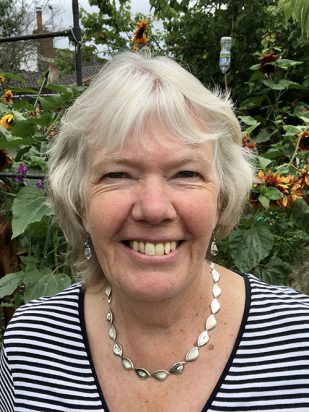
I started working for the Ri in the late 1990s, organising the London Y9 (14-year-olds) mathematics masterclasses, after being involved with the Hertfordshire masterclasses from 1993. In 2005, I had the opportunity to run a pilot project of engineering masterclasses, funded by the Royal Academy of Engineering, and these were such a success that they grew into a nationwide programme. In 2014, I found a backer to support the start of computer science masterclasses, with the same format as the mathematics and engineering ones, and again they’ve been popular ever since.
I became Clothworkers’ Fellow in Mathematics, supporting the growing masterclass team at the Ri until I retired in 2015. I still organise and take masterclasses as often as possible, also going into schools and running sessions with my husband, who is also a mathematician.
How would you describe your professional expertise?
I find it easiest to encourage good early-career mathematicians, engineers and computer scientists to think about how they can explain their expertise to younger people. I enjoy helping them discover hands-on activities to explain their ideas. I also like to encourage youngsters to try new things, open their eyes to new ideas and find out about the amazing world around us.
What is your experience in knowledge exchange (KE)?
The Ri masterclass programme is such an amazing concept. The speakers are enthusiastic, knowledgeable and so good at encouraging bright students of all ages to open their minds and take in new ideas. It is great to offer young people such exciting opportunities outside the normal school environment; for them to see, hear and work with such amazing people.
What would you recommend to an early-career mathematical scientist who is passionate about knowledge exchange?
Talk to and visit others in outreach; watch lots of events; realise that there are different ways to handle certain subjects. Mathematics talks can be great fun and practical subjects can be fascinating, especially with simple experiments. An enthusiastic speaker can make all the difference to how ideas come across.
Ask for help with ideas which schools would welcome. One-off science fairs and STEM busking will give confidence and the Ri has a great programme for new masterclass presenters.
Is there a knack to communicating mathematical ideas to people who are not mathematical scientists?
Keeping things basic without dumbing down is most important. You can describe almost anything to non-scientists with the right language, examples and demonstrations.
What is the most effective mechanism for KE?
Large groups for an exciting event will encourage students to think differently about their school STEM subjects. One-off events in school classrooms, with mixed ability children, can be great fun for students, teachers and speakers. However, small groups of the more able children working with enthusiastic speakers over a number of weeks can work brilliantly. Different topics and ideas can be introduced, worked on, improved upon, discussed and also taken back into the classroom.
Who inspires you?
All the Ri masterclass presenters I’ve seen and worked with. I’m always so amazed at their enthusiasm and the interesting ways they bring together their thoughts and ideas. I’ve seen different presenters introduce the same topic in such varied ways; each bringing out something that is important to them and explaining it in their own unique style.
What motivates you?
Still being invited into schools to participate in special events and asked to run and present Ri masterclasses and summer schools. In Hertfordshire, masterclasses were large sessions with up to 80 students at a time and their excitement and commitment was amazing to see. Now, living in Norfolk, the sessions are much smaller (around 30 students) but their enthusiasm and commitment is every bit as good and the teachers are great to work with.
Reproduced from Mathematics Today, October 2020
Download the article, Interview with Dr Diane Crann MBE MIMA (pdf)