Marcus du Sautoy
FOURTH ESTATE – HARPERCOLLINS PUBLISHERS 2010, 304 PAGES
PRICE £16.99 (HARDBACK) ISBN 978-0-00-727862-6
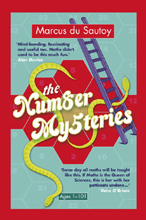 Marcus du Sautoy’s latest book The Num8er My5teries is written for the general reader. The book bursts with creativity, analysis and explanation in a clear non-specialist style. Complex issues in the subject become accessible as he exposes readers to the big ideas in mathematics.
Du Sautoy frames his approach in terms of man’s need ‘to make predictions about what the future holds, negotiating the environment around us’. Observation of nature and allowing the observation to inform and develop scientific progress is a strong feature of the book. He neatly develops insights, for instance contrasting the appearance of the cicada insect in North America with prime number distribution leading to the Riemann Hypothesis.
The book is split into five chapters and the questions in each chapter focus on primes, shape, winning, codes and predicting the future. The chapters are layered and progressive. The chapter on shape progresses from early speculation on the shape of the world to the big idea of the Poincaré conjecture: what shape is the universe? On this journey the recognition of the bubble as the most efficient shape using the least amount of energy is the starting point, considering Plateau and Kelvin’s work on this structure. Du Sautoy uses modern contextual references to good effect. He uses the side view of the Beijing Olympic Swimming Centre (which ideally illustrates the shapes bubbles make in relation to an angular sheet of glass through foam) as an interesting counterpoint to Plateau’s bubble combination rules. In effect the rules show that this view could not be formed in foam.
Du Sautoy uses the language of mathematics to experience shape and geometry of objects that cannot be physically constructed or naturally occur. He begins with numbers and describes his impetus ‘I spend my life playing with numbers’ and ‘The numbers are a code to describe the shape and I can use this code to explore the shape without ever having to physically see it’. He uses the example of La Grande Arche de La Défense in Paris as a projection of a four dimensional cube, translating shape to number by means of Descartes’ Dictionary to enable its description.
He shows the full power of mathematics informing situations that cannot be visualised structurally and also in showing something must exist without constructing it. He does this through Euler’s approach to the solution of the Königsberg Bridge Problem and the development of ‘Eulerian paths’, which result in a non-overlapping map being able to be drawn if certain path criteria apply. Du Sautoy links the mathematics behind the problem to the development of internet search engines. Cutting edge problems in mathematics are given full consideration including elliptic curve cryptography (ECC) and aircraft turbulence reduction amongst others. This modern edge continues in terms of the smart phone QR codes in each chapter that give access to external websites complementing the ideas and insights detailed. The book also has its own website with games and shapes that can be made.
Du Sautoy’s enthusiasm, curiosity and passion for mathematics leaps from the pages. I strongly recommend The Num8er My5teries to anyone who would like to learn more about the major challenges in mathematics, contemporary and historic.
Wallace A Ferguson, CMath MIMA
Chatham House Grammar School
Mathematics Today October 2011
The Num8er My5teries – A Mathematical Odyssey through Everyday Life can be purchased at Amazon.co.uk