Date: Saturday 19 May 2012
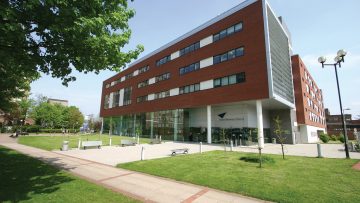
Location: University of Manchester
Come along for a great day of mathematics and socialising!
The 16th in a series of conferences for Early Career Mathematicians. In between the talks will be plenty of time for eating and socialising with other like-minded Early Career Mathematicians as well as quizzing the speakers in more depth on their topics.
Following the conference you will have the opportunity to join in with an informal post-conference dinner at a local restaurant. Please state on your registration form whether you wish to attend the dinner in addition to the conference.
Do I qualify? Can I come?
Yes, everyone with an interest in mathematics is welcome! Generally you will find that most attendees have either graduated with a maths degree less than 15 years ago OR joined the IMA less than 15 years ago (but don’t have a degree) OR they are a student of maths.
Who’s speaking? What are the talks about?
Speakers are listed in alphabetical order
Sandy Black – University of Leeds
Life as a PhD student: experience and an introduction to combustion CFD
Richard Crawford BSc MSc CMath MIMA – AMEC
The LEWIS method of nuclear reactor channel functionality assessment
Sharon Evans MIMA – Rolls Royce
Inspiring Future Generations
Valentin Fadeev – Maersk Line and MSc Student at the Open University
Design of a method. Building bricks of analysis
Steve Humble FIMA aka DR Maths
Maths on the Streets: A journey from school to learning maths beyond the classroom with a sprinkle of magic along the way
Katie Steckles – Think Maths and The University of Manchester
Maths Outreach
Charles Walkden – The University of Manchester
Get cracking: promoting mathematics to young mathematicians via classical cryptography
For further information on this conference or queries, please contact the Conference Office at conferences@ima.org.uk or +44 (0) 1702 354020.
Abstracts
Sandy Black – University of Leeds
Life as a PhD student: experience and an introduction to combustion CFD
An early career mathematician will give an insight into his position as a PhD student. Sandy Black is now near the end of his second year as a PhD student and based on his experience, the advantages and disadvantages are presented of doing a PhD. An introduction to his research topic on computational fluid dynamics (CFD) being applied to combustion problems and new technologies emerging in the field of carbon capture will also be presented.
Richard Crawford BSc MSc CMath MIMA – AMEC
The LEWIS method of nuclear reactor channel functionality assessment
A description is given of the LEWIS method for assessing the functionality of channels in the core of a nuclear reactor. Using linear programming and the small-angle approximation, the method analyses the ability of control rods and fuel assemblies to fit in a channel of the reactor core. The relative speed of this method enables assessment of every channel in a whole-core model, which enables the production of core maps and the ranking of channels.
The talk will include an overview of the concept of a safety case, and how one can be supported by evidence from mathematical models.
Sharon Evans MIMA – Rolls Royce
Inspiring Future Generations
Many would agree that it is important to not only educate children, but to also inspire them. Inspiring them to want to do better or to become world-renowned in their field, or to inspire them to think differently. Sadly there is no one-size-fits-all solution. One method that has been shown to help is inspiration by example. Scientists, technologists, engineers and mathematicians throughout the UK volunteer as STEM Ambassadors to help out in a variety of extra-curricula activities. Find out what you could do to help inspire children and students.
Valentin Fadeev – Maersk Line and MSc student at the Open University
Design of a method. Building bricks of analysis
Every branch of mathematics offers a wide variety of methods and techniques to deal with specific classes of problems. In many instances similarities arise across the seemingly disjoint subjects. Ideas can be borrowed and give rise to yet more elaborate systems.
Is there a way to classify, generalise, arrange in patterns the tools used by various parts of science? Is mathematics a toolbox, a catalogue of tricks, or we may hope to reduce some them to fundamental building blocks? Are there any guidelines for laying foundations to new paths of thought?
Starting from one of the core concepts of analysis, the idea of continuity and infinitesimals we take a brief journey through some of the fundamental ideas representations of which can be found across different methods and theories. We examine the way how the seemingly simple restrictions imposed on the objects in the theory of analytic functions lead to exceptionally rich structures and yield useful non-trivial results. It is shown how the limitations of the assumptions that underpin classical analysis lead to the development of some modern theories like fractals and chaos.
Object-oriented approach in mathematics is considered as a convenient decomposition of the original problem into blocks which may not be obvious at first sight. Placeholders defined to represent these blocks and operations defined upon them form the rising layers of complexity of modern science. Examples range from solutions of differential equations to tensor calculus and category theory.
Duality as a property and a method of solving problems is demonstrated in several examples. Special attention is paid to one of its extreme cases, the duality of discrete and continuous objects. The impact of this collision on the development of science is discussed. Practical devices such as Dirac delta are shown in applications.
Inverse problems not only complement the theories and lead to better understanding. They also serve as a means of devising new methods, exact or approximate, that can be applied in related theories. Some examples of this procedure in calculus of variations are presented.
As an extreme representation of inverse methods an inversion of analysis itself in the form of “mathematical synthesis” is considered. Although no strict definitions are given a possible general direction of thought is pointed out with a few non-technical examples.
Since the concepts discussed are present in various forms all over mathematics it becomes possible to recognise them and establish links between the branches which seem to have nothing in common with each other. A series of examples ranging from analytic geometry to convex analysis demonstrates that cross-over areas in science are the ones where most powerful ideas are discovered. The design of a method in these examples is understood as joining the forces of different branches through statements that connect their objects of study.
Blog: http://weary-watcher.blogspot.com/
Related material: http://www.lulu.com/product/ebook/changing-the-way-we-change-the-variablesrefresher-notes-in-real-analysis/18762550
Steve Humble FIMA aka DR Maths
Maths on the Streets: A journey from school to learning maths beyond the classroom with a sprinkle of magic along the way
Steve Humble (aka DR Maths) has written a number of books and published a large number of articles on ways to enrich the mathematical curriculum.
With more than twenty five years teaching experience he has worked in a wide and varied range of educational establishments, both teaching students and supporting teachers. He spent five years working for the National Centre for Excellence in the Teaching of Mathematics (NCETM) as a Senior Regional Coordinator. Now he works as a Freelance Mathematics Consultant, engaged in a range of activities to support schools in raising their student achievement through creating a positive attitude to maths. He also works with the Further Mathematics Support Programme and teaches mathematics on the Primary PGCE Course at Newcastle University.
He writes a fortnightly column in the Evening Chronicle newspaper called DR Maths to help show people that maths is all around them. As DR Maths he holds the Guinness World Record for the most children learning maths outside the classroom.
Katie Steckles – Think Maths and The University of Manchester
Maths Outreach
Having recently completed my PhD, I have become increasingly involved in maths outreach activities of different kinds. I will discuss my experiences in the field, as well as giving an overview of the different types of work and how I think researchers can benefit from devoting some time to outreach, even if it’s not their ultimate career plan.
Charles Walkden – The University of Manchester
Get cracking: promoting mathematics to young mathematicians via classical cryptography
How can one get young potential mathematicians interested in mathematics? How can one demonstrate to school children that mathematics is really about logical and abstract thought, and not just doing ‘really hard sums’? In this talk, I will discuss some of the history and methods of classical (i.e. solvable by pen-and-paper, rather than computers) cryptography and show how they can be used to design outreach activities, such as the `Alan Turing Centenary Cryptography Competition’ (which we ran at the University of Manchester in early 2012), that get school children (and others!) interested in mathematics.