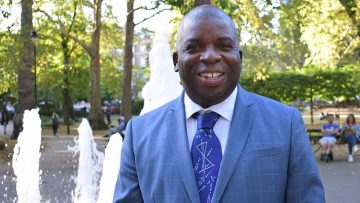
June 2004, the 1st IMA Younger Mathematicians’ Conference, was a day that would change my life forever. The Younger Mathematicians’ Group was the prequel to what we now call the Early Career Mathematicians. In 2004, the IMA Council wanted to cater to those members of the IMA who were under the age of 35! I was very happy about this as it was going to be my first opportunity to present at an IMA event! My talk, ‘Simulation within the Defence Industry’, was nothing really to write home about but the following debate and discussion caused my eyes to open wide.
An open question was put to the delegates after one of them said that ‘they would not call themselves a mathematician at a cocktail party’. I asked: ‘Who among you would defend mathematics live on a radio station if the DJ had earlier declared that: Mathematics is boring?’ [1]. This group of younger mathematicians, who represented the future of mathematics, all said: ‘No!’ Hence, my journey, my mission, my quest to ‘build a powerful mathematical identity!’ had officially started.
My name is Nira Chamberlain and this is my story.
I did a four-year mathematics degree at Coventry Polytechnic (now called Coventry University). My third year was an industrial placement year at an RAF base working on a kitchen refurbishment simulation. This was my very first mathematical model applied to a real-world situation. My final year project was strange attractors involving the Lorenz equations [2]:
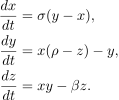
This introduced me to the notion that a solution can be extremely sensitive to its initial conditions.
Following this, I did an MSc in Industrial Mathematical Modelling at Loughborough University, where my final dissertation project was undertaken at a material science start-up based at Aston Science Park. My research was on impacts on an adhesive joint (see Figure 1), which took into consideration how materials behave in an aggressive environment.
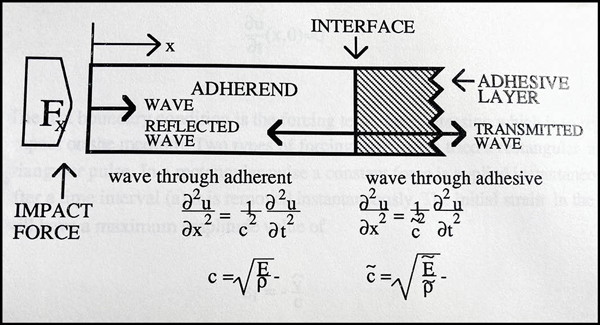
Many years later I undertook a part-time PhD at the University of Portsmouth. My thesis was called the ‘Extension of the Gambler’s Ruin Problem Played over Networks’ [3]. I am very passionate about mathematics. Apart from being the president of the IMA, I wear many other mathematical hats. For nearly 30 years now, I have been a professional mathematical modeller working in a number of different industrial sectors, including engineering, energy, defence and retail, all over Europe. Currently, I am the Professional Head of Discipline for Data Science at Atkins, part of the SNC-Lavalin Group.
As well as this, I am a mathematics communicator. Two of the talks that have given me the most satisfaction are ‘The Mathematics that can Stop an AI Apocalypse’ and ‘The Black Heroes of Mathematics’. In 2018, I won the Big Internet Math-Off competition and was named the World’s Most Interesting Mathematician.
The final hat that I wear is my work for charity, either going into schools talking about mathematics for Speakers for Schools or delivering a two-day mathematics masterclass to the UK’s brightest African/African–Caribbean diaspora students hoping to get into the universities of Oxford or Cambridge.
That is my background, but back to the theme of this article. When I lived in France, I would often visit Paris. Standing at the foot of the Eiffel Tower, I would look up and see the names of great French mathematicians. When I visit London and stand at the foot of Big Ben or any other iconic building, I see no names of mathematicians. So, why don’t we have the same positive attitude to mathematicians as our European cousins? Is it Brexit? No, it is Mexit! Moreover, the problem is made worse by the interaction of Hard and Soft Mexiteers.
So, what are the definitions of Hard and Soft Mexit?
Definition of a Hard Mexit: When a mathematician no longer considers themself as a mathematician!
So, when does a Hard Mexit occur?
- During school
- During university
- First year after graduation
- Later on in their career
Definition of a Soft Mexit: When a mathematician is uncomfortable being a mathematician.
Some may not see this as a problem, but from personal experience, the following statement is unfortunately true: Soft Mexit mathematicians influence younger mathematicians to become Hard Mexit mathematicians.
On top of this, the mathematics community is being challenged about its value by the general public when it comes to responding to a global crisis. In the previous global crisis – the financial crash of 2008 – mathematicians got the blame. In the present COVID-19 crisis, questions about predictions and mitigating strategies arise.
Hence, if mathematics was put on trial, the argument for the prosecution would be: ‘Members of the jury, how can we trust mathematics in a world crisis when …’
- The public hates mathematics.
- The media hates mathematics.
- The mathematics community is not very diverse.
- Mathematical skills are not sustainable.
- In comparison to physics, engineering, statistics, operational research or data science, mathematics has no USP.
- Mathematics is like a hammer. It is static, and just a tool.
- Maths is so unattractive that many graduates abandon the profession.
So, the challenge for the mathematics community is how do we enter the ‘Era of Mathematics?’ [4].
To answer this, I wish to quote Cory Booker, a United States Senator: ‘Leadership is not a position or a title, it is action and example’ [5].
Fine examples of mathematical leadership may be found from none other than our past IMA presidents (see Figure 2).
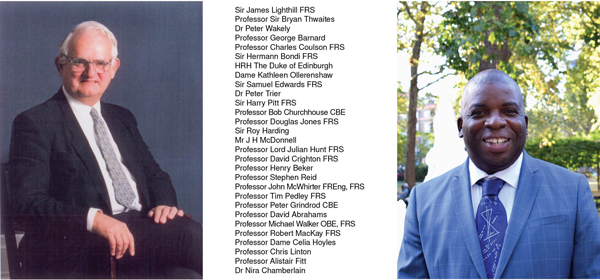
We have had presidents who helped design Concorde and the Thames Barrier. We have had presidents who, during the Second World War, developed strategies against U2 submarines. We have had past presidents who have been government advisers, head of the Met Office, leaders in cybersecurity, data science or signal processing. We have past presidents who mentored future Nobel Prize winners, and also became the president of the OR Society and the Royal Statistical Society. We even had a president married to the Queen! They have ranged from pure mathematics to applied, from academia to industry, from educationalist to directors of start-ups. The IMA, we have had them all – mathematical leaders who led by action and example!
These are not the only diverse mathematicians who inspire me by example and action!
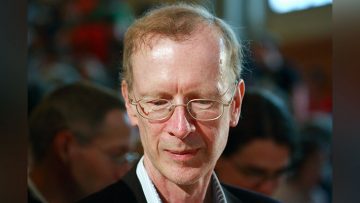
The Japanese mathematicians Goro Shimura and Yutaka Taniyama observed a possible link between two apparently completely distinct branches of mathematics that laid the groundwork for Andrew Wiles to solve Fermat’s last theorem [6].
Dr Snezana Lawrence created the Mathsisgoodforyou website that links mathematics to history (Snezana’s Historical Notes for Black History Month issue is also available online). If we neglect mathematical education, what type of mathematicians do we produce?
Professor Keith Still developed an agent-based simulation to model crowd safety at the annual Hajj pilgrimage.
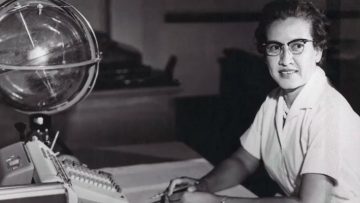
Katherine Johnson was an American mathematician whose calculations of orbital mechanics as a NASA employee were critical to the success of the first and subsequent US crewed space flights. Her story was depicted in the film Hidden Figures [7].
Observing the work of IMA past presidents and these other inspirational role models, I can counter the prosecution argument by saying that when mathematics is strong it makes …
- Science stronger
- Technology stronger
- Engineering stronger
- The economy stronger
With this knowledge and inspirational mathematical role models, in February 2020 I went to a Parliamentary event, STEM for Britain, and said the following to politicians, STEM students, other STEM society presidents and the Vietnamese ambassador!
The Institute of Mathematics and its Applications is a professional learned society whose vision is to enhance a mathematical culture in the United Kingdom and elsewhere.
In light of this, I wish to make the following statement: Mathematics is indisputably the greatest subject in the world!
Why? It is one of the few disciplines that can teach science to scientists, engineering to engineers, technology to technologists and I can go on. Mathematics is everywhere and is the life blood of any modern economy.
Mathematicians in the room, in today’s modern data-driven economy, we are entering the Era of Mathematics! Who among you will be the next Hannah Fry, the next Andrew Wiles, the next Katherine Johnson or Ramanujan! Even more importantly, let today be your first step not your last.
Finally, always let the world know that you are proud to be a mathematician!
The response from both the mathematicians and the non-mathematicians in the audience was very positive. In doing this I confirmed a principle that: How we see ourselves influences others. If mathematicians cannot respect mathematics, then we cannot expect anybody else to respect it.
There will always be critics of mathematics. However, we should welcome challenges. A mathematician must know their value and worth in any arena they enter. Despite what our critics say, we, as mathematicians, must make an impact.
Here are a few examples of where I have made an impact in different arenas using mathematics.
Mathematics is for everybody
I was doing some voluntary work at an inner-city Saturday school, giving a group of 14-year-old boys a mathematics lesson. I started the lesson by saying this (reproduced from [8]):
Nira: Right, class, I am going to start the maths lesson now, but first, just as a warm-up, I am going to give you some questions on long multiplication…
(The class starts to protest.)
Nira: What is wrong?
Class: We cannot do it, sir!
Nira: What do you mean, you cannot do it?
Class: We have never been taught long multiplication.
Nira: What do you mean you have never been taught long multiplication?
Class: We have never been taught it, sir.
Nira: But in 18 months’ time you will be sitting your GCSE in mathematics!
Class: We know sir, but we have not been taught it!
![Figure 3: Nira Chamberlain's long multiplication method [9].](https://ima.org.uk/wp/wp-content/uploads/2021/09/Long-Multiplication-Method-361x412.jpg)
You are not an engineer!
In my first job, I worked for an automotive components research and development centre. I had a great time there, and I am still friends with some of my ex-colleagues to this day. I joined the Department of Advanced Engineering, where my role was to write mathematical simulations to solve complex engineering problems. However, I was the only mathematician out of 20 or so mechanical engineers. One of the comments made to me when I had an idea was that: ‘You are not an engineer!’ Nevertheless, I had my chance to make an impact. One of the engineers designed a novel gerotor, a component to pump oil within a car engine. The shape of the gerotor was derived from taking the derivative of an epicycloid:

The challenge was that at certain angles, there were two solutions. The engineer was confused by this and so just took the average and used this to design the gerotor. This approach actually corrupted the shape and caused the gerotor to stop rotating in the engine rig. After many of the engineers had been asked, I was eventually asked to solve the problem. I found the error in the approach and produced the correct shape for the gerotor [10]. This was seven times more efficient than the solution produced by our main competitor.
Mathematicians hit their peak when they are 21
When I was 30 years old, I worked for an IT company that looked after the software of several major engineering companies. To my dismay, I was not doing much mathematics. When I had a chance to go on a secondment for six weeks to the Netherlands to work for my previous automotive company competitor, I leapt at the opportunity. However, my line manager at the time was not overly keen on me going, saying: ‘Mathematicians hit their peak when they are 21’, i.e. I was too old to be a mathematician and that my mathematical days were over. I still went on my six-week mission.
I was asked to change a finite element code to fit into a Formula One design simulation, which had to solve the Reynolds equation [11]:

However, there were  programs and
  files. I quickly realised that if I tried to do this manually I would make mistakes and run out of time. So, I wrote a computer virus that read the finite element code to translate it into a language that was compatible with the Formula One design simulation. The merger of the two codes was successful and the client went on to win the Formula One Championship. Not bad for an old mathematician aged 30!
Mathematics is the poetry of logical ideas
In my professional mathematical modelling career, I find myself explaining very complex ideas to non-technical people. However, I was very much influenced by the US crime drama Numb3rs [12], where the star of the show, a mathematician, uses analogies to explain complex logical ideas. I thought to myself that is interesting and when I did it, I found that communicating this way is quite effective. One day, I was faced with a situation where I had to explain the optimisation of non-linear equations to save a very important project. I started by telling the story Goldilocks and the Three Bears.
The project was the creation of a mathematical cost capability trade-off model for the HMS Queen Elizabeth at a time when the £6.2 billion project was still at the computer design stage and the first sheet of steel had yet to be cut [13]. Instead of assuming what the solution was, the cost capability trade-off model was expressed as a set of non-linear equations that described the relationship between cost, capability and design. The assumptions were more low level but it and the logical argument that built towards the solution were transparent and challengeable.

My model convinced the client that this prestigious aircraft carrier should indeed be built, as it provided evidence that the running cost for a certain capability was affordable. For this work, I was cited in the Encyclopaedia of Mathematics and Society [14], making me one of only a handful of British mathematicians to receive such an accolade.
Building a powerful mathematical identity
And so, I return back to June 2004 – the 1st IMA Younger Mathematicians’ Conference, where the delegates declared: ‘They would not call themselves a mathematician at a cocktail party.’ Was this the beginning of my quest to ‘build a powerful mathematical identity!’ No, that started a few months earlier. I was driving home late one evening and had the radio on. I was listening to a station that broadcasts to the whole of the West Midlands. This was a late night talk show. On this radio programme, there was a presenter and a co-presenter. To my alarm, this is what I heard:
Co-Presenter: One of the topics tonight is maths. There was a maths teacher at a conference recently who stated that mathematics should not be compulsory for 14 year olds.
Presenter: That is right! Maths is boriiiing!
The presenter really emphasised the ‘ring’ of ‘boring’ by holding the syllable for five seconds. I was not very happy when I heard this. When I arrived home, fifteen minutes later, I obtained the radio station’s phone number and rang up. To my surprise, after introducing myself as a professional mathematician, I went straight on air!
Presenter: On line one, we have Nira. Nira, how can we help you?
I paused for a moment, and then I started, speaking a bit nervously I said:
Nira: The reason why I have phoned is because of what you have been saying about mathematics. I disagree with you. Mathematics should be compulsory for 14 year olds. At that age, as a country, we are mathematically behind countries like France, Germany, Japan and India. I think we should be looking at ways of strengthening mathematics, not weakening it. Mathematics is a beautiful and powerful subject.
Presenter: Whoa, whoa, whoa, Nira! What are you going on about? Mathematics is a beautiful and powerful subject? Come on Nira! Everybody knows that mathematics is boriiiing!
The presenter again emphasised the ring of boring. I considered this as a verbal slap in the face. From this point on I lost all my nervousness. I replied:
Nira: Mathematics is the poetry of logical ideas!
For a moment there was a stunned silence. Then, the presenter countered:
Presenter: Okay, but Nira, tell me why a 14 year old needs mathematics?
Nira: Doing mathematics you acquire the skills of speed, accuracy and understanding. You also acquire skills such as strategy and organisation for everyday use. If you are talking about not making mathematics compulsory for 14 years olds, you might as well not make English compulsory as well!
Presenter: No, no, no, Nira! We need English! We do not need maths!
Nira: Oh, yeah? So, tell me something. How do you make a cup of tea?

There was a pause. (For an example of maths in tea see last year’s early career competition winning article [15]). Then the presenter avoided the question by saying:
Presenter: But, Nira, why do we need mathematics?
Nira: Mathematics is one of the few scientific subjects that can be described as an art form. Studying mathematics is almost like playing a sport. It is one of the few subjects that teaches geography to geographers, biology to biologists, engineering to engineers, economics to economists, etc.
Presenter: Okay, okay, Nira, I give you that! Mathematics is not boring; it is the teachers that make it boring! But answer me this, why does a 14 year old need mathematics?
Nira: Let’s say, you are driving a car and all of a sudden you see a ball roll out in front of you followed by a child …
Presenter: Whoa, whoa, whoa, Nira! I have to stop you there! I just have to stop you there! I agree that you use mathematics in speed, braking distances and angles! But there is no way you take out a calculator when you about to run a child over in your car!
Nira: No, you don’t use a calculator! But teaching a 14-year-old child mathematics, at that age, enhances their natural mathematical abilities!
Stunned silence. Then I heard the co-presenter whisper to the presenter: ‘He’s highly educated.’ A bit of a pause, then the presenter spoke to me in a calmer and slower manner.
Presenter: Nira, what do you do?
Nira: I am a Chartered Mathematician.
Presenter: Educated to what level?
Nira: Masters. (This was before I started the PhD.)
Presenter: And what do you in your job?
Nira: I write mathematical simulation models that solve complex engineering problems.
Presenter: Oh! Well, Nira, thank you for phoning this radio station this evening.
The presenter paused, then continued very slowly.
Presenter: I really am sorry, but I still disagree with you. I can see why mathematics is relevant to somebody like you though. But hey, at least your views have been broadcast right across the West Midlands.
Then to my surprise the presenter said this:
Presenter: Actually, Nira! Congratulations! You are the first person I have ever spoken to who has made mathematics sound sexy!
Nira Chamberlain CMath CSci FIMA
President of the IMA
References
- Chamberlain, N. (2005) Proud to be a mathematician, Graduate Profile, Math. Today, vol. 41, no. 2, pp. 48–49.
- Wolfram, S. (2002) A New Kind of Science, Wolfram Media, Champaign.
- Chamberlain, N. (2013) Extension of the gambler’s ruin problem played over networks, PhD Thesis, Portsmouth University.
- Bond, P. (2018) The Era of Mathematics.
- Booker, C. (2013) Facebook post.
- Singh, S. (1997) Fermat’s Last Theorem, HarperCollins Publishers, New York.
- Shetterly, M.L. (2016) Hidden Figures, William Morrow and Company.
- Rycroft-Smith, L. (2019) Seven questions with … Dr Nira Chamberlain, Cambridge Mathematics.
- Chamberlain, N. (2005) Long multiplication and percentages without a calculator, Mathematics in School, vol. 34, no. 3, pp. 22–23.
- Fabiani, M. et al (1999) Modelling and simulation of gerotor gearing in lubricating oil pumps, SAE Technical Paper 1999-01-0626.
- Gustafsson, T. et al. (2015) Nonlinear Reynolds equation for hydrodynamic lubrication, Appl. Math. Modell., vol. 39, no. 17, pp. 5299–5309.
- Delvin, K. and Lorden, G. (2007) Numbers Behind Numb3rs: Solving Crime with Mathematics, Plume, New York.
- Matthews, V. (2016) Top UK scientist on ‘the beauty of maths’, The Telegraph.
- Greenwald, S.J. (2012) Encyclopedia of Mathematics and Society, Salem Press, Pasadena.
- Panconi, L. (2020) A mathematician’s guide to the perfect mug of tea, Mathematics Today, vol. 56, no. 6, pp. 232–234.
Reproduced from Mathematics Today, October 2021
Download the article, Presidential Address: Building a Powerful Mathematical Identity! (pdf)
Or view on YouTube.