I recognise the privilege associated with being the editor of Mathematics Today. I’m also acutely aware of the responsibility that comes with the role. I feel a responsibility to the Institute of Mathematics and its Applications, to be a considerate temporary custodian of a key mechanism by which the Institute promotes its message, both internally and externally. I feel a responsibility to those who submit articles and other content for potential publication, to ensure their efforts are recognised and respected, whilst also upholding the standard of the publication: there’s always a feeling of regret and sorrow when an item has to be rejected (often because it’s not suitable for Mathematics Today, rather than because it is of poor quality); conversely, it’s always a joy when something is accepted, especially when the author and reviewer have worked diligently and cooperatively to make it suitable for publication. I also feel a responsibility to the readership of Mathematics Today, especially Institute members, to provide something that entertains and informs, whilst also promoting our subject. None of those responsibilities rests lightly on me.
Obviously, there is a link between being editor and writing editorials. So, it’s no surprise that I have the same feelings of privilege and responsibility as I draft this text. You might have thought that the more editorials I write the easier the process becomes. Unfortunately, it doesn’t feel like that! In particular, there’s the challenge of trying to find something new and interesting to say. The more I try to do this, the greater the respect I have for those who have regularly contributed content to Mathematics Today.
Reaching back into our history, I fondly remember View from the Pennines, which I believe ran for an incredible 50 articles, as well as inspiring the title for the multi-author Urban Maths series. Through the years I’ve also been amused, challenged, educated and very occasionally infuriated by A Doctor Writes, which is, I think, exactly what that sort of content ought to do. Historical Notes has taught me a lot about our subject and the many people that have helped make it great. And, somewhat more recently I’ve been astounded by the breadth of topics included in Westward Ho! To all those who produce, or have produced, regular content for Mathematics Today, I salute you.
The last editorial I wrote was for the December 2022 issue, which made the choice of topic rather easy. Just in case you’ve forgotten (and with apologies if you’ve deliberately wiped it from your memory) that editorial centred around mathematical Christmas cracker jokes. This time round I have, with considerable trepidation, chosen a more ambitious topic, specifically, what it means to be human.
It could be argued that creativity, especially in the arts, defines the essence of humanity. Proponents of this argument might point to a wonderful symphony by Beethoven, a glorious painting by Picasso or an inspiring building by Frank Lloyd Wright.

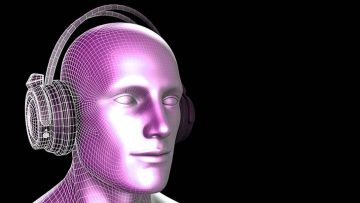
Whilst I have some sympathy with this view, I think recent progress in Artificial Intelligence (AI) means it needs refining, if not completely rethinking. For example, we now have AI that can convincingly answer questions, write articles, produce art and do many other things. Of course, ‘convincingly’ is a somewhat subjective judgement and I’m not enough of a specialist to pronounce informed judgement in any of these areas. So, I could be overstating things.
However, if the majority of people cannot tell the difference between AI-created works and ones produced by humans, then even if experts can reliably make the distinction, I’d suggest the majority vote wins (and, given the nature of the test that bears his name, I suspect Alan Turing might agree). That would mean creativity is not a uniquely defining human characteristic.
Another perspective on what it means to be human comes from, perhaps, an unexpected source, namely Dave Rensin who was (and maybe still is) a director of Site Reliability Engineering (SRE) at Google. Paraphrasing a small part of a presentation on this subject [1], Dave hypothesises that the nature of being human is to make well-intentioned mistakes.
From an SRE perspective, this means that aiming for 100% uptime is, in a very real sense, inhuman. There are also other arguments as to why a 100% target isn’t the best approach: for example, because once a certain level of reliability has been reached, customers perceive no benefit from extra reliability and the supplier pays an increasing cost as the magical 100% is approached. Equivalently, this means that SRE comes with an acceptable amount of downtime, the precise amount of which differs depending on the nature of the service being provided.
Treating allowable downtime as an error budget helps achieve balance between maintenance activities to increase reliability and activities to introduce new features. More directly, the error budget and the associated well-intentioned errors provide an explicit opportunity to learn.
I like lots of the arguments that Dave puts forward. I also really like the way that he brings a human face to the specialism of SRE, which we all depend on, yet, I suspect, comparatively few of us think about. However, returning to my theme, if making errors and learning from them is a human characteristic then I don’t think it’s a uniquely human one. This is exactly the process that is used to develop (or, if you prefer, train) AI implementations.
Of course, that learning is done against defined objectives and there are plenty of examples, fictitious and otherwise, of poorly constructed objectives leading to undesirable behaviour, including the case where the world drowns in paperclips [2]. So, perhaps the thing that sets humans apart is our ability to understand context and to see the wider picture. There may be something in this argument but, on balance, I think that the growing performance of AI in situations, typically games, of ever increasing complexity means it is unlikely to be a compelling argument, especially in the not too distant future.
I said earlier that I was approaching this topic with trepidation and I’m sure that professional (and amateur) philosophers will find much to criticise within my argument. Regardless, I have the privilege of being able to state it and I will, very shortly, do so.
Astute readers will no doubt note that much of the preceding discussion is based on the capabilities of AI. I would argue, and I think the term itself supports this argument, that we are building AI in our own image. More directly, I think the very nature of humanity is what underpins AI, which at its core is just a series of simple calculations, mainly multiplications and additions. I would go further to suggest that, in a general sense, the underpinnings of AI are something that everyone does, regardless of their role in society and their feelings about our subject. Consequently, I humbly submit that: to be human is to use mathematics.
Rob Ashmore CMath CSci FIMA
Defence Science and Technology Laboratory
Crown Copyright © 2023 Dstl. This information is licensed under the Open Government Licence v3.
The views and opinions expressed herein are those of the author and do not necessarily reflect those of the Defence Science and Technology Laboratory.
References
- Rensin, D. (2018) Less risk through greater humanity, CernerEng.
- Bostrom, N. (2003) Ethical issues in advanced artificial intelligence.
Reproduced from Mathematics Today, June 2023
Download the article, What it Means to be Human (pdf)