The Christopher Zeeman Medal is awarded every two years by the IMA and LMS in honour of Professor Sir Christopher Zeeman FRS, who presented the first award. The award was created to recognise and acknowledge the contributions of mathematicians involved in promoting mathematics to the public. Thereby demonstrating that such activities are a valuable part of a mathematician’s roles and responsibilities.
Christopher was both an outstanding mathematician and a highly engaging and accomplished presenter. Indeed, in 1978 Christopher became the first mathematician to deliver the Royal Institution’s Christmas Lectures. All previous winners of the award – from 2008–2016: Ian Stewart, John Barrow, Marcus du Sautoy, Rob Eastaway – have made very significant contributions to promoting mathematics to the public. But they have done far more than just increasing public awareness and interest in mathematics – they have also improved the public’s perception, appreciation and understanding of mathematics.
So who could possibly follow in the footsteps of such inspirational communicators of mathematics to receive this award for ‘Excellence in the promotion of mathematics to the public or engagement with the public in mathematics in the UK’?
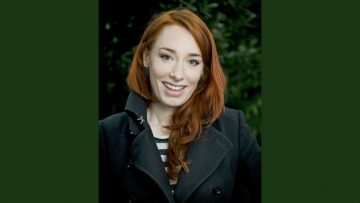
Step forward Dr Hannah Fry – an inspiration to those of us fortunate enough to see Hannah give her outstanding lecture, but also to millions through her many and varied high-profile activities.
Hannah’s immense contributions to the public understanding of mathematics, including its relationship with, and importance to, science, society, and the planet, are unparalleled. She is the most brilliant of communicators of mathematics – any audience, any age. It is difficult to imagine anyone not being mesmerised by her clear, engaging exposition.
Hannah’s citation says (see Hannah Fry is awarded 2018 Christopher Zeeman Medal),
Besides her mathematical research, she has a sustained and distinguished record of communicating mathematics to the public, with a huge portfolio of public engagement activities including books, videos, radio, TV, and public talks, which between them reach vast audiences.
She has that very rare quality of being able to take the maths to her audience, and she is able to do this with great conviction through examples from her own research in mathematical modelling of urban and social systems, all of which appeals to a wide audience. By reaching out to audiences in this way Hannah is able to make mathematics feel more relevant and more human. Her trump card is humour, always in abundance in most of what she does, and her lecture was no exception.
Hannah began her lecture by telling us how previous winners had inspired her as she was growing up and becoming ever more interested in mathematics, and computers. She explained that at first sight mathematics doesn’t have the ‘awe and wonder’ that other subjects have, such as physics with the Higgs boson, black holes, etc. Mathematicians often seem ‘reluctant to step outside of the subject and show its awe and wonder’ – we must ‘step outside and invite others in’.
Hannah’s lecture was full of fascinating facts and insights across a very wide range of topics – from pigeon outliers, through riots, cows wearing pedometers, Bach cantatas, dementia, to pink sheep and nuns, and much else besides, concluding with radiologists not seeing a picture of a gorilla on a CT scan!
So, what relates this seemingly disconnected set of topics that Hannah spoke about? In short – humans and machines: their relationship, how we can make the best of our ability to give insight, weigh up the evidence, take a balanced view to make a judgment; complemented by the ability of machines and their algorithms to process vast amounts of data, with their sheer power and speed.
Through a series of examples Hannah demonstrated how the creation of such strong relationships, and an understanding of the strengths and weaknesses of each, can work to good effect and that without this there can be disastrous consequences.
One of the more serious examples was on the safety of a nuclear power plant. While you would want a machine to monitor all outputs by collecting, processing and analysing data, if the machine gave an alarm signal you would want a human making an evidence-based decision about what action is taken.
Hannah explained that care is needed when taking many decisions, like those that occur in medicine, because some decisions are a matter of life and death, or at least may have life-changing consequences. She summarised this very neatly as sensitivity versus specifics, each represented by a dial that can be turned, but where the dials cannot be operated independently. Wherever one sets the dial on the sensitivity scale will have an impact on the specificity, and vice versa, and that is where the human element comes in. She gave the example of breast cancer screening – it needs to be sensitive enough to pick up on the abnormalities present in all the breasts that have tumours, without missing any pixels in the image with tumorous tissue and reporting that these are clear. On the other hand, it needs to be specific enough not to flag perfectly normal breast tissue as suspicious. This can be compared to hypothesis testing in statistics and the concept of false positives (Type I errors) and false negatives (Type II errors). A false positive occurs when the algorithm incorrectly identifies a healthy woman as having breast cancer – it is too sensitive; while a false negative occurs when the algorithm incorrectly identifies a woman with tumours as being healthy – it is not specific enough.
In the field of crime and justice, an algorithm can be used to decide whether or not a person convicted of a crime should be given parole by ‘predicting’ how likely they are to commit a further crime, e.g. homicide. They can also be used when determining lengths of sentence for convicted criminals. Hannah asked the audience whether we would trust an algorithm over a jury/judge (human) in determining whether or not we were guilty of a crime, or how long our sentence should be if we were convicted of a crime. Most opted for the human! Ultimately, it has to be a balance – the algorithm can only do so much and human input is needed too, not least because they can take a holistic view and will be able to add an element of emotional intelligence into the decision-making process, which an algorithm is unable to do.

On the lighter side, Hannah talked about image recognition and machine learning algorithms – they can recognise objects in pictures and understand words as we speak them and translate from one language to another, i.e. from images to text. The second most amusing part of the lecture for us was when Hannah showed a picture with a group of pink flowers growing through grass, which was interpreted by the algorithm as ‘a pink sheep in a field’. First place went to the picture of a sheep on stairs which was recognised by the algorithm as ‘a cat sat on a fence’!
Hannah also played two clips of music – one was an authentic Bach cantata, and the other generated by David Cope’s algorithm Experiments in Musical Intelligence (EMI), which has some similarities to predictive text algorithms on a smartphone, with the ‘dictionary’ comprising a sophisticated library of data determined from much of Bach’s musical works. The audience were invited to identify which was the authentic piece – the result was a split decision, but fortunately the authors made the correct identification. Hannah invited us to decide whether ‘the Bach was worse than the byte’!
You can find out much more about these examples, and many more, from Hannah’s truly excellent book – Hello World [1].
We have already alluded to the first take-home message from the lecture – it is our duty to find out ‘where our audience is’ and ‘take the mathematics to them’ – they are likely to be more interested, eager to engage and learn more, and to have a better appreciation and understanding of what mathematics is, how it relates to and benefits them, and what it can do for us all.
The second take-home message is more of a guiding principle for the future as the role of data science and AI become more prevalent. While humans can create ever-more sophisticated algorithms to analyse the data, we should not make critical decisions using the output alone – it must be balanced with human judgement. As Hannah put it so succinctly ‘humans and machines are rubbish in different ways – we should understand the weaknesses and strengths of both, embrace the flaws, and exploit each other’s strengths’.
Hannah’s lecture was so well-received that the applause lasted longer than any ovation that we have ever witnessed at any event – mathematics or otherwise – and was a very fitting end to a wonderful event. Unless we’re much mistaken, we think Hannah was genuinely taken aback by the audience’s reception.
Hannah’s citation concluded:
Hannah Fry is a truly outstanding ambassador for mathematics and it is fitting that she is awarded this prize in acknowledgment of her remarkable impact.
No one can argue about the impact she has made through her engagement with millions of people, now being more enthusiastic, knowledgeable, and inspired by mathematics, and we should celebrate this. But what is equally true and should not be overlooked, is that Hannah is the most generous, warm, friendly (and humorous!) person you could ever wish to meet. We are sure that Christopher would have been as pleased and proud as we all are that Hannah was awarded the 2018 Zeeman Medal.
Paul Glaister CMath CSci FIMA and Elizabeth M Glaister
University of Reading and Kendrick School, Reading
References
- Fry, H. (2018) Hello World: How to be Human in the Age of the Machine, Doubleday.
Reproduced from Mathematics Today, June 2019
Download the article, Hannah Fry on Riots, Bach Cantatas and Pink Sheep (pdf)