
One of the joys of mathematics is that it does not rely on physical strength, speed or dexterity and there are few requirements for equipment. It rewards the logical thinker; providing a home for both the person who likes quiet introverted reflection on details and the extrovert who wants to be part of an exuberant research group.
On this page you will find a wealth of interviews, stories, hints and tips from members of the mathematical community.
You can also find out about the IMA’s involvement in the STEMM Disability Advisory Committee.
Professor Alan Champneys FIMA talks about Depression
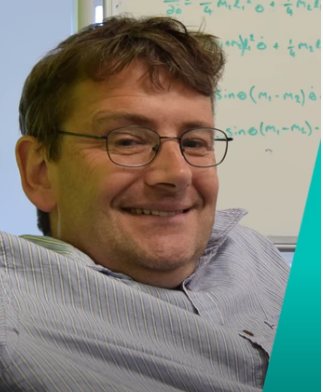 As part of the University of Bristol’s #timetotalk initiative, IMA Fellow Alan Champneys told his story in this wonderful YouTube video about his experiences with Depression and Imposter Syndrome.
Watch Alan’s video on YouTube.
We asked Alan to tell us more about his experiences.
You have an incredible career, do you think this comes with particular pressures?
Real pressure and stress in my experience is often hard to spot in others. We all experience it differently. I do recognise that I frequently put myself into situations way outside my comfort zone. This is how I learn and where creativity comes. But it also exacerbates my natural inclination to experience the imposter syndrome. I also note that getting involved in a lot of things can be part of my own cognitive distortion that if I can’t be ‘clever enough’ to compete then I can succeed by doing more.
Do you think mathematicians experience different aspects of depression or stress, compared to other academics?
I feel there are particular risk factors for mathematicians. First, mathematics is unique among the sciences that there is the absolute concept of right or wrong answers. It is easy to beat oneself up as being incorrect or stupid and yet the fundamental state of a mathematician who is currently engaged with research is ‘stuck’. Then, unfortunately parts of the mathematical sciences are remarkably elitist.
What can academia do to help?
A more diverse community would help and engaging more in active bystander training, then those at a more senior level, can call out such unhelpful elitist behaviour. We need to recognise, that even in the mathematical sciences, the academic endeavour is mostly a team sport. In the system of academic promotion and reward we need to genuinely reward team players.
Is there anything you personally find particularly helpful?
Personally, I am a huge fan of talking therapies. The cumulative effect of being able to shine a light on what is really going on, learning to identify unhelpful thought patterns without being obsessed by them has been invaluable to me. I have been lucky to have had access to workplace, NHS and private counselling.
To me, recovery from depressive episodes is all about maintaining a balance. I have to mentally and physically step back, but not totally disengage. I have discovered, given that work is the main cause of my episodes of depression, surprisingly that stepping away completely is not the right approach.
Does it help to feel part of a community of mathematicians?
I have found it amazing, since I have gone on record as having had my issues over the years with clinical depression, when other mathematical scientists have been able to open up to me about their own personal experiences. We are all different, and I find it so helpful to realise it is not about a bunch of people who ‘get it all the time’ and me who doesn’t, but in fact that most of us are muddling through.
Have you found your interactions (or any benefits) with the IMA helpful? What could the IMA do more of to help?
One of the things I really like about the IMA, compared with other organisations I have been involved with in the mathematical sciences, is its inclusivity. There is no boundary within the organisation between academic mathematicians and those who practise or teach mathematics in the real world.
I believe the IMA already does a good job, but could do even more in promoting examples of mathematical scientists who have varied career paths. There are numerous examples of people who retrained in mathematics later in life, or have used their fundamental mathematics expertise to make a real difference in some other domain.
We also need to avoid the notion that only those who have an amazing mathematical pedigree should be celebrated, see my Westward Ho! feature on Oliver Heaviside for an excellent example.
An Interview with Amy Bishop, Computational Scientist
Amy presented at the IMA’s Employers Forum on Employability, Diversity and Inclusivity, held at EDF Energy in November 2017. She talked about having both visible (being a powered wheelchair user) and invisible (eg Dyslexia and Chronic Fatigue) impairments. Here we catch up with Amy to find out more.
What attracted you to mathematics?
From a very young age, I always liked maths both in and out of school. I enjoyed both the logical nature of the subject and also the problem-solving side. As I got older, I became more aware of the wide range of topics maths can be applied to and there was never a question that I wouldn’t study mathematics at university. University maths allowed me to work out what area I wanted to go into, for me it was always going to be some form of applied maths.
 What kind of mathematical applications do you work on?
Since leaving university I’ve worked as a computational scientist. In recent years, most of my work has been developing and maintaining codes. Even fixing code bugs or adding a new feature I enjoy; it involves similar problem solving and lateral thinking skills to doing maths research. Being dyslexic, I can use my visual thinking abilities to my advantage in both the maths and the computer coding.
Your presentation talked about the importance of the Social Model of Disability; can you tell us more?
In addition to being dyslexic, I’m a powered wheelchair user and have quite complex health needs that have varied a lot over my years in employment. I’m a big advocate of the Social Model of Disability. The model says that people aren’t disabled by something that is considered wrong with them, but by society, the way we organise ourselves, the attitudes we hold, the environments we build and the policies we write. When you look at disability from that angle, what matters is the barriers to work, not what impairment, health or neurodivergent condition you might happen to have. When we apply social model thinking to policies, ways of working, buildings and so on, quite often the changes we make benefit everyone, not just disabled people.
What reasonable adjustments have helped at work?
It’s easy to forget that reasonable adjustments are not just about equipment. Through the government’s Access to Work scheme I have had various equipment funded but of equal importance have been adjustments to the ‘normal’ ways of working. For many years I have completed part of my working week at home and I also work very flexibly, to the benefit of my employer as well as myself. It’s also important to remember that reasonable adjustments aren’t static. For example, if you move role, change project, move to a new office, have a change of management, adjustments may need to be changed.
What about returning to work after long-term sickness absence?
I have had a couple of periods of long-term absence, the most recent being a significant part of 2019. It’s really important after a long period off that you have a phased return. I also had the support of occupational health, my medical professionals and my line manager, all three were essential. I was able to use Access to Work for some adaptions to equipment and I was given the time in work to re-familiarise myself with the work I’d been doing before I was off. It was helpful to have targets, but not major deadlines. The return to work is rarely smooth, especially if you’ve had several months or more off.
How do you find accessibility at conferences?
Often people make assumptions that getting to a conference away from work might be too much of a challenge and so sometimes invites aren’t made (an example of a societal attitude disabling people).
Conferences can be really hard work as they take you outside your normal routine but with planning are usually doable. All conferences should ask delegates if they have any access needs at the sign-up stage.
I find if they’re relatively short (no more than 3 or maybe 4 days) I can push through but I have to take time beforehand and afterwards to rest more than usual. For conferences away from the workplace, I’m also likely to request to stay in a hotel. Not having to commute makes a big difference to my ability to participate fully. For me, the best conferences are those where my hotel is in the same location.
For people with a wide variety of impairments and conditions, a quiet room can be really important. For example, for physical and mental fatigue, chronic pain, or for sensory overload, time out away from a bustling conference can make the difference between someone making it through the day or not.
Being dyslexic, something as simple as any papers being printed on yellow or pink paper, can make a difference to my ability to make the most of a conference.
Jenny Macey CMath FIMA, talks about mathematics, Eczema and Allergies
Why Mathematics?
I found mathematics was a subject that I could study wherever I was – in class, at home ill, or on a hospital ward. Where other subjects required class discussion, equipment, supplies or chemicals; all I needed for maths was my textbook, paper and pen. A world of logic, puzzles, concentration and escapism awaited me.
How do you find the mathematics community?
I have found mathematicians incredibly accepting; they don’t mind that I look different, they cared about me when I was ill, and my maths colleagues helped me to find projects that I could continue working on through periods of long-term ill-health.
How did you find education, your undergraduate and postgraduate degrees?
Schools and Universities have worked hard to provide reasonable adjustments and improve their accessibility. When I attended school and university the top achievers had a range of conditions: deaf, ASD, OCD, Disability, Epilepsy, and Diabetes.
Who have you drawn inspiration from?
I worked hard and was inspired and encouraged by my teachers, tutors and lecturers. IMA members, such as the late and much missed Edward Stansfield, inspired me with their infectious enthusiasm and incredible kindness.
Did you have problems finding a job?
I was very lucky to be awarded an undergraduate scholarship with work experience each summer which later grew into a funded PhD. This gave me an opportunity to prove my ability and dedication in the workplace. I have been thrilled to work full-time for them for many years now. I feel (as many in the D&N community do) an intense sense of loyalty to my employers as they have given me this opportunity to work.
I strongly encourage all students to look for opportunities such as work experience, internships or summer placements. Companies like the IMA’s Corporate Affiliates and workshops like those run by Erica Tyson, the IMA University liaison officer, are great places to start.
What Reasonable adjustments do you have?
Reasonable adjustments for me have included special keyboards and mice, special chairs, moving to a cooler office, being able to work from home when my health is poor. Being able to talk to my managers has meant I always felt supported.
What about returning to work after long-term sickness absence?
I had been so busy dealing with my physical recovery that psychologically returning to so called “normality” was like opening the floodgates. Lessons I learnt – ask for help and trust your colleagues. Also don’t be afraid to ask for a change, I opted for a secondment and this led to the role I do now.
How do you find accessibility with conferences?
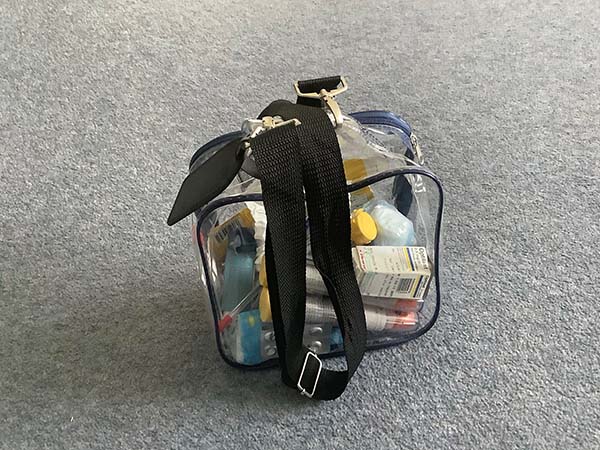
I have severe allergies and carry EpiPens to treat anaphylaxis, therefore you might think that travel was out-of-bounds. Not at all, thanks to the incredible hard work of conference organisers and colleagues I have been privileged to travel to the US, Italy, Czech Republic and France. This has been achieved by a mixture of: agreeing menus in advance, organisers helping to translate and giving me their mobile numbers to ring for help, carrying dried foods in my suitcase, and self-catering. It never ceases to surprise me the extent to which organisers go to help me. In return I ensure I have a comprehensive diet sheet, a list of foods I am allowed, provide a list of suggested meals and give advice to avoid cross-contamination.
Tell us about your involvement with the IMA
The IMA have supported me throughout my career and through every stage of my professional development. That is why I enjoy volunteering for them as a Councillor, PAC member and Diversity Champion, I like to feel I can give something back.
Dame Kathleen Ollerenshaw, IMA President 1978-1979
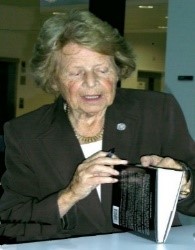 Dame Kathleen Ollerenshaw was a founding Fellow of the IMA and our president between 1978-1979. She overcame many adversities to make outstanding contributions to mathematics and society. Despite being deaf since the age of eight, Dame Kathleen learnt to lip read and excelled in mathematics. She reached 101 years of age and even after losing her sight she still found ways of enlarging and lighting material for reading and writing.
Read the article: ‘Women’s History Month’
Tilak Ratnanather and STEMM-HEAR
Associate Research Professor Tilak Ratnanather works at Johns Hopkins University as a faculty member within the Institute for Computational Medicine (ICM), in the Mathematical Analysis of Neuroimaging of the cerebral Brain laboratory. In 2015 he was awarded the Presidential Award for Excellence in Science, Mathematics, and Engineering Mentoring (PAESMEM) by President Obama. His research focuses on the analysis of brain structures which include the hippocampus and the auditory and prefrontal cortices, investigating how these structures are implicated in disorders such as schizophrenia, Alzheimer’s and speech and language processing. Mathematical studies include the physiological fluid mechanics of the cochlear outer hair cell, and the study of nonlinear partial differential equations (e.g. EPDiff in Computational Anatomy, boundary layer separation in physiological flows).
As an alumnus of Mary Hare School in Berkshire, University College London and Oxford, Tilak has devoted himself to mentoring an unprecedented number of deaf and hard-of-hearing (HOH) individuals in the UK and the United States into STEM fields. Since the early 2000s he has worked to form an extensive and involved network, allowing his protégés to serve as mentors in turn. In 2018 he helped form STEMM-HEAR providing Internships for 5 students with hearing loss at Johns Hopkins.
Joint author of over seventy articles (as cited on Google scholar), he and his co-authors received the Farrington Daniels Award for the best publication in Medical Physics in 2012 for “Effects of protocol and obesity on dose conversion factors in adult body CT.“.
Tilak suggests visiting the Connect Hear website for the most up to date advice for accessibility regarding classroom, laboratory, meetings and conferences.
Read Tilak’s article: ‘Accessible Mathematics for People with Hearing Loss at Colleges and Universities’.
An Interview with Ken O’Neill – including his work with mathematical terms in British Sign Language and his role as a Government Statistician
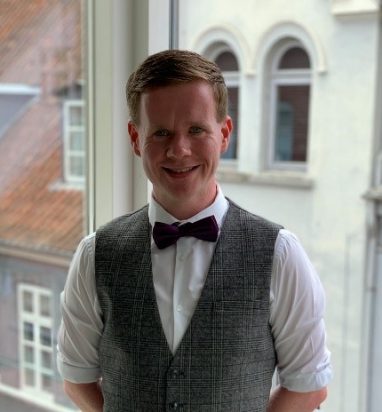 In 2015, The IMA (together with the EMS and LMS) were proud to award a Small Grant to IMA Member Ken O’Neill and colleagues to continue work to define and film more mathematical terms and concepts in British Sign Language.
Read the article: ‘Maths Terms for British Sign Language’ (pdf)
In 2015 Ken was the subject of this excellent article, ‘Disability as a difference of perspective’
We contacted Ken to learn more and get an update on his career.
What attracted you to maths?
Good question, I’m sure my answer is similar to most people’s, for example we do use it every day, it is challenging and enjoyable etc. However, I have another answer that is unique to D/deaf* people: I experienced both “assumption” and “communication” barriers in school. Hearing teachers tend to have little understanding of the broad impact of deafness and how to meet the needs of D/deaf children. Furthermore, D/deaf people usually have poor access to English, especially in education. For me, maths is a kind of visual language, and since I am a BSL speaker, I found it easier to dive in and learn different mathematical topics on my own without having to rely on both teachers and lecturers too much. When I was doing SQA Advanced Higher at school, that was when I started to really enjoy maths and so I decided to apply for a maths degree.
Can you tell us about your PHD?
Coagulation and fragmentation processes are ubiquitous in nature and can often be found to lie at the heart of technological processes. Here by coagulation we mean the aggregation of smaller units of matter to create larger units. These units of matter can be objects as different as polymer, molecules, clay particles, red blood cells or planetoids. Fragmentation processes are processes by which particles fall apart into smaller units.
In my thesis, we developed theoretical approaches that were used to investigate the nucleation and growth of islands (clusters of monomers). We used rigorous and novel mathematical techniques to obtain results on the asymptotic behaviour of the point island size distribution and the distribution of gaps between islands. The results predicted by our approach were then compared to kinetic Monte Carlo simulation data.
Can you tell us about your work in an executive agency of the Scottish government?
Recently I have had a bit of a career change. Since February 2019, I am the Lead Official for Statistics at Accountant in Bankruptcy (AiB), an executive agency of Scottish Government and I am responsible for the production of statistical outputs, compliance with the Code of Practice for Statistics and statistical legislation within AiB.
My broad duties are: To process, analyse and publish quarterly and annual statistics reports; To provide effective, influential and high-quality statistical analysis evidence and advice for AiB and wider internal & external stakeholders. As at March 2020, while I am still active in my current role, I am working in Scottish Government’s Office of the Chief Economic Adviser on a temporary basis in response to the COVID-19 priorities.
Although I no longer engage in mathematics research, I would like to think that I do remain a mathematician at heart and I am still a member of the IMA. I always ensure that my colleagues and I understand all methodologies we use and that these methodologies are up to international standards. This requires both mathematical and computational thinking as we do use a variety of computer programming languages for data processing and calculations.
BSL links of interest
There are BSL signs for mathematical terms videoed at the Scottish Sensory Centre’s BSL Glossary of Mathematics terms.
Read an interview with Jess Boland, who has also recorded BSL YouTube videos: ‘Mathematical Sign Language – Interview with Dr Jess Boland’
Mungo G. Aitken, PhD student at DAMTP, University of Cambridge
 DAMTP, and Cambridge more generally, is such an incredibly exciting place to be if you’re a researcher. The cross-pollination of ideas means that an informal conversation with somebody who works in an entirely different area of mathematics can raise new questions and push your research in new directions. As somebody whose family is deaf, sometimes I still can’t believe that I’m here. But I am and I’m going to make the most of it.
I’m interested in how acoustic waves are affected by so-called spatial inhomogeneities in solid structures. For example, think of an underwater vehicle. The engine is a source of sound waves which propagate through the hull. Ribs are commonly used to strengthen the hull, which affects the propagation of the waves. These ribs interact with the acoustic waves and so are the spatial inhomogeneities in this context. What I like about this research is that you have to combine several areas of mathematics such as solid mechanics, acoustics and perturbation theory in order to answer interesting research questions.
It would be fantastic to see access broadened not just for people with disabilities like me, but everybody. Given that I’m the first deaf person most people have met, let alone the first deaf mathematician, there is clearly still some way to go. We’ve made a good start though and I want to help contribute to that effort by mentoring up and coming deaf mathematicians.
Accessible Mathematics and Braille
 Here is a useful article from the Royal National Institute of Blind People (RNIB) about how to make mathematics more accessible to students with vision impairment: ‘Making maths more accessible for students with vision impairment’.
For maths signs in Braille using the Unified English Braille Code, see ‘An Introduction to Braille Mathematics. Using UEB and the Nemeth Code’
The Lambda Project is a mathematical computing program for blind students.
Here is an excellent interview with mathematician and IT Specialist Mark Coleman, who kindly agreed to tell us about his varied career. We were put in contact with Mark through the RNIB’s customer involvement group, Connect Voices.
An Interview with Mark Colman, Business Analyst
What led you to mathematics?
By the age of about 13 I’d started to focus in on maths and computing as areas where I was particularly able. I could do a month’s work over the weekend; I feel sorry for my teacher at the time who had to feed this insatiable hunger.
I was fortunate enough to have enough sight to just about manage, with a hand-held magnifier and enlarged A3 worksheets. I do remember one day getting zero on my homework, having copied down the polynomial division problems from the blackboard and discovering too late that I’d actually created my own questions!
Please tell us about your time at Oxford
Oxford was never on my radar. But I had six spaces on my UCAS form and using one for Oxford wouldn’t hurt. Next thing I knew, I was on my first ever train journey and being dropped off at St Hugh’s where I spent 3 days getting lost on the way to various interviews.
Midway through year 2 numerical analysis options were starting to appear, and I got through my degree with a backbone of interpolation, extrapolation, finite elements and numerical linear algebra, tacking on less palatable options where necessary. Being taught by world-renowned academics is both an immense privilege and extremely scary, there’s really no place to hide, so you’re kept on your toes and are all the better for that.
Did you find any adaptations or approaches that particularly helped with studying?
At the time the best we had was meticulously-prepared and typeset lecture notes downloadable as PDF files, from a few of the more forward-thinking lecturers. I somehow managed to take down decent notes from most of my classes, though looking back I was very reliant upon lecturers reading out every word, equation or proof as they chalked it up. My eye condition, I discovered, much preferred white chalk on a blackboard to multi-coloured pens on a white screen.
Please tell us about your time as a teacher
I spent 4 years in the classroom, including a very enjoyable 2 years teaching A-level students. Midway through this, the Retinitis Pigmentosa time bomb went off and my sight went from being on the borderline of being able to drive, to inability to recognise my own face in a mirror (every cloud…) over the space of a few weeks. I made a big mistake here, in not being open with my school about the problem and accessing support through Access to Work. Had I done so, I think I’d have still been teaching. As it is, I decided to move on. In my current role, I have an assistant funded through Access to Work who fills in the gaps left by screen readers and other technologies.
Can you tell us about moving into computing?
I went back to studying, completing a Computing degree, I’m nothing if not consistent! The logic that solving a Maths puzzle teaches you is directly applicable to the construction of computer code which (a) does what you want it to, (b) does so efficiently, and (c) doesn’t go round and round in an infinite loop.
I then worked as a web developer looking after virtual learning environments. With anything online, and particularly involving children, security is always at the forefront, so my previous study of cryptography was invaluable here. At the time, this was a very interesting dual challenge of being constrained by technology and by my own inability to see what the results of my work looked like. In such situations I’m enormously grateful to my colleagues for letting me interrupt them to borrow their eyes. Don’t ever be afraid to ask people for help, it’ll benefit you in the short term and open you up to helping them out in the future, which happens more often than you’d think.
Please tell us about your role as a Business Analyst
For the last couple of years, I’ve been working as a Business Analyst in local government. There are two main aspects to my role. One is very data-driven, looking at often vast data sets (like the million phone calls into and out of our organisation) to find peaks and patterns. I’ve investigated the financial and environmental costs of running courier services across rural areas and showed we should go digital.
The other side of my work is about mapping processes, such as the journey of an older person through the care system, identifying inefficiencies and making things better for the customer along the way. Neither of these use sophisticated mathematics, certainly nothing beyond A-level statistics, but I do believe that my mathematical training in setting down and understanding a problem, examining the available tools and approaches, and applying these in a systematic manner, has been invaluable.
STEMM Disability Advisory Committee
 The IMA are proud to attend the STEMM Disability Advisory Committee; a group of learned societies and academies who recognise the importance of inclusion of disabled people in STEMM education and employment. The Committee realises that to maximise impact it is important that we speak with one clear authoritative evidence led voice. They work to bring about collective action and a strategic approach to reduce or remove common barriers across the sciences. They act as a point of contact and seek to improve policies, practices and provisions. The committee considers both physical and mental disabilities and looks at the whole STEMM pipeline.
STEMM-DAC Resources for Students
Our representative is Emma Cliffe who is Head of the Mathematics Resources Centre at University of Bath, Vice Chair of the SIGMA network, and a Fellow of the IMA. Emma has considerable experience and qualifications in mathematics and education. She has previously worked as a registered needs assessor and in specialist study support for Blind students and students with visual impairments. Her specialist interests are in the technical and practical accessibility of mathematics to students experiencing a print impairment. Emma has registered disability practitioner status and is a Professional Member of the British Dyslexia Association with approved tutor status (ATS FE/HE).
* In this webpage “D/deaf” includes people who are Deaf and Deafblind BSL users, deafened, deafblind and hard of hearing. We use Deaf with a capital “D” to refer to people who have been deaf all their lives, or since before they started to learn to talk, and communicate in British sign language. They are members of the Deaf community with its own culture and sense of identity. Each contributor has chosen to use the terminology they prefer.