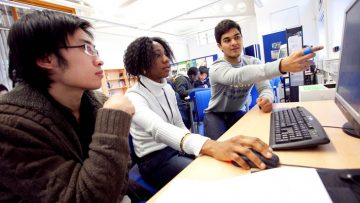
In July 2017 a one-day meeting was held in honour of the late Professor John Blake. Those fortunate enough to know John regard him as one of the first champions of discipline-based teaching and learning. The meeting sought to identify how the mathematical sciences community could continue to work together in an evolving higher education landscape [1].
Only a few years later, that landscape would change drastically, possibly forever, as a consequence of the COVID-19 pandemic. Teaching and learning in the usual way were no longer possible; higher education moved, at least in part, to online learning. With universities now commencing a phased return to their on-campus operations this is an appropriate time to explore what the legacy of COVID-19 might be for higher education.
A survey of mathematical sciences departments, launched in December 2020, explored changes to teaching and learning necessitated by the pandemic restrictions. Overall, those departments who responded represent around two-thirds of students studying in the mathematical sciences within the UK. Respondents identified two key areas where they would like to see the changes to practice continue: the delivery of core mathematical content, and the assessment of student learning. These form the focus of our editorial.
During the pandemic, social distancing restrictions drastically limited lecture theatre capacity and rendered traditional large lectures impossible. Our survey indicates that the dominant delivery method for new content changed in 2020/21 to the online release of pre-recorded lecture-based material. The teaching of fully online mathematics courses has traditionally primarily been asynchronous [2], so the fact that many departments opted for some form of asynchronous delivery was not unexpected. Its use affords learners the flexibility to balance their studies with other commitments, which was particularly important during the pandemic.
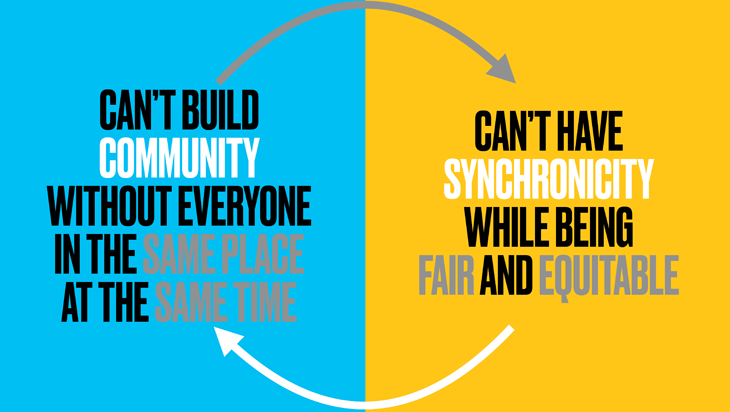
Almost two-thirds of departments also indicated that at least some modules utilised synchronous online lectures, with a third of all responding departments indicating that most, if not all, modules do so. This raises an interesting question as to whether there should be a greater use of synchronous instruction in online courses.
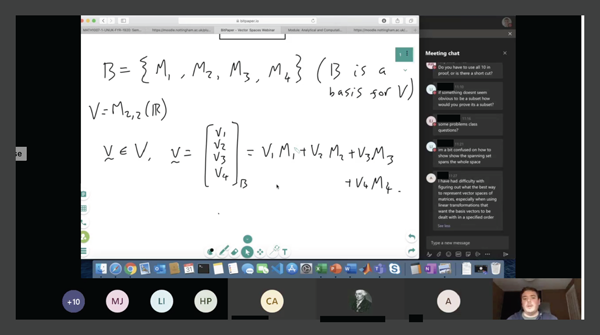
If greater use is to be made of synchronous online delivery, work is needed by departments to help students understand how to use it effectively. Many of us will be all too familiar with the lack of visibility, and indeed audibility, of students during synchronous sessions and this was a concern noted in our survey. The use of ‘chat’ facilities or online polls should not blind us to the importance of meaningful mathematical dialogue.
Just under a half of respondents to the survey indicated an intention to implement ‘blended’ or ‘hybrid’ learning across their modules. Some went further indicating a desire to incorporate a ‘flipped classroom’ approach. Here basic course content is presented outside of the classroom possibly via asynchronous videos. Class time is then devoted to higher-order skills. This offers interesting pedagogic possibilities for delivery, but at the same time we must never lose sight of the value of the in-person lecture [3]. A related concern noted by both staff and students was that a reliance upon online delivery could undermine the sense of belonging that a face-to-face learning community encourages.
We now turn to assessment within the mathematical sciences. Unsurprisingly, at the time of the survey, all departments who responded on assessment expected this to take place online. This is of great interest since on-campus, closed-book, invigilated examinations have long been the dominant form of assessment in our departments. In an online world, students were typically required to complete, and upload, a written assessment that was released in an open-book format.
A key decision when modifying an assessment for open-book delivery concerns the time allocated to students for its completion. Too short and students may experience technical difficulties that impact their ability to upload answers, too long and there are concerns for student well-being as they spend much longer than advised trying to perfect their solutions. Our survey indicates a range of timescales were used. The most common approach was that classified as the ‘short release’ format, whereby students had a similar amount of time to write solutions as they would in a proctored, on-campus examination, plus a period (usually 20–60 minutes) for upload. However, over half of departments used a longer-release format, allowing between six and 48 hours to complete the whole process.
Perhaps the most concerning findings from our survey were the reported issues of academic misconduct by students in relation to their assessments. Quite significant instances were mentioned in responses; several respondents linked these issues to the time students had available to complete their assessments. It is helpful here to consider what we mean by the term ‘academic integrity’ in relation to open-book assessment; it exists as a spectrum of issues, each of increasing severity and with somewhat blurred boundaries:
a) Poor academic practice – for example inadequate referencing;
b) Collusion – the inappropriate discussion of answers with another student;
c) Plagiarism – submitting work of another as their own;
d) Contract cheating – a student paying another to complete work on their behalf.
Points (a) and (b) can be addressed through better educating students as to what is acceptable. After all, but for examinations we freely encourage our students to find information online and discuss their mathematical learning with others. Points (c) and (d), however, pose the greatest concerns since they represent a deliberate and considered act to circumvent the fair assessment process. Cases of contract cheating are known to have increased markedly within the STEM subjects during the pandemic because of the widespread availability of so-called ‘assessment support websites’ [4]. Even short-release assessments are not immune as answers can often be obtained in under an hour.
The uncertainty as to whether the work submitted by a student is their own raises fundamental concerns about the integrity of any assessment process. This and concerns surrounding widening inequality have led the IMA, RSS and LMS to release a joint statement on this issue [5] especially as there appears to be an increased desire within universities to move away from traditional on-campus examinations. Further, now that student awareness of these ‘assessment support websites’ exists, we need to be mindful of their potential for use even within lower stakes summative assessments like problem sheets.
If the issues of academic integrity can be successfully overcome, open-book assessments may provide a better discriminator between students [6]. Assessing higher-order skills in mathematics encourages students to take a deeper approach to their learning and open-book assessments allow this testing to take place in a non-pressured way. Respondents to our survey thought that removing the time pressure encouraged students to focus upon learning more deeply, with several looking to continue to set assessments that required genuine understanding and higher-order mathematical skills.
Beyond content delivery and assessment, we should consider the academic support provided to students outside of scheduled teaching sessions. Over many years mathematics and statistics support has been one important mechanism and the sigma Network continues as an ever-growing community of practice. Mathematics support is now widely available to learners, however pre-pandemic it was rarely offered online and very few institutions had plans in place to do so [7]. Consequently, the number of students accessing mathematics and statistics support services during the pandemic fell substantially below that seen in more normal times [7].
This highlights an important issue. There will be many reasons why students choose to not engage with online learning, but it is essential that such opportunities are accessible and inclusive. Institutions must ensure that student participation and success is not damaged by a lack of access to core digital infrastructure or suitable study spaces.
We conclude by highlighting one aspect of the mathematical sciences community’s approach that did not change throughout the pandemic: our continued desire to collaborate and share. Although restrictions severely curtailed in-person meetings, we found other ways to share our ideas, experiences and practices. A particular focal point has been the Teaching and Learning Mathematics Online (TALMO) initiative which organises online workshops for mathematical sciences educators and assists them in adapting their teaching for online delivery. Between June 2020 and March 2021, there were around 2300 attendees at its online events. The talmo.uk website also forms a growing repository of links to online teaching and learning advice, guidance and resources.
This has been a difficult and challenging time for everyone working and studying within the mathematical sciences in higher education. Despite the challenges there are opportunities to learn from our experiences during the pandemic and for us as a community to frame the future of teaching and learning within our discipline. It is now a good time for us to begin that dialogue.
Michael Grove FIMA and Matthew Henley AMIMA
University of Birmingham
Acknowledgements
We are grateful to Dr Joe Kyle for his advice in the preparation of this editorial. We would also like to thank Dr Rachel Hilliam, Dr Kevin Houston and Professor Duncan Lawson for their support in undertaking the research described here.
References
- Grove, M.J., et al. (2018) Where next for mathematics education in higher education? A one-day meeting in honour of Professor John Blake, MSOR Connections, vol. 16, no. 2, pp. 3–15.
- Trenholm, S., Peschke, J. and Chinnappan, M. (2019) A review of fully online undergraduate mathematics instruction through the lens of large-scale research (2000–2015), PRIMUS, vol. 29, no. 10, pp. 1080–1100.
- Pritchard, D. (2010) Where learning starts? A framework for thinking about lectures in university mathematics, Int. J. Math. Educ. Sci. Technol., vol. 41, no. 5, pp. 609–623.
- Lancaster, T. and Cotarlan, C. (2021) Contract cheating by STEM students through a file sharing website: a Covid-19 pandemic perspective, Int. J. Educ. Integr., vol. 17, no. 3.
- IMA, LMS and RSS (2021) Statement on Methods of Assessment in the Mathematical Sciences.
- Phiri, P.A. (1993) A comparison of assessment by closed book and open book tests, Int. J. Math. Educ. Sci. Technol., vol. 24, no. 1, pp. 23–26.
- Hodds, M. (2021) A report into the changes in Mathematics and Statistics support practices due to Covid-19, Coventry, UK; Sigma.
Reproduced from Mathematics Today, December 2021
Download the article, Online Teaching and Learning (pdf)