A Celebration of the Best Maths Projects in the North West 2022, featuring talks by Charlzen Martinez (Manchester Metropolitan University) and John Kerfoot (University of Liverpool)
The North West Branch held its second annual celebration of student mathematics projects in July. Universities in the North West of England were invited to submit one entry from the student who had been awarded the highest mark for their final-year projects. Presentations were delivered in a 10-minute virtual setting followed by a five-minute Q&A session, and they could cover any branch of mathematics, statistics, or operational research.
Charlzen Martinez and John Kerfoot were awarded first and second place respectively, and will deliver talks based on their respective projects.
Abstracts
Going Viral: Using Bayesian Analysis and Time-Series Models to investigate whether internet search trends affect stock behaviour, a talk by Charlzen Martinez (Manchester Metropolitan University)
As the world becomes more’ online’, an overflowing amount of data streams traversing throughout the globe are generated, and as a result, trends will inevitably show. Could the online popularity of a stock influence its value? Can we observe the stock trends on online platforms and see if we can predict their behaviour? This research will explore whether trends in online searches are a good indication of stock movement and trading behaviour. The project will use Bayesian inference, a statistical inference method, on the time-series models of GameStop Corporation (NYSE: GME) stock prices and GameStop Corporation Wikipedia page-hits statistics. This research tested the hypothesis by creating a conditional likelihood function: p(LRt | θ) = LRt ∼ N (θ, σ2), where θ = α + γDWt−1 + βLRt−1 and performing Bayesian analysis. My research identified a significant correlation between the two time-series models and concluded that GameStop “going viral” translate to a stock price movement.

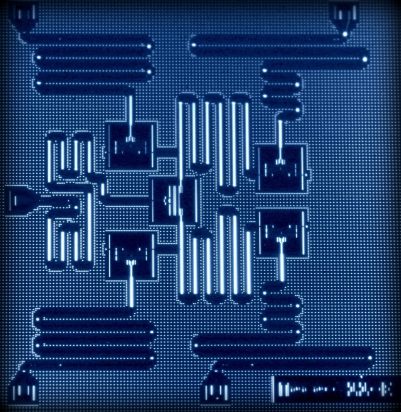
The cross-resonance interaction in superconducting transmon qubits, a talk by John Kerfoot (University of Liverpool)
Quantum computers are continually growing in their size and capabilities enabling for more complex algorithms and operations to be performed. As a result, the need for high fidelity gate operations is vital for the realisation of large-scalable quantum computers. In this presentation we demonstrate how the cross-resonance interaction in superconducting transmon qubits can be exploited to create a functioning Controlled-NOT gate. Experimental data shown in this presentation derives from real experiments performed on a real quantum computer using IBM’s cloud-based software Qiskit Pulse. Frequency sweep and Rabi experiments were performed to calibrate the qubits and by creating and using a cross-resonance pulse we establish a functional controlled-NOT gate operation. Analysis of this base gate demonstrates an error per Clifford of 0.0237 and a fidelity of 0.772 which with error mitigation being applied is improved to 0.830.
Each talk will last around 25 minutes, with five minutes to follow for questions.
This talk will be given remotely, via Zoom. If you wish to register for attendance at this North West branch talk, please register here https://my.ima.org.uk/item.php?eventid=366
No charge is made to attend meetings. Non-IMA members are welcome.
Once registered you will receive all joining information one day prior to the event.