
Gender diversity
To be able to supply the future STEM pipeline, it is essential that mathematics attracts a diverse community. In some mathematical areas such as healthcare and statistics there is a good balance and many university courses in these areas are proud of figures such as 42% female undergraduates. In contrast, other areas where mathematics overlaps physics, IT or engineering the ratios have remained disappointing.
It is tempting to think that we live in an enlightened age where no barriers exist, but complacency is the enemy of improvement. Women have only made up a substantial part of the workforce for 3 generations, and there can be up to 5 generations in many industries. In both academia and industry there is still a “leaky pipeline”, leading to a shortage of females in senior positions.
Every IMA member can make a positive difference, whether it is a teacher who includes more examples of female mathematicians, a member in industry who mentors, or an organiser who moves a meeting to be at a better time for childcare. After all, “if not you, then who?”
Women Presidents at the IMA
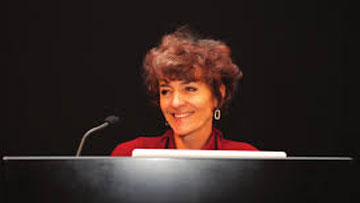 When writing for women’s history month as IMA Diversity Champion I started thinking, “what about the history of the IMA?”
The IMA has had two female presidents, Dame Kathleen Ollerenshaw 1978-1979 and Professor Dame Celia Hoyles 2014-2015.
Celia was President the first year I was on Council and she made me feel so welcome when I joined.
A few facts about Celia:
- She co-presented a popular TV mathematics quiz show ‘Fun and Games’, which topped the prime-time ratings between 1987 and 1990.
- She is currently working on the dissemination of the outcomes of UCL ScratchMaths, an initiative to use the programming language Scratch to help teach maths, see https://www.ucl.ac.uk/ioe/research/projects/scratchmaths
- When she was appointed to the UCL Institute of Education in 1984 she was the youngest Professor.
- She was the first recipient in 2004 of the International Commission of Mathematics Instruction (ICMI) Hans Freudenthal medal, and later in 2011 the first recipient of the Royal Society Kavli Education Medal
- When she was elected IMA President in 2014, the Institute’s 50thanniversary, she was the first president from education in a mathematics learned society.
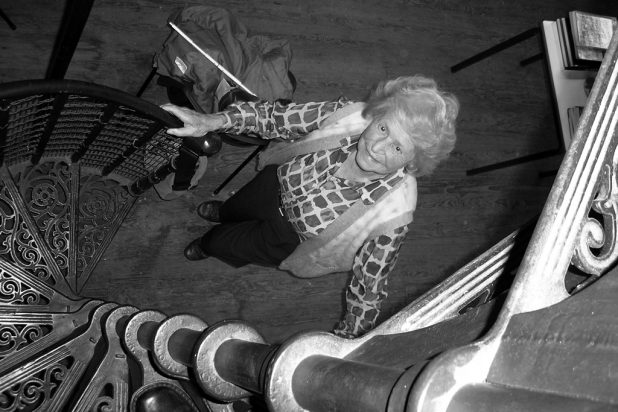
Find out more about Dame Ollerenshaw and her advances with the mathematics of the Rubik’s cube.
Messages from our Mathematicians and Corporate Affiliates
Dstl’s SWAN Circles
 A few years ago, a group of senior women colleagues in Dstl decided to found mentoring circles for female staff. These women founded the Senior Women Action Network (SWAN) and the circles became SWAN Circles, the network is now known as the Gender Equality Network, but the name SWAN has stuck.
The motivation was that at the time there were so few female colleagues in a senior position that it would be difficult for some more junior female staff to find role models they could relate to. So circles were set up where a senior female would host approximately six female colleagues at the grade below them. The circles meet regularly, and they enable a safe space for women to discuss career aspirations or get support in dealing with any challenges they may be facing. Some circles also have a male ‘buddy’, a peer of the leader who supports the circle and as a side benefit also has their awareness of diversity issues enhanced. Although these circles were set up with the full support of Dstl’s Executive, one of their strengths has been the fact that they are essentially ‘self-help’ and each circle is driven by its members, rather than being required to work to a corporately defined schedule.
The circles are now a feature of life at Dstl, they exist at all levels in the organisation and female new starters are encouraged to join them by their Team Leaders. The circles are managed via Distillery, Dstl’s in house knowledge sharing tool, which means the administration is not labour-intensive. A number of staff credit the circles as playing a major part in giving them the confidence to apply for promotion, and many of their members have been promoted as a result, indeed some more than once.
One member of a circle who was recently successful in achieving a promotion in Dstl said, the “circle helped me build networks with other women in STEM that were instrumental in my career progression”. The male buddy of that circle said “ it was a great privilege to support this person to achieve the promotion they richly deserved, I have also found the insights I have gained from supporting the circles very helpful In my own development.”
Prof Andy Bell, Dstl’s Executive Sponsor for its Gender Equality Network said ‘I am proud of the work of the mentoring circles across Dstl and am delighted that they have proved so popular in the workforce. The circles are a key part of Dstl’s drive to promote diversity and equality across its workforce.’
Crown Copyright 2020
An Interview with Shamia Sanjania, Undergraduate STEM Lead at University of Leicester
 Why did you choose to study maths?
I have always enjoyed challenging myself to new ways of thinking and for whatever seemed impossible, I was keen to make it possible.
I’ve never thought about maths being a degree course I would study, but I have always been very passionate to break stereotypes and pursue a career in a STEM field as a woman. For this reason, simply to keep my options open, I chose to study maths at A level. It was a comfortable subject for me as I generally did very well in it. It was during this journey that I actually developed my love for maths. I was introduced to the wonders of mathematical application in the real world which then inspired my creative mindset to consider developing my journey by studying maths.
What have you enjoyed about your course at Leicester?
Leicester has been the key to my door for endless possibilities. Beginning my journey at Leicester, I have been given every opportunity not only to gain very useful mathematical skills but to develop myself further as a person by gaining employability skills to allow me to strive for greater success. Studying at Leicester has allowed me to grow and begin networking with people in industries.
During a module in the first semester, I completed the Leicester Award by working in a team to calculate the green space of the university. This meant, using mathematical knowledge and computer programming skills to measure carbon uptake by calculating the amount of green land across the university sites. During this, I had the opportunity to meet several experienced people from industry, explaining what their roles are and how mathematical models can be applied, from weather forecasting to microbiology, further inspiring me and allowing me to explore the endless routes into careers after education.
What can we do to raise the perceptions of maths and make it an aspirational career for all?
Initially studying maths at secondary school, I used to question why we are learning maths other than knowing how much money I owe to pay the shop keeper for my groceries. Mathematical applications go very unnoticed, specially to students as myself that come from a less experienced background or parents not attending university. It restricted me to have a very small vision for what I could be in the future. Only the front-line careers that I would encounter on my day to day routine were visible aspirations, an example being I have never once come across an actuary to understand that role.
For me, the perception of what studying maths meant only became clear after I started my degree. For this reason, I believe only bringing light to such fantastic roles, would bring forth the aspirations to the students for routes into these fields. It’s quite a challenge for a 16-year-old to understand what it means to be the first Fields medal winner, rather than what it means to be the first person on the moon.
So I believe it should be introduced gradually, interactively, in a means they can imagine challenging and enjoying themselves. Once they can understand the millions of routes available and how they can create their own, we can make it an aspirational career for all.
Can you tell us about your work as STEM undergraduate Lead at Leicester?
I became the undergraduate STEM lead for mathematics at the University of Leicester in 2020. During this period, I have foundered, and now chair, a platform based on Women in Maths as I believe the females in our community must receive all the support and encouragement to continue down these STEM fields as it is here that lacks full engagement.
Currently, I have held a few networking and socialising events where I have invited several women from different mathematical fields as this allows the students to understand the range of route available from attaining a maths degree. With this, I plan to hopefully develop my ideas further into the wider community. I have had an opportunity to engage with primary students across the city, where I was able to deliver a presentation and hold a workshop, talking about my journey and routes into STEM fields.
From all my inspirations I have received to reach this stage, I would like to share my passion and motivations to younger students to hopefully inspire them to pursue careers in this route.
How do we inspire the next generation and build a diverse STEM pipeline for the future?
I believe students are capable to shape the future in many wonderous ways with the creativity and imagination within them.
How I aim to inspire students to further develop this in STEM fields is by showing them the potential within them. Making them believe they have the skills to create whatever they can imagine by introducing them to the wonderous uses of mathematical application in industry and the tools and softwares we are equipped with. Getting every individual aware of how we can support them, then let them lead us into shaping the future in every area of STEM.
Who were inspirational role models for you?
There are endless role models out there who have made excellent mathematical discoveries which build upon each other, from Ada Lovelace to Maryam Mirzakhani, holding a role in the development of our world to where it is standing today. I have mostly been inspired by the female mathematicians, that have struggled to attain education and yet still have achieved great discoveries. This motivates me to understand the beauty of attaining and understanding knowledge, making me appreciate it even more to use it to further develop the future community.
What has inspired your love of the maths community?
My passion for maths has been developed over time as I begun to understand the endless possibilities to its application.
Maths is everywhere and its by understanding it, that it opens many more doors of future research. From the development of codes and communication to robotics and artificial intelligence, who knew numbers could be moulded into such a wider network of uses.
This fascinates me the most, an unknown discovery still out there which I could potentially discover. I have always been keen in cracking puzzles and getting creative which I strongly believe becoming a part of the maths community will definitely allow me to explore. Who knows, I may be the next individual to code up a mechanism to allow cars to fly!
Chris M studies BSc Mathematics via distance learning (Open University)
I study at home. This gives me great flexibility to fit studying around work, hobbies and other commitments. Like many people, what had made me start my maths degree was not the reason at all to keep going. I got a massive feel-good kick out of returning to my old stronghold, a rediscovery of my old self in many ways. The sheer joy of homing in on old skills and acquiring new, sharpening my mathematical tools so to speak, has really been fantastic and there’s no stopping me anymore!
However, studying at home also means that I do not see how other mathematicians work. My current work is in a non-academic environment. While I am preparing myself for a world of sophisticated data analysis, science and hopefully making a worthwhile contribution to society by doing something that not many people can do, there is a sense of being separated by this specialism from my surroundings.
Work colleagues appear to be mystified by my love for mathematics and I tend not to speak about it unless somebody asks me directly. ‘I always struggled with maths at school’ and ‘rather you than me’ are typical comments.
Private acquaintances, however, have been more understanding and encouraging. Several people have surprised me by reminiscing about a love for mathematics, and often also for physics, in their earlier lives. Many of them are women who have kept this love to themselves – just like I do most of the time.
In a quest to connect with other mathematicians I joined the IMA in autumn 2019 and attended the Early Career Mathematicians conference. I found myself among like-minded people. There were many others who were new. Interesting talks were given, workshops invited own participation, and conversations arose. I felt included and found a sense of belonging within the community of mathematicians.
Sarah Brown, PhD Student
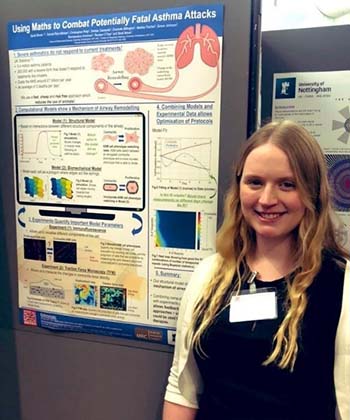 I am a final year PhD Mathematics student at the University of Nottingham and my research combines experiments in a laboratory with mathematical/computational models to describe the changes in structure and function of asthmatic airways over time. When I tell people what I do there are usually two reactions. First, there is surprise that I am a young woman doing advanced mathematics. Second, there is confusion over how maths could possibly be used to learn about asthma. This inspired me to create the “What’s the point of maths?” programme; to show that maths is used for a lot more than most people realise, by lots of different people, everywhere around us! For example, did you know that maths is an essential part of solving crimes, it is used to make all our favourite Disney Pixar movies and cool snapchat filters, it tells us how we can predict flooding or increase wheat yields and can help us learn about the development of fatal diseases. I try to explain these weird and wonderful uses of maths in a way that everyone can understand and take this initiative into schools and to many different science fairs with fun hands on activities to aid the understanding. I do this with hope of engaging more young people (particularly more girls) in the wide range of mathematical applications out there.
Facebook link: https://www.facebook.com/whatsthepointofmaths/
Website link: https://whatsthepointofmaths.com/
Twitter link: https://twitter.com/SarahKBrown2
Jenny Macey, FIMA, CMath, CSci
I have worked as a computational physicist in industry for over a decade. Three years ago, inspired by an article in Mathematics Today, I moved to work in a whole new area of mathematics. The move was great for refreshing my professional development; there are few subjects that can rival mathematics in offering such a range of opportunities.
My experiences have varied through the stages of my career. After being the only female in many classes, I was then delighted to discover that working in industry I had many female colleagues and never felt like I was treated differently. I was also impressed with the diversity and gender balance of the IMA Council and committees.
However, as I become more senior, I am starting to notice that:
- Many of my female peers have moved out of technical roles and into management.
- Like many female colleagues, I get a buzz from doing a variety of roles. This is encouraged during your early career and within management. However, in a technical career path there is often an expectation of single-minded focus within one narrow subject area.
- Confidence to take a risk in applications (for jobs or Fellowship) differs between my male and female peers.
I believe having a mentor (male or female) is one of the best things you can do to help your career. It is so good to have someone who can challenge, champion, encourage and remind you of your talents.
Are things improving? I believe so, there is more awareness of unconscious bias, more role-models in senior positions and more opportunity for flexible working.
What can we do to help? Be visible, vocal, valiant role models who support others.
Karrie Liu, FIMA
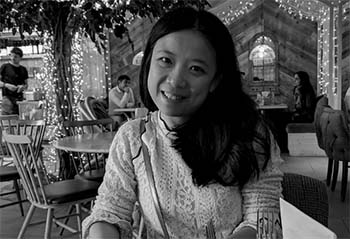 The IMA wishes to congratulate Karrie Liu for being selected to be one of the top 100 in #TechWomen100 https://wearetechwomen.com/karrie-liu-boehringer-ingelheim-ltd/
Karrie was co-opted on to the IMA Council in March 2018. Her previous work for the IMA has been with the Early Career Mathematicians, where she was Vice Chair in June 2017, Chair in June 2018 and Past Chair in 2019. During that time, she was Chair of 3 conferences (November 2018 at UCL, March 2019 at Lancaster, November 2019 at Bath) and chaired the monthly ECM meetings in 2018.
Karrie is passionate about providing visible role-models. She volunteered for the IMA at New Scientist Live in 2018 and 2019; she speaks at schools through the National STEM Learning Network; is an active maths tutor for the charity Action Tutoring; and takes part in the mentoring programme run by the award-winning social enterprise STEMettes. During these activities she feels it is vital to provide a strong role model, as growing up with two distinct family cultures, she is aware that in some cultures girls are not encouraged in the same way that boys are. She believes passionately in showing both girls and boys how to follow their dreams.
Karrie also uses her mathematical expertise as Analytical Advisor for India’s WaterHarvest charity since August 2019. She provides statistical support for clean water programmes in Rajasthan, using data science and technology to improve the design and optimise the resources needed to implement systems and programmes of work.
Karrie writes about her experiences of cultural expectations differing with gender below:
“I would like to tell you a story about culture difference and inequality. I left home at 17 to continuous study in UK. Like many Chinese parents, they were concerned I won’t be able to get a job after graduation from Maths Degree. Fast forward to Nov 2019, my parents was real excited to find out that I got shortlisted for the hashtag#TechWomen100 award. About a week later (4th Dec 2019), I told them then I was selected to be one of the top 100.
The first thing my father asked me is “how much money do you get after winning the award?” I was shocked and explained “that is an achievement”. He then replied “if there is no money, what is the point of doing it!”
I was not angry at all but feeling upset and slightly disappointed as you can imagine. Even though our culture is focused more on the boy and measuring success with money (how much we made); I wish they can happy for me for 5 mins.
To other Asians (girls) : It is not easy to be a female or without any support from the family in a foreign country, I agreed that we need money to survive, but that should not be the only reason why we do things. We should do what you enjoy and good at, no one can or should stop you!“
Diana Akanho tells us about the organisation Women in Data
Women in data is a not for profit organisation that focuses on creating gender parity within the data and analytics field. They believe “It is imperative that children at every level of education cultivate an interest in STEM. To do this they must demonstrate how STEM can empower girls, women and gender diverse individuals to be agents of change”
To read more about Women in Data and Diana’s role in data then please see:
Girls in Data – Launching Spring 2020
Diana Akanho – The Female Lead
You can also read more thoughts from Diana on our BAME page.
The IMA and the LMS act together for Women in Mathematics
The IMA and LMS work together to support Women in Mathematics, this way we avoid duplication of effort, can both support each other’s events, and can ensure messaging and initiatives are consistent across the whole of the mathematics community.
The LMS has operated a ‘Women in Mathematics Committee’ since 1999. A representative from the IMA attends this meeting, currently our representative is Sara Lombardo who also sits on our Research Committee https://www.lboro.ac.uk/departments/maths/staff/academic/sara-lombardo/.
Information on LMS Women in Mathematics activities can be found at the following web page: http://www.lms.ac.uk/women-mathematics and there is also a linkedin group.
Current topics of discussion include:
- Academic Pipeline Survey – the study is being undertaken by Dr. Eugenie Hunsicker, Senior Lecturer in Mathematics and Director for Equality and Diversity at Loughborough University, and Chair of the LMS Women in Mathematics Committee https://www.lboro.ac.uk/departments/maths/staff/academic/eugénie-hunsicker/.
- National Benchmarking Survey – commissioned from Ortus Economics Research and presented by the WIM Committee, this report seeks to understand the current status of women in UK mathematics departments and experiences of departments with the Athena Swan process.
- WIM continues to look into barriers to promotions to understand what barriers may exist to career progression for mathematicians in the UK.
- Accessibility at conferences
The LMS Success Stories https://www.lms.ac.uk/success-stories champion the diversity within mathematics.
IMA Statement on Women in Mathematics
The IMA will:
(a) be aware of and seek an appropriate gender balance on its committees and working groups, and encourage the Nominating Committee to give similar attention in its proposals for election;
(b) keep under review the regulations governing its membership, prizes, awards and grants to ensure that they do not inadvertently deter or fail to recognize people with non-standard career patterns;
(c) actively encourage and facilitate the nomination of women for its prizes and awards, and ensure that it considers women when it is proposing nominees for external prizes and positions;
(d) actively seek to include women speakers in its meetings and workshops;
(e) continue to increase the emphasis on gender and diversity in all aspects of our journals;
(f) expect that the organisers of conferences and activities who are seeking grants and support from the Institute will invite both male and female speakers.
In addition to the above the IMA endorses the work of the LMS in this area, as follows:
- LMS Women in Mathematics Committee
The IMA does not plan to form a parallel committee, but supports the LMS Committee through its representation on the Committee by a member of the IMA Research Committee. - The Women in Mathematics Day annual event
The IMA encourages members to attend this event. - The Annual Mary Cartwright Lecture
The IMA encourages members to attend this event. - Good Practice Scheme (GPS)
The IMA endorses the LMS GPS, and welcomes the associated benchmarking survey of university mathematical sciences departments. - Support for those who wish to apply for the Athena SWAN Award
The IMA endorses the initiative of the LMS to assist mathematical sciences departments to develop the good practice required for this award.
LMS Good Practice Scheme
The LMS Good Practice Scheme (GPS) has been mentioned, at point 4, above, as an initiative which the IMA endorses. Further details of the scheme can be found at the following web page: http://www.lms.ac.uk/content/good-practice-scheme