This is the text of a speech given by Alison Etheridge, Chair of the Council for the Mathematical Sciences, at a Parliamentary Dinner on 13 June 2022 to promote the mathematical sciences. The dinner was hosted by Baroness Garden and supported by the Protect Pure Maths campaign with the LMS. Attendees included parliamentarians, representatives of the mathematics community, including the Presidents of the IMA and the LMS, and business leaders.
The mathematical sciences have an image problem. Maths is a ubiquitous and vital part of all of our lives, but how often do we talk about it, let alone celebrate it, and crucially tell our kids about it?
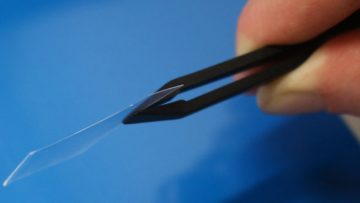
How many people know that maths is used to design the dust filters in their vacuum cleaners, and that the same maths has been used to develop filters to remove arsenic from groundwater in the Ganges–Brahmaputra delta, impacting hundreds of thousands of people.


Many people probably are aware of the role played by maths in digital security, but how many know of its vital role in the manufacture of smart screens?
The maths we learn at school is largely about certainty, for example 7 × 9 really is equal to 63, but it is also maths that provides the tools for quantifying uncertainty, which underpins decisions at all levels – personal, national, and international; and related to medicine, finance, the environment, the list is endless. But an understanding of uncertainty is crucial for making decisions about how to deploy limited resources, from hospital beds to bandwidth in the telecommunications industry.
And I haven’t begun to talk about maths in science. Even with increasing computing power and more sophisticated technology, maths guides scientists in knowing what to look for and where. These advances often stem from a culture of curiosity driven research that has been nurtured over decades. Sir Roger Penrose showed that the theory of general relativity inevitably led to singularities in the 1960s, many decades before physicists were able to observe what we now call black holes and he had to wait until 2020 to share the Nobel Prize.
The ability to manipulate vast data sets like the UK Biobank, with all the promise that brings for personalised medicine, stems from techniques developed when the idea of sequencing 100 000 genomes sat firmly in the realm of science fiction.
When I first met my colleague Ulrike Tillmann in the 1980s, I don’t think that she dreamt that her work in topology, that most beautiful of fundamental mathematics, would today be driving advances in data science.
Looking forwards, I can’t predict what mathematics we need to face the challenges ahead, but I can say with some confidence that it will draw on foundational work developed over many decades.
So how can we guarantee that we’ll have the knowledge and skills that we require? Well, we need diversity in all its senses.
Support the whole discipline
We need to support the whole discipline, ensuring constant innovation across the spectrum. Short term incentives for higher education institutions can encourage concentration on those parts of the mathematical sciences that are exploiting what is already known. This work is vital, but so is generating the new foundational research that will feed our innovation pipeline for years to come.
Recruit researchers with diverse backgrounds
We need to draw in researchers with diverse backgrounds and points of view, and, crucially, keep them in the system. The data that we have related to gender reveals a ‘leaky pipeline’ with lower and lower proportions of women as we move up through career stages in the mathematical sciences. There are particular problems at the mid-career stage with women disproportionately affected by caring responsibilities; an effect that will no doubt have been exacerbated by the pandemic. We need innovative ways to keep those people in the system.
Support maths at all levels
It is not just about mathematical sciences researchers. We need to be equipping students and educators at all levels to navigate what is inevitably going to become an ever more mathematical world.
Alison Etheridge OBE FRS FIMA
University of Oxford
Reproduced from Mathematics Today, August 2022
Download the article, The Ubiquity and Diversity of Mathematics from MT August 22 (pdf)