It was Friday afternoon – 13 March 2020 – and I had just finished my penultimate lecture session on Mechanics to the first year civil engineering undergraduates at Imperial College London. I had completed introducing the final topic of the course: minimum energy principles for facilitating the analysis of the stability of equilibrium. My final words to the students, meant partially in jest, were:
See you next week, unless we’re locked down of course …
There was a ripple of what I concluded to be nervous laughter but we all knew deep down that a lock-down, owing to the rapidly increasing number of UK Covid-19 infections, had become a distinct possibility, if not indeed a racing certainty. Later that evening, we were told that the final week of term will be delivered through recordings and students were free to leave as if it were already the Easter vacation.
On the following Tuesday, 17 March 2020, I went into my department to record my final lecture session to an empty classroom apart from one of my unfortunate research students whom I had asked to attend just in case I made any obvious errors. After that day, until early June 2021, I would visit the campus only once more and that was at the end of September 2020. All research and teaching staff who did not have a sufficiently good reason to come to campus, i.e. those of us whose research was not laboratory-based or those who had sufficient resources to work effectively at home, were encouraged to remain working remotely.
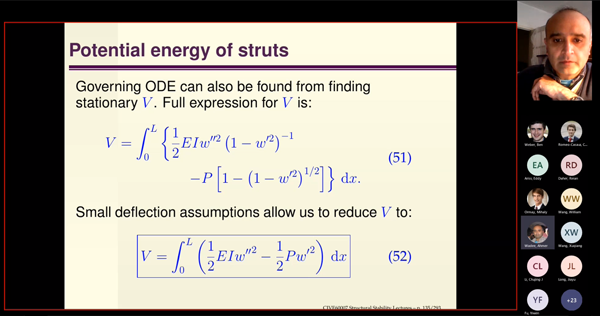
As with all sudden changes, I am sure I was not alone in feeling daunted given I had a very pleasant office environment and a fairly settled routine. Having said that, my previous experience of Skype was reasonable, however I had never used Teams and had only used Zoom once up to that point.
There were of course some obvious enforced changes. Interactions with my research group generally became far more structured with regular appointments and durations; gone were the invaluable quick chats in the corridor while fetching cups of coffee. While this worked well for some, less self-sufficient students found it more difficult to adjust and a bit of drift became apparent that needed addressing periodically.
In terms of formal lectures delivered remotely, personally and perhaps surprisingly, I found it to be a relatively positive experience. Although some of my colleagues had experienced some disruption during their early sessions, confined mainly to the behaviour of less mature first year students being mischievous in their first term, I did not encounter any such problems. Indeed, when we were teaching entirely remotely through Teams, my experience was that there were generally more good questions, particularly coming via the text chat facility. A few of us came to the conclusion that not having to ask questions out loud encouraged those perhaps less extroverted students to contribute, which could only be a positive outcome.
For problem-solving tutorial classes and group project work, I have to admit that my experience was less positive. Levels of student attendance at these online sessions varied and the fact that a considerable number of students were reluctant to turn on their cameras made online interactions less straightforward.
Over the past decade or so, there have been increasing demands from students for resources to be provided online, in systems such as Blackboard or Moodle, which include lecture notes, worked examples, solutions to exercises and more recently live lecture recordings. This has been largely a positive development and has generally increased the quality of teaching delivery where lecturers have been forced to be more organised and structured in how their courses are delivered.
Students have been free to tackle tutorial, which is to say not formally assessed, exercises privately; and therefore it is inevitable that the aforementioned solutions have been made available to some students before they have had a first attempt at the exercises. Given the emphasis that we in the higher education sector place on independent learning, it is unfortunate that this access to answers potentially removes the necessary struggle to learn new concepts, and can hence encourage complacency. In this context, let us consider the words written by Arthur Chickering and Stephen Ehrmann, published in the American Association for Higher Education Bulletin, back in October 1996 [1]:
Learning is not a spectator sport. Students do not learn much just sitting in classes listening to teachers, memorizing prepackaged assignments, and spitting out answers. They must talk about what they are learning, write reflectively about it, relate it to past experiences, and apply it to their daily lives. They must make what they learn part of themselves.
Under normal circumstances, the in-person experience for the vast majority of students, whether within discussions amongst themselves, or within the classroom tutorial setting, would probably be sufficient to ensure that those who were potentially coasting had, periodically, some kind of reality-check. Students would therefore be prompted to identify where their proficiency is insufficient and apply greater focus. However, during the periods where students were working entirely remotely, such interactions would have been far less frequent and there is a risk that not learning the fundamentals in sufficient depth may have been an unintended casualty.
By October 2021, the UK vaccination programme had covered most of the vulnerable population, and so my institution, alongside several others around the UK, decided that we should resume in-person teaching but with some degree of social distancing enforced. This led to some severe restrictions in teaching room capacity where the ventilation was deemed to be inadequate and made certain activities, such as laboratory classes, highly challenging to schedule.
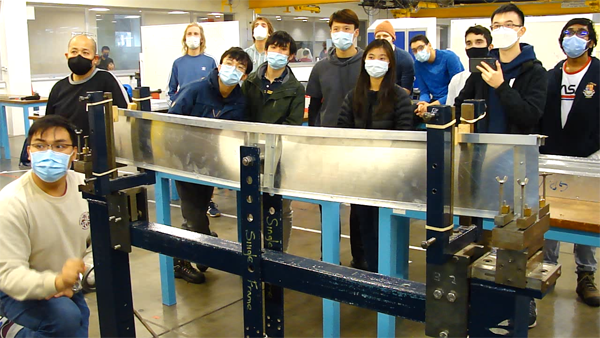
Personally, I found this hybrid approach particularly irksome; for instance, it was difficult to keep track of what was happening to the small proportion of the class attending remotely if I were delivering a lecture to a classroom of say 70 students who were present in-person. I also noticed that the number of questions online had dropped significantly when compared to teaching the whole class remotely in the previous year – my suspicion was that the students who were attending remotely were perhaps less inclined to engage compared to when all students were in the identical situation.
Since October 2022, however, we have returned to teaching fully in-person and after reading that month’s fascinating special issue of Mathematics Today on pandemics, I have been reflecting more broadly on my own experiences. Personally speaking, the bustle of the new term has been most refreshing and enjoyable, particularly given how long it had been quiet on campus. Nevertheless, students and staff are still understandably being urged to be vigilant and encouraged to make alternative arrangements if they become unwell. At the time of writing, this appears largely to have worked well and the general atmosphere seems to have returned to how it was pre-pandemic.
However, one thing of which I am very conscious is that the undergraduate group with whom I spend most time during any given year is now the one that arrived at university during the time when we delivered teaching entirely remotely. These students have had to struggle with isolation while being exposed to an entirely unfamiliar institution without having any opportunity to meet their peers properly nor the teaching staff. Moreover, first years have always needed time to adjust to higher education and all that this entails in terms of learning how to learn independently. It is going to take a number of years for the effect of the pandemic to work through the system and perhaps we, those of us who teach the students, need to take stock and consider whether we are providing a suitable and effective learning environment. In particular, this is critical when students are outside of their comfort zone and engaging in higher education for the first time.
Ahmer Wadee CMath CSci FIMA
Imperial College London
References
-
Chickering, A.W. and Ehrmann S.C. (1996) Implementing the Seven Principles: Technology as Lever, AAHEA Bull., vol. 49, no. 2, pp. 3–6.
Reproduced from Mathematics Today, March 2023
Download the article, How Covid-19 Affected Routine University Teaching (pdf)