In 2024, the IMA celebrates its 60th anniversary and 100 years since the birth of its founding president, Sir (Michael) James Lighthill FRS.
- Early Years
- Supersonic aerodynamics at NPL
- Trinity College to Manchester
- Two remarkable papers
- Mathematical community and founding the IMA
- RAE, the Harrier jump jet and fish swimming
- Waves and rotating fluids at Imperial
- Wider influence at UCL
- Honours, Medals and Travel
Early Years
Sir James Lighthill was born on 23 January 1924 in Paris, the third and youngest child of Ernest Balzar (Bal) Lighthill (1868–1952), a mining engineer, and his wife, Marjorie (1887–1962). The family returned to England in 1927 when Bal retired. Lighthill was a precocious child, showing especially great ability in mathematics, languages, music and chess, and revealing a prodigious memory.
Lighthill was educated at Winchester College from 1936, where an exact contemporary was another twelve-year-old prodigy, Freeman Dyson. Both pupils were brilliant mathematicians and were encouraged to learn from original sources, for example the three-volume Cours d’Analyse by Camille Jordan. At the age of fifteen they were both awarded major scholarships to Trinity College, Cambridge, but were not allowed to go up until 1941.
At Cambridge the only lectures they attended were those for Part III of the Mathematical Tripos, in particular those by Hardy and Littlewood. Lighthill and Dyson both graduated in 1943 with firsts in Part II and distinctions in Part III. Lighthill met his future wife, Nancy Dumaresq, in Cambridge during chamber music rehearsals. They were married on 17 February 1945 and had four daughters and a son.
Supersonic aerodynamics at NPL
After graduation in 1943 Lighthill worked in the aerodynamics division of the National Physical Laboratory (NPL) at Teddington. Here he was persuaded by Sydney Goldstein that the science of fluid mechanics was a rich subject to which talented mathematicians could make an important contribution. During the Second World War, Lighthill made numerous contributions to supersonic aerodynamics. In those days numerical computation was laborious and time-consuming, so it was essential to analyse physical problems mathematically in order to develop formulae that could be used in design. Lighthill was a brilliant analyst, but under the guidance of Goldstein he also developed a deep physical insight which enabled him to explain the essence of his theories in words to the non-mathematical engineers and policymakers who had to use the results.
Trinity College to Manchester
After the war he was elected to a prize fellowship at Trinity College, Cambridge, where he was influenced by another great fluid dynamicist, Geoffrey (G.I.) Taylor. However, in 1946 Goldstein was elected to the Beyer chair of applied mathematics at the University of Manchester, and he took Lighthill with him as a senior lecturer. In 1950 Goldstein moved to Israel and Lighthill succeeded him in the chair, which he occupied until 1959. The thirteen years he spent at Manchester saw a tremendous outpouring of original, fundamental, and wide-ranging research, both by Lighthill himself and by his many research students. The subjects included the development, structure, and propagation of shock waves; the interaction of shock waves with boundary layers; the distortion of a complex flow, in a wake for example; non-linear wave motions, applied both to flood waves in rivers and to traffic flow on highways; and an early application of fluid mechanics to biology (the swimming of microorganisms).
Two remarkable papers
Two pieces of work from this period were particularly influential. The first was a remarkable paper of 1952, ‘On sound generated aerodynamically’, published in the Proceedings of the Royal Society in two parts, in which Lighthill derived a formula for the acoustic power emitted by highly turbulent flows such as the wakes of jet engines. This paper, inaugurating the subject of aeroacoustics, neither contained nor needed any reference to prior work, but has itself been referred to thousands of times since. The second new subject was that of nonlinear acoustics, which developed from Lighthill’s 100-page article in Surveys in Mechanics, published to celebrate Taylor’s seventieth birthday in 1956.
Mathematical community and founding the IMA
While he was at Manchester, Lighthill also played a leading role in the Aeronautical Research Council and developed a powerful interest in mathematical education. In 1956 he was one of the founding associate editors of the Journal of Fluid Mechanics (JFM), which immediately became, and remains, the leading journal in the field. In 1959, Lighthill founded the annual British Theoretical Mechanics Colloquia (now known as the BAMC), and campaigned for the creation of the IMA, which was eventually founded in 1964 with Lighthill as its first president.
 RAE, the Harrier jump jet and fish swimming
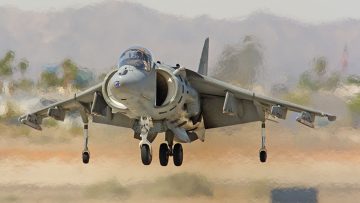
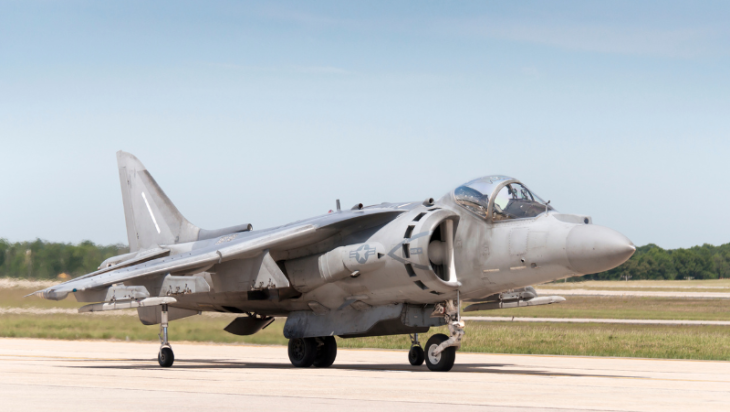
In 1959, Lighthill was the unexpected choice as director of the Royal Aircraft Establishment (RAE), at Farnborough. Highlights of his directorship included major developments in vertical take-off and landing (leading to the Harrier jump jet); in supersonic transport (leading to Concorde); in weather-independent automatic landing; and in low-cost air transport. In hindsight, a weakness in the RAE and in Lighthill at that time was a failure to recognise the importance of computation in aerodynamic design. At Farnborough, Lighthill continued to publish prolifically, though more reviews and didactic chapters than original research papers. One exception was a brilliant 12-page article on the swimming of fish, published in JFM in 1960.
Waves and rotating fluids at Imperial
After five years at Farnborough, Lighthill returned to full-time research in 1964 as Royal Society research professor at Imperial College, London (he had been elected Fellow of the Royal Society in 1953), where he remained for five years. He also served as secretary (physical sciences) and vice-president of the Royal Society (1965–9). At Imperial he wrote influential articles on the theories of wave motion and of rotating fluids, with application to the atmosphere and oceans. Fluid mechanics in biology became his principal preoccupation for more than fifteen years. He wrote important surveys of undulatory fish-swimming (though all the main mechanisms had been foreshadowed in his 1960 paper), of undulatory microorganism swimming (though the main feature was contained in a paper by his student Hancock in 1953), of animal flight, and of physiological fluid dynamics (blood flow, breathing, etc.). This work was all brought together in Mathematical Biofluiddynamics (1975).
Administratively, Lighthill’s main achievement while at Imperial was the formation in 1966 of the Physiological Flow Studies Unit, bringing together physiologists, physicians, and physical scientists, for interdisciplinary research. This is now subsumed into the Department of Biomedical Engineering. In 1969 Lighthill was elected to the Lucasian chair of mathematics at Cambridge, succeeding Paul Dirac and preceding Stephen Hawking. Here his main research was in biology and waves (his advanced textbook Waves in Fluids appeared in 1978), and he contributed enthusiastically to teaching.
He was also involved in many national and international committees, reporting on a variety of topics: postgraduate training in the UK, direct dialling for long-distance telephone calls, the future of telecommunications, control engineering, and artificial intelligence, which he notoriously declared (in 1973) to have no future. He became president of the International Commission on Mathematical Instruction (1971–74), president of the International Union of Theoretical and Applied Mechanics (1984–88), and chairman of the International Council of Scientific Unions committee on the international decade for natural disaster relief (1990–95). He had a strong influence in India, where he encouraged the study of monsoon dynamics, a branch of geophysical fluid dynamics with special relevance to the region.
Wider influence at UCL
Ten years in Cambridge were enough for Lighthill, who missed the wider influence he could exert as leader of a large organisation. In 1979 he was happy to be appointed as Provost of University College, London. Here his priority was to enhance UCL’s already outstanding academic strength, not least by encouraging women academics to fulfil their high potential. He was also extremely popular. His formidable memory enabled him to come to know the name and to remember the interests of every professor and many other staff. He was unable to devote much time to research, but publications continued (for example, on the dynamics of the inner ear), including one undergraduate textbook, An Informal Introduction to Theoretical Fluid Dynamics (1986).
Honours, Medals and Travel
As well as his fellowship of the Royal Society, Lighthill received many honours, notably his knighthood in 1971 and the Royal and Copley medals of the Royal Society, the former in 1964 and the latter posthumously in 1998. In 1982, he was one of the first recipients of the IMA Gold Medal for ‘his wide-ranging contributions to the applications of mathematics and the development of its techniques’. He was elected foreign associate or honorary member of nine national academies of science or engineering, including those of the USA (both), Russia, and France (he was fluent in French and Russian). He received twenty-four honorary doctorates around the world. His collected papers were published by Oxford University Press in four volumes in 1997.
He travelled widely. Lighthill’s principal form of physical recreation was swimming. Every year, on holiday, he would embark on an ‘adventure swim’, preferably round an island. His favourite island was Sark and he was the first person to swim round it in 1973. He successfully repeated the feat five times. On 17 July 1998 he had almost completed the swim once more, when his mitral valve ruptured and he died.