As a mathematician at the Defence Science and Technology Laboratory (part of the UK Ministry of Defence), it is difficult for me to talk in detail about my role. However, when given the opportunity to write this editorial, I wanted to highlight the significant contribution mathematics makes to Defence.
There are many famous historical examples of the application of mathematics in Defence. Perhaps none more so than the work of mathematicians in cryptanalysis during the Second World War. Led by Professor Alan Turing, a large team at Bletchley Park worked to decode German messages, including those created using the Enigma machines. However, it’s often overlooked that many of those problem-solving mathematicians were women.
Also in the Second World War, in his role as a scientific advisor, Lord Patrick Blackett OM CH FRS pushed for senior leaders in Defence to take advice from scientists when developing strategic plans, leading to the emergence of operational research as a discipline (often known as operational analysis within Defence). This opened the door to many more problems being viewed and expressed using mathematics. In December, I was lucky enough to attend the Operational Research Society’s annual Blackett Lecture. It was given by former IMA president Professor Nira Chamberlain OBE CMath CSci FIMA. In his talk, he showed how, just as Blackett had applied science to military strategy, we can apply mathematics and science to model Equity, Diversity and Inclusion.
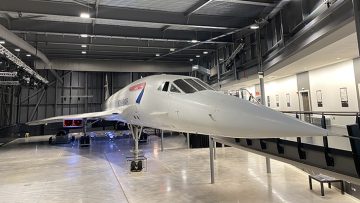
Last year as part of the IMA’s 60th anniversary we also celebrated the work of our first president, Sir James Lighthill FRS. His applications of mathematics to fluid dynamics led to a range of advancements, including the development of Concorde. More importantly for Defence, he played a pivotal role in advancing vertical take-off and landing technology, an innovation that led to the beloved Harrier Jump Jet (see photo). While Lighthill may not be a household name, he remains a key figure in the IMA.
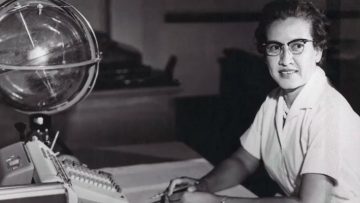
Recently, Defence got the Hollywood treatment in the 2016 film Hidden Figures. The space race is often viewed in terms of politicians and astronauts from two opposing power blocs. However, the film shone a light on the vital contribution of mathematics and also highlighted the role of the Black women whose mathematical skill made it possible, despite the discrimination they endured. It focused on Katherine Johnson, an outstanding mathematician who used her abilities in analytic geometry to perform vital calculations such as producing the trajectory for the first American in space.
Although these famous examples have all played a large role in Defence, the use of mathematics is embedded throughout, providing fundamental value in a wide range of activities.
When we develop new technology or techniques for Defence, we need to understand how they will perform. Statistics is crucial to model the uncertainty that is inherent in real world systems. For example, when testing the robustness of a piece of personal protective equipment, statistical design and analysis allows us to ensure, to a given level of confidence, that it will indeed protect the soldier who wears it.
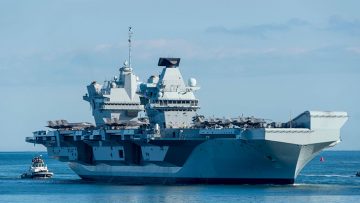
Operational Research, analysis and modelling are used every day in Defence. Since the work of Blackett in the Second World War, operational research has become essential. A basic example may be a model to calculate the distance different types of vehicles can cover, given the available fuel. More complex models include those used to examine the aerodynamics of new aircraft. However, it’s not all about equipment. Modelling is essential in financial calculations, such as to understand the costs of procurement decisions. Although he didn’t mention it in his Blackett Lecture, Nira has previously described how he applied cost-capability trade-off modelling in the design of the HMS Queen Elizabeth aircraft carrier. Mathematics is essential for leaders in Defence to ensure their decisions are evidence based.
Cryptography is a rightly famous application of mathematics. However, it would be remiss not to mention the importance of mathematics in the signal processing required to send and receive messages. For example, information theory is a mathematical discipline that led to definitions of channel capacity (how much information can be communicated). Another key application is error correction. When we transmit messages, we know that effects such as interference will introduce errors. By introducing redundancy, mathematical algorithms allow us to correct for errors, and we can balance the amount of redundancy against the level correction needed. Mathematical understanding of signals becomes even more crucial with the signals used in the Global Navigation Satellite System (GNSS), or in radar when we are applying inversion techniques to improve our situational awareness.
The importance of mathematics is not decreasing. As we look at the emergence of new technologies, mathematics seems set to grow in value for Defence and Security (as for wider society).
Generative artificial intelligence (AI) such as large language models (LLMs) have phenomenal capabilities, but the risks should not be ignored, especially in Defence. Maths has a key role in helping Defence to use AI and autonomous systems responsibly, for example in the testing and evaluation of model performance, developing our understanding of how AI works, and using maths to develop safeguards. Defence also needs to develop AI techniques that use a lot less data and compute (processing power) than those in commercial applications. Defence’s use cases are often unusual or niche. There are not mountains of data to train a machine learning model, and so mathematical innovation steps in to help shape the models. Defence cannot rely on having access to Cloud computing and will need to be able to work at the edge with greatly reduced compute power, so models need to be smaller and more efficient.
Talking of compute, Professor Stephen Lynch FIMA gave a fascinating talk for the IMA’s South East Branch on Brain Inspired Computing. As he showed, mathematics is key to the development of new types of computers. For the public, media focus has often been on the impact of quantum computers. However, there are a plethora of new approaches such as biological and neuromorphic that will require mathematical innovation. These new approaches could be vital for Defence, as we are often operating in environments with limited power. For society, novel approaches to compute could also reduce the environmental impact of AI. Recent news stories have highlighted the impact of data centres on the environment, especially in areas with water and power shortages.
For most of this article I have focused on Defence with a capital D as seen at a national level. However, the November meeting of the Mathsci-comm community reminded me of the importance of maths when considering defence at a personal level. The Mathsci-comm is a community open to all those with a role in the communication of the mathematical sciences. The November 2025 meeting considered the dangers of misinformation and how this is propagated. Everyone in society needs a level of mathematical understanding to help spot misinformation and understand how and why decisions are made. In a lecture at the London School of Hygiene and Tropical Medicine, Professor Sir Chris Whitty KCB FRS spoke of the importance of disclosing uncertainty for retaining trust. However, understanding and explaining mathematical or statistical uncertainty is no easy task.
Hopefully I have drawn out some examples that show how crucial maths is to Defence. If you are interested in more examples of how it is being applied in a Defence context, I recommend reading the summary of the recent IMA Conference on Mathematics in Defence and Security. This event took place at the Catalyst in Newcastle in October 2025 and brought together mathematicians working on Defence challenges from government, industry and academia.
Working in Defence has only increased my passion for mathematics as I see its genuine impact. Being part of the IMA (especially as part of its Council) has added a passion for the mathematics community and what we can do together. In maths, as in Defence, the whole is greater than the sum of its parts – we can achieve greater things working together.
If you work in UK Defence and would be interested in being part of a special interest group to collaborate with other mathematicians, please visit https://forms.office.com/e/8mTB88q8zZ.
Emma Bowley CMath MIMA
Defence Science and Technology Laboratory
Crown Copyright © 2025 Dstl. This information is licensed under the Open Government Licence v3.
The views and opinions expressed herein are those of the author and do not necessarily reflect those of the Defence Science and Technology Laboratory.
Reproduced from Mathematics Today, February 2026
Download the article, Mathematics for Defence (pdf)