The Western mathematical tradition began, according to legend, with a holiday. It is said that in the 6th century BCE, Pythagoras travelled to Egypt, where he studied mathematics (among other things) before bringing the ideas back to Greece and kick-starting Greek interest in the subject. OK, this is probably just a myth, and perhaps it wasn’t, strictly speaking, a holiday, but it highlights the benefits that mathematics has gained from international exchange from a very early date. Indeed, the story of mathematics is one of the exchange of ideas across cultures – from Egypt into Greece, from the Middle East into Europe, and between India and China, to give just a few instances. For the mathematicians involved, travel certainly broadened the mind.
In the few examples given above, leisure may not have been at the forefront of travellers’ minds, but it is easy to imagine people enjoying the mathematics that they were learning abroad. In any case, the boundary between ‘professional mathematics’ and ‘recreational mathematics’ is notoriously fuzzy. Readers of Mathematics Today will be well aware of how difficult it can be for mathematicians to set problems aside, even on holiday.
A prime example of this is provided by the American algebraist Leonard Eugene Dickson (1874–1954), who, when asked about his honeymoon, is reported to have replied that it was a great success, except he only got two papers written [1, p. 244]. The nature of mathematics, which can be progressed by pencil and paper, or perhaps nowadays a laptop, means that it can easily follow you on holiday. The views of Dickson’s wife, Susan McLeod Davis (1880–1947), are not recorded.
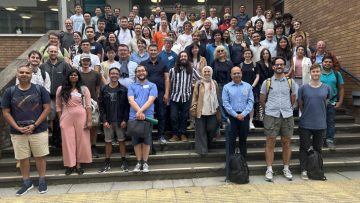
The growth of international conferences – in particular, the International Congresses of Mathematicians (ICMs) – during the second half of the 19th century enabled mathematicians to combine mathematics with tourism in a big way, so much so that these might be considered (perhaps a little pejoratively) as ‘mathematical holidays’. The proceedings of the ICMs record the excursions that were arranged as part of the conference programmes. These were often opportunities for the organisers to show off the local landscape, such as a trip to Rapperswil on the shores of Lake Zurich during the 1897 ICM [2, p. 43], and another along the Neckar River near Heidelberg in 1904 [3, p. 10].
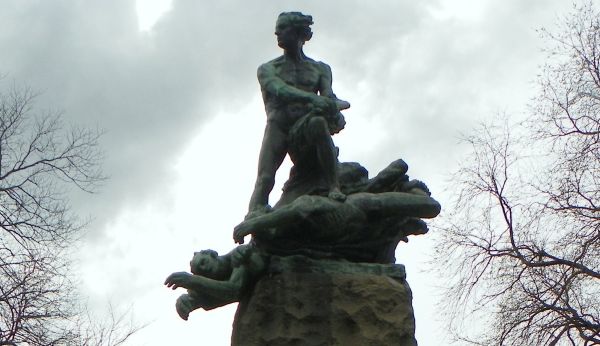
However, given the audience, it is no surprise that we also find mathematical tourism, usually in the form of a pilgrimage to a site of mathematical significance, whether it be the 1912 visit to Arthur Cayley’s grave in Cambridge [4, p. 108], or the expedition to the Niels Henrik Abel monument in Oslo during the 1936 ICM [5, §2.9.2]. A more recent mathematical event, the 7th European Congress of Mathematics, which took place in Berlin in 2016, provided delegates with a detailed guide to, and outlines of walking tours around, the city’s mathematical sights [6].
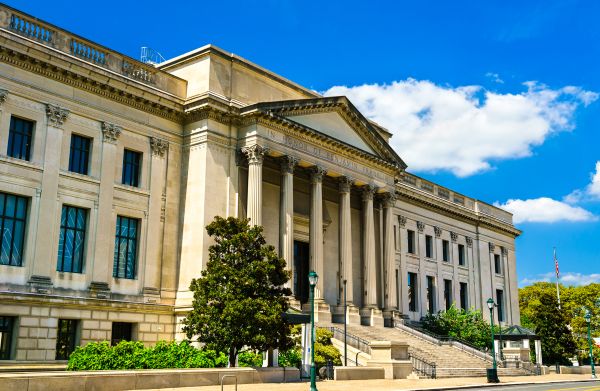
Excursions and tours, mathematical or otherwise, are such an established part of international conferences that there are very likely to be even more at this year’s ICM in Philadelphia, coming up in July.
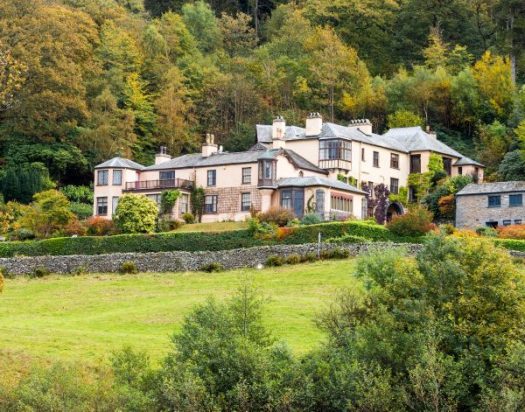
But mathematicians do sometimes take holidays that are not associated with conferences, and this special issue of Mathematics Today celebrates the varied ways in which holidays, travel, or leisure time more generally can involve and stimulate mathematics. We find here, for example, articles inspired by things seen on holiday. Alan Oxley investigates the geometry of cracks, taking his cue from broken tiles seen at John Ruskin’s home of Brantwood in Cumbria, while the scientific names inscribed around the Eiffel Tower provide a jumping off point for Gregory L. Bason’s article on Sturm–Liouville systems. Nathan Turner’s piece, on the other hand, takes us from birdwatching (or, more precisely, listening) into signal processing, while Sami Ataullah’s article moves us from listening to birds to listening to music. Readers will also find practical advice in this issue, in the form of Chris Willis’s treatment of the structural mechanics of building sandcastles.
Readers seeking inspiration for places to visit may find it in Peter Rowlett’s contribution on the late David Singmaster’s Mathematical Gazetteer of the British Isles, or indeed in Tom Briggs’s reflections on the place of mathematics in museums. Noel-Ann Bradshaw reviews the National Museum of Mathematics and a few other mathematical sites in New York City. Elsewhere in the issue, Katherine Hamilton turns our attention to languages, and how they shape, and are shaped by mathematics, while Ben Devenish discusses improvements to the models used to analyse the ash cloud produced by the Icelandic volcano Eyjafjallajökull that infamously disrupted air travel in 2010.
If, after reading these articles, you similarly find something of mathematical interest on your holidays, then do please write us a letter (or indeed send us a postcard) to tell us about it.
In conclusion, I thank my co-editor, Rob Ashmore, as well as Mathematics Today’s Editorial Executive, Rebecca Waters, and dedicate this special issue to all those mathematicians who travel to conferences in sunny places, but have never been able to convince their families that no, it’s not a holiday…
Christopher D. Hollings FIMA
University of Oxford and MT Letters Editor
References
- Duren, W.L,. Jr. (1976) Graduate student at Chicago in the twenties, Amer. Math. Monthly, vol. 83, no. 4, pp. 243–248.
- Rudio, F., ed. (1898) Verhandlungen des ersten Internationalen Mathematiker-Kongresses in Zürich vom 9. bis 11. August 1897, B.G. Teubner, Leipzig.
- Krazer, A., ed. (1905) Verhandlungen des dritten Internationalen Mathematiker-Kongresses in Heidelberg vom 8. bis 13. August 1904, B.G. Teubner, Leipzig.
- Snyder, V. (1912) The fifth International Congress of Mathematicians, Cambridge, 1912, Bull. Amer. Math. Soc., vol. 19, pp. 107–130.
- Hollings, C.D. and Siegmund-Schultze, R. (2020) Meeting under the Integral Sign? The Oslo Congress of Mathematicians on the eve of the Second World War, American Mathematical Society.
- Grötschel, I. and Grötschel, M. (2016) Mathematical Berlin: Science, Sights, and Stories, Berlin Story Verlag.
Reproduced from Mathematics Today, June 2026
Download the article, Maths on Holiday (pdf)