IMA Lighthill Lecture: Geometry as a Key to the Virosphere: New Insights into Virus Structure, Assembly, Evolution & Therapy, a talk by Reidun Twarock (University of York)
Abstract
Viruses are remarkable examples of symmetry in biology. Many viral pathogens package their genetic material into protein shells that are organised with overall icosahedral symmetry. These containers, called capsids, act akin to Trojan horses, protecting the viral genomes between rounds of infection. Mathematical techniques from group, graph and tiling theory can be used to characterise capsid architecture, and better understand the mechanisms underpinning virus assembly. In this talk, I will demonstrate how mathematics has helped to uncover a mechanism underpinning the assembly of many important pathogens, including Hepatitis B and C virus and Picornaviruses, a family that includes the common cold. I will show that characteristic features of this mechanism are shared across different viral strain variants and therefore lend themselves as targets for novel forms of broad spectrum anti-viral therapy. Using mathematical models of viral evolution in the context of a viral infection and an implicit fitness landscape, I will moreover demonstrate that therapeutic interventions directed against these conserved viral features have advantages over conventional forms of therapy. I will also discuss how the new mathematical and mechanistic insights can be exploited in bionanotechnology for vaccination or gene delivery purposes.
Further Information
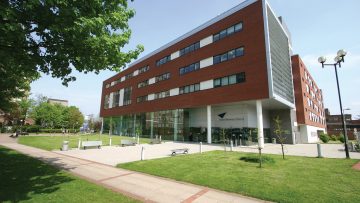
The Physics and Astronomy Building is number 15 on the campus map.
The IMA Lighthill Lecture takes place as part of the programme of the British Applied Mathematics Colloquium (BAMC), in memory of Sir James Lighthill, founder President of the IMA. There is no requirement to book to attend this lecture.
Image credit: Hepatitis B virus (HBV) by Sanofi Pasteur / Flickr / CC BY-NC-ND 2.0