
Global Majority Mathematicians
“Mathematics knows no races or geographic boundaries; for mathematics, the cultural world is one country.”
Howard Eves in Mathematical Circles Squared (Boston 1971)
Mathematics is a vital and rewarding career that needs diverse talent from all cultures, races and backgrounds.
This page features an exciting range of stories and interviews from Global Majority mathematicians. Here are just some of the topics covered:
- Raising the profile of mathematics as an aspirational career that solves real world problems, and is a worthy and attainable profession. This includes providing clear advice and answers for “what does a mathematician do” and “how do you become a mathematician”.
- Having visible Global Majority role models in mathematics.
- Following your dreams and championing your abilities.
- The importance of having access to inspirational people, such as teachers or mentors, to provide encouragement and access to the maths community.
- Loving our differences, embracing the benefit that diverse thinking brings.
- Realising there is no one path and no “typical mathematician”.
- The need for flexible study, to allow people to earn during their education.
- The maths – doing it, loving it, being inspired by it, enjoying it!
UCL Black Role Models in STEM Event, February 2020
The IMA’s President Dr Nira Chamberlain was pleased to speak at UCL MAPS Faculty’s networking evening to celebrate Black Role Models in STEM. The event included a great range of mathematicians, such as:
- Professor Carla Faria, Professor of Physics at UCL, working on Strong-field and Attosecond Physics.
- Dr Amna Shaddad, a mathematician working in political campaigning.
- Luke Davis, a PhD student in Physics at UCL and organiser of Diversity Challenge.
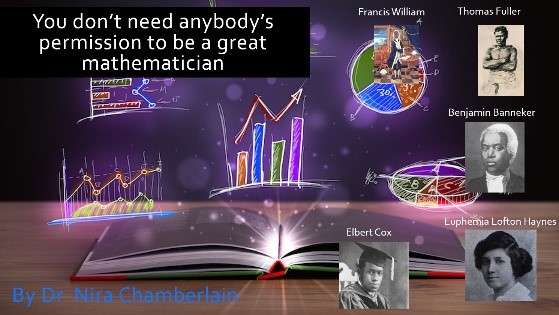 Nira’s talk inspired many tweets, with calls for this slide to be the “quote of the day”.
Both Nira and IMA Council member Karrie Liu found the evening a powerful event which increased the visibility of, and strengthened the connections between, black undergraduate scientists and mathematicians. The messages that resonated strongly with the audience included:
- Dare to follow your dreams, don’t let others tell you that you can’t!
- Work hard to succeed and go for it!
- Beware though, there is a fine line between loving something and being exploited.
- Don’t worry about pleasing people and fitting in. Geniuses don’t follow the beaten track.
- There is no “rough” or “smooth” timeline, there is more than one possible path in life and several plan B’s.
- Rejections will happen, learn to improve, listen to feedback and move on.
- Feedback that is not precise and uses words such as “slow, stupid…” comes from biases and should not be taken seriously.
- Know the rules backwards and forwards but be creative.
- Know your allies, choose your mentors/supervisors wisely.
- Beware of tokenism and cultural taxation.
- The idea of Parental Osmosis: knowledge about privileged positions, expectations and behaviours passed down to children. This doesn’t occur where parents were denied opportunities themselves.
Thank you to the organisers Dr. Luciano Rila, UCL MAPS Faculty and Chalkdust magazine; and to the sponsors: UCL MAPS Faculty and the LMS for this excellent event.
Dr Nira Chamberlain, President of the IMA 2020-2021
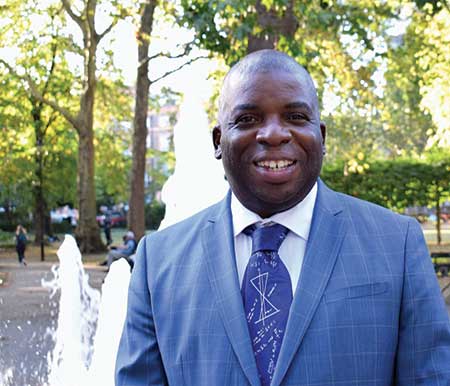 Read our Mathematics Today interview with IMA President Dr Nira Chamberlain here https://ima.org.uk/13624/interview-with-dr-nira-chamberlain-cmath-csci-fima/
John Pougué Biyong, PhD Student University of Oxford
Why maths, what inspires you?
 My mum used to tell me to stop asking “why are things the way they are?” all the time. Indeed, I was interested in relationships and connections between things from my early years. Back in the days, I was full of energy but quite bored at school. Mathematics was the only subject where I could find convincing and non-disputable proofs of why things are the way they are. So, it started from a need to find answers really. During my first year of university in France, mathematics became tough and studying it became a challenge to overcome. Eventually, when I acquired some scientific foundations, I realised that my old question “why are things the way they are?” had remained unanswered and that I needed to redirect my math practice towards that question. That’s the state of mind I am in at the moment.
From there, I started focusing on applied mathematics and took a gap year to work in the industry before moving to the UK for a MSc degree. I have realised that the French way of doing mathematics is much rigorous and theoretical while the British way is more straight-to-the point and applied. The approaches are different. Since this gap year, I have done several internships and part-time jobs to keep applying my knowledge to real-world problems and acquire more experience (which is as valuable as diplomas in the professional world).
What are you working on at the moment?
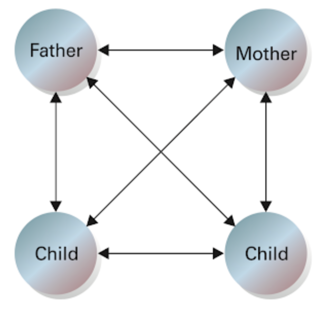
This year, I have started a PhD in mathematics at the University of Oxford, with a focus on network analysis. A network is simply a bunch of entities with connections between these entities. For instance, a family is a group of people that have relationships (children, parents, cousins etc.).
What can we do to raise the perceptions of maths and make it an aspirational career for all?
I think mathematics has much to gain in showing how much the innovation in the field has an impact on the real world, and how much many problems we tackle are very concrete. Through the rise of artificial intelligence, I feel that the awareness on what mathematics can do has increased. I hope this kind of impact will incite more parents to encourage their kids to practice mathematics and inspire younger people to take a chance on that road.
What it has been like moving between study, working in industry, then back to study.
Nowadays, the idea of “standard mathematician profile” is more challenged. As a black French-speaking student who used to be very bad at English in school, living, doing a doctorate degree in maths and working in an English-speaking environment was not the most intuitive option.
How can we inspire the next generation and build a diverse STEM pipeline for the future?
More generally, the idea of “standard STEM profile” is wrong. However, convincing parents and young people from under-represented social categories of this fact is not easy. Enhancing diversity, inspiring from the early ages and mentoring younger black people to take their chance in STEM fields is of course one way to go. I think that young people should aim at doing things that “people that look like them” have not done much before: “doing something that everyone that looks like you does” does not bring much added-value to the table. From my experience, even though it might be the hardest way to navigate, staying true to yourself and working hard to get what you aim at is, on the long run, much more rewarding than anything else.
How has joining the IMA been beneficial for you?
Over the last year, the IMA’s networking opportunities have helped me in adapting to my academic life in the UK. As an applied mathematician that aims at working in the industry later on, the IMA is very relevant for me.
John also contributed to the 2018 UK Black History Month with an article published in Chalkdust (http://chalkdustmagazine.com/black-mathematician-month/the-maths-black-box/).
An Interview with Zahraa Kadri CMath MIMA, Senior Analyst
Please tell us about your mathematics journey?
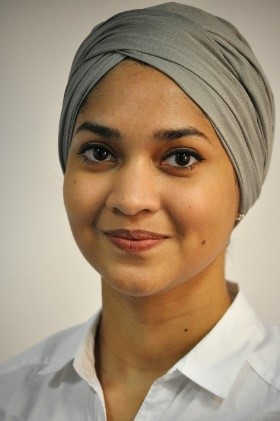
Just over 6 and a half years ago after graduating with a BSc Mathematics (Hons), I thought “what could I do with my mathematics degree?” Half of my class decided to enter teaching, but I wanted to do something different. I entered the world of engineering as a technician to gain experience in the industry, but within a few years I realised I could do more with my degree in this industry and changed my career direction towards data analytics and data analysis in transportation within engineering. It was the best decision I made, as I am now a senior analyst and part of a team which works on projects that contribute to policy change, produce asset management decision support tools and asset management strategies for local and national road authorities. At this point in my career, I have gained membership of the Institute of Mathematics and its Applications and recently achieved chartership. I am also on the NxtGen Committee for the Institute of Asset Management and I am on the international Asset Management Technical Committee for the PIARC – World Roads Association.
Why did you choose mathematics in the first place?
Like other mathematicians, for me Mathematics was one of the only subjects which just “clicked” for me throughout my education. People think mathematics is just algebra or calculus, but actually there are multiple avenues in mathematics which can be applied to everyday life. For me, mathematics is like poetry of logic, it’s the models or techniques you need to use to solve problems and find insights. It’s this logic which helps me to do my job when I am analysing different scenarios for various projects in engineering and in particular asset management. In mathematics, there is always a more difficult situation or question that challenges me to try and find new ways of answering the “exam question”.
Sometimes, the simplest solution requires the most complex decision-making process, and this inspires me to continue to be a mathematician.
What difficulties do you face as a female Global Majority mathematician?
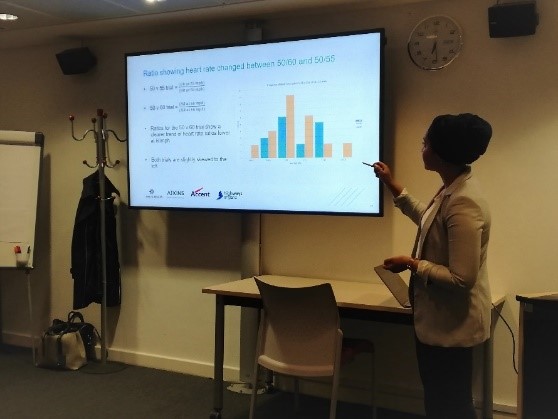
Working in the engineering industry, I constantly feel the need to prove myself, and show that I do know how to solve problems, or that I know how to answer a client’s question about some numbers in a report and explain what they mean. Only after presenting at a national conference and a regional talk, did I realise that people will listen and ask me questions about my work. This helped me with my confidence, and allowed me to show peers what I can do, and how capable I am.
I don’t want to be that person that “ticks all the boxes”, that’s why I am always trying to prove myself and make a difference.
Because there are so few female Global Majority mathematicians in the workplace, it can be difficult to feel that I deserve to be where I am, but I do deserve to be where I am. I am constantly trying to improve and learn more so that I can give my best effort for the client and show that I am more than capable to be part of strategic projects.
A diverse workplace is important as the most diverse teams think differently and find innovative ways of finding solutions and solving problems. If we were all from the same walks of life, then how will we input differently to projects?
What do you think can be done to improve the situation?
As a female mathematician, I would benefit from a mentor who is a female mathematician to guide me through experiences and challenges she may have faced in her career, so I am more equipped in facing those challenges professionally. As I have not been fortunate to have a female mathematician as a mentor, I have learnt to share my experiences to graduates and younger members of the team, to help them in the early years of their career and to help them with their chartership. I hope as mathematicians we can inspire more young females to become mathematicians and become mentors to the future generation too.
I am lucky to be part of a very diverse analytics team from a variety of nationalities which has a 40:60 split of female to male. We need to be in a position where the number of female Global Majority mathematicians are higher in the data analytics and research teams. Interestingly, the number of Global Majority male mathematicians is also low in my team and this is also reflected in the audiences of national analytics and mathematics conferences I have attended. To ensure the balance is improved going forward, we need to inspire the next generation through STEM and educate them, we need to show that you can enter interesting careers after studying mathematics.
After all, mathematics contributes immensely to the other sciences and in industry, and we need an increase in female Global Majority mathematicians to ensure a healthy talent pipeline for future generations.
An Interview with Megel Barker, International Mathematics Educator
We heard Megel’s Global Insiders podcasts https://www.spreaker.com/user/globalinsiders/globetrotting-teacher, https://www.spreaker.com/user/globalinsiders/how-to-teach-globally about life as a globetrotting mathematics educator and wanted to find out more.
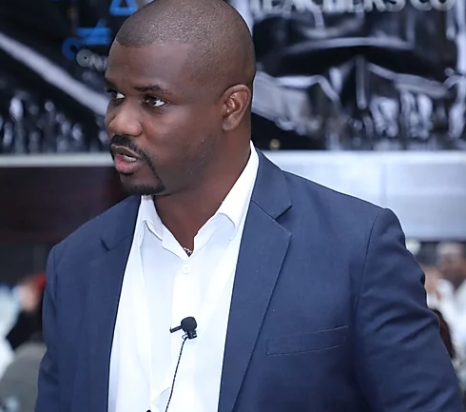 Tell us a little about yourself?
Well, my name is Megel Barker. I am a Jamaican-British Mathematics educator who holds an Education Doctorate in International Instructional Leadership. My career has spanned over 25 years across different job roles in the education sector and in three different countries, Jamaica, UK and Oman. My research interests are in the whole curriculum where I inquire into its design, development, efficiency, and efficacy. With an established track record of raising standards in UK mathematics classrooms, I am committed to raising the profile of mathematics among all learners.
At the moment, I reside in Oman and, while here, I published two moderately successful mathematics workbook to support the Oman GED. My current role is assistant Principal and MYP coordinator, but I also serve as the ASCD ambassador for Oman, a contributing editor for ASCD EdAdvantage, conference presenter and researcher.
So what interested you in mathematics to begin with?
I think my interest in mathematics began when I used to practice my times table as a 10 year old in Jamaica. We were required to memorize all our multiplication tables before entering the classroom after break in primary school – up to the 12 times table. It didn’t take me long to recognize that there were some patterns inherent in the times table so that fascinated me quite a lot. I also remember as a child I used to take the calculator (which were more like adding machines), and pressing the equal sign repeatedly. I would just keep pressing that number to see how far it would go. I was really piqued by this and I would try unusual numbers like 13 or 17 and just kept pressing the number just to see where that number would go. When I got bored I would then try and do subtraction.
Another memory I have which goes way back into my childhood is when my friends were playing cricket. I used to draw up elaborate scoring sheets and I would maintain scoring statistics for them, even though it wasn’t required. I used to get a lot of praise for that. Yet another clear childhood memory was I remember standing at the petrol station one day when I was about 13 years old, and a man came up to me and he asked me this question: he said if I were to share one dollar between two people so that one person receives 10 cents more than the other how would that be divided? He offered a soft drink if I could get it right. I remember thinking about this problem and the feeling I got when I realized within myself what the solution had to be. I shared my answer and he provided the promised reward with a lot of praise about how for my age I had shown great imagination. That feeling stuck with me and made me believe that I had some ability to do mathematics well. I was determined then to be a top mathematics student.
So what I believe really got me interested in mathematics was the manner in which people around me appreciated mathematical thinking. I realized quite early that being “good at math” was something prized in my community.
Who inspired you to pursue your career?
As I look back at my teaching career, I find it hard to ascribe any one person with the credit for inspiring me to become an educator. My Grade 4 teacher Miss Jones provided the greatest example of how influential a teacher can be in someone’s life. Her example of service and commitment as an unselfish devotion to helping children had a profound impact on me as a person then and now. My mother, Olive Anderson, was integral to me pursuing my career as she was always positive and supportive and always insisted that I should always have “ambition”. Later in life I understood what she meant but then it was a constant mantra. My mother wanted me to set lofty goals and then go for them with determination and persistence. Along the way, there were friends, colleagues and family who always had positive words to share that are too numerous to mention by name. Certainly, many people played roles in getting me to where I am now. My wife and kids for sure and my father.
In the podcast you talk about learning in your own way through school and university; studying in the library, rather than classes, and having to balance education with earning money to support your family. Can you tell us more?
I am from poor means and lived in rural Jamaica in a seaside town called Annotto Bay about an hour from Kingston and 45 minutes from Ocho Rios. My mother held numerous jobs to keep food on the table, so at one point she was employed in a garment factory making uniforms, and another time she worked in a bakery, and later she worked as domestic helper. Life was rough. I was the eldest, so from very early I had to take responsibility for my younger sisters. Cooking, cleaning, disciplining, stewarding. As I moved off into college (CASE) to study teaching, we just did not have enough money to go around so I used to teach mathematics class after 8 pm to other trainee teachers to make extra money. I also remember using my mathematical skills in games to win money as well. For example, I hardly lost a game of Scrabble back then. Many people believe Scrabble to be a word game but at its highest level it is a strategic mathematical game.
Prior to attending the University of the West Indies to read for a BA in Mathematics and Economics, I self-studied GCE Advanced Level Mathematics and got an A, and I had my first child. So I had responsibilities and goals. To get by, I used to teach mathematics all across Kingston to make the money to support my university education and my child’s financial needs. I remember hardly going to classes throughout Uni to get to these jobs. I worked at so many places and worked so many late hours, but I quickly learnt that I was an honest learner with myself. My MO was work late and study early in the mornings when my brain was fresh. I also learned that I enjoyed talking through math problems in groups as a way of retaining strategies and conceptual understanding. So the nights leading up to my finals would see me finding study groups and making headway through content I had missed in the year. Somehow I made it work and finished my first degree.
Could you discuss your work in raising standards and grades and what it is like to run a curriculum?
In 2008, I was appointed as a Lead Intervention Consultant for Mathematics in the Coventry Local Authority. At the time, four schools in the LA had failed to achieve the DfE’s benchmark for mathematics results. Their results were below 25%. My role was to work with the school leadership to implement strategies that would improve student outcomes through tracking and intervention plans. To be fair, despite having great success, I found this job very boring as I had no contact with students and was moving between four schools over a one-week period. It wasn’t enjoyable and somehow that role never inspired me enough, so I left the job 8 months later to become a Head of Department at Kings Norton High School (now Ark Kings Academy). Our headteacher wanted to improve the mathematics results from 18% and she handed me, an untried Head of Department, that poisoned chalice. I had an incredible team, two people stood out in my three year reign; Ms Rajania & Mrs Sewell. Amazing people! In our first year, with a tracking system we called the “matrix” we managed to identify student weaknesses and built bespoke intervention plans. Our first results improved to 41%, proportionally over 200% increase. From a situation where 1 in 6 students were passing Mathematics, we shifted the results ratio to 1 in 2.5. I think we were rewarded with a small team room stocked with a refrigerator, a kettle and a toaster. Later, I moved on to a larger school, Hodge Hill Sports & Enterprise College with a much larger team and with a different challenge.
From my experience, you need three important factors to run a curriculum along with a strong and committed team. These are time, tools and trust. Teachers need time to plan and prepare in order to optimize learning opportunities for students. They also need the tools that will make them effective. Those tools can be modern teaching software, classroom space, and up to date technology. Also, teachers need trust. It is important that in any mathematics department meeting time is devoted to sharing best practices and discussing learning. In these small sharing sessions, team members learn to trust each other as colleagues. These factors are critical when you are running a curriculum. That is if you want to do this successfully.
What has it been like moving between different countries?
Given that I had emigrated to the UK from my home country in 2002, it was not really that difficult to decide to move to another country to teach Mathematics. For us as a family, we knew there were inherent risks but we felt confident that we would be able to cope as long as we were together. The biggest challenge is taking on new cultures and different curriculum structures. Our first posting was in an Omani private school that offered the PYP (Primary Years Programme) in grades 1 – 6, the IMYC (International Middle Years Curriculum) in Grades 7 – 9, the IGCSE in Grade 10 and 11 and the Oman General Education Diploma in Grade 12 and 13. Imagine teachers teaching across three different mathematics programme in this environment! I taught all three which was a big shift from working in the National Curriculum in the UK.
Working internationally, though was a breath of fresh air. The opportunity to be immersed in a new culture is one that every educator should consider. Students were respectful, and behavioural challenges and government targets were a thing of the past. After two years, we moved to a truly International school where they offered the full International Baccalaureate suite (PYP in Grades 1 -6 , Middle Years Programme (MYP) grades 7 – 11 and IBDP in Grades 12 and 13). After a year, I was promoted to being an administrator in the role of Assistant Principal and MYP Coordinator.
Moving between countries can be stressful but if you have an open mind, a positive attitude to facing challenges, and a willingness to learn from others and situations, you can be a success. We have survived by forming strong bonds with other expatriates and enjoying the flora and fauna of Oman. Additionally, it helps if you are competent in your role as most expats are on 1-year contracts so the job security that exists in the UK is not available.
How can we make the mathematics community as diverse as possible?
Mathematics learning has always had challenges within the school system. Many people are quite unashamedly “bad” at mathematics. Without any real research to back this up, I feel that this negative perception of the subject would also pervade most communities.
Diverse as possible, I am trying to consider what this phrase could mean. For children what would it look like? The easy answer is that they need to see more role models in mathematics. They need to see real people making progress and being recognized, for them to see mathematics as desirable.
The Global Majority community can impact this in a positive way. There are numerous mathematicians out there from the community leading exciting projects, but someone must harness that resource and present it to the youths who are in schools. If the only images they see of academics are people of other races, they may choose to avoid a place that seems to exclude their elders. We need to be intentional to bringing familiar looking faces to our young generation by being in school and on panels, launching mentoring programmes and inviting Global Majority successes back into their communities. It is a symbiotic relationship. I certainly feel that people who emerge from multicultural UK are willing to give back, but someone must package it for them.
We also need to re-join the academic conversations and change the topic. I am ready!
Diana Akanho, Customer Insight Manager
On our gender diversity webpage Diana told us about her work with the organisation “Women in Data”, here she shares more thoughts with us. https://ima.org.uk/about-us/diversity-statements/gender-diversity/
“I enjoy working in data, as it is a very diverse field. Data is found in all types of industries and sectors. It’s great to get my hands on various datasets to analyse and pull out insights.
Having examples of ethnic diverse people and people working in the field of data, to show what is possible is extremely important, particularly for younger generations.
People talk a lot about men vs women. However, there is still a huge gap and issue when it comes to showcasing black males, it is mainly negative. So, it is very important to change this narrative to show we exist- doing useful and inspiring things.
Altruism is also another important aspect to showcase, to give people a view into how they can use a STEM subject to help others, whether that be through insights, data and engineering within medicine or finance as example.”
To read more about Diana, please see:
Girls in Data – Launching Spring 2020
Diana Akanho – The Female Lead
Dr Howard Haughton CMath FIMA, tells us why he decided to become a mathematician
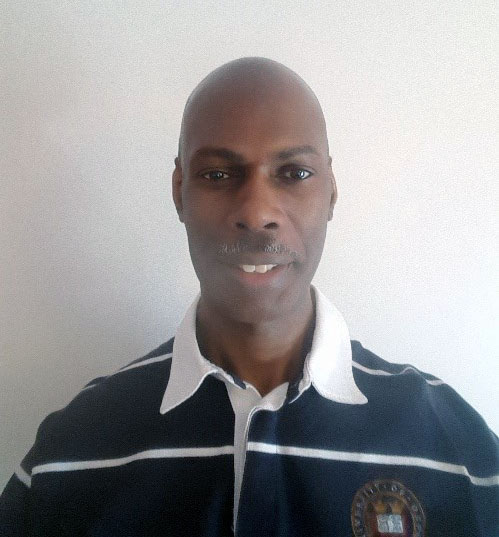 At the age of thirteen I was informed that I had a mild form of learning difficulty. I was in the lowest sets at school, and had to attend a special school one day a week to improve my reading and comprehension. On reflection, it became clear to me that a disproportionate percentage of people with my ethnic background were being classed as having learning difficulties.
Although dejected, I took it on myself to go to the library and read advanced books on mathematics, a subject that I loved but was struggling to command. My thinking was that if I could understand advanced texts it might make it easier for me to undertake my schoolwork. I persisted.
My persistence paid off and just six years later I was accepted to study mathematics, statistics and computer science at university. I graduated top of my class and was awarded a prize of graduate membership of the IMA. My thirst for mathematics continued and I undertook a PhD in mathematical computer science. The novelty of my research was to specify a mathematical framework for reasoning about the correctness of computer network communication protocols.
I applied my knowledge of probability theory, propositional/predicate calculus and category theory to produce mathematical models of safety critical systems, as a research scientist in industry. Later on these skills helped me when I became an investment banking professional and was involved in structuring and risk management. My earlier studies on calculus and differential equations also proved to be invaluable. They enabled me to understand derivatives pricing and how to use mathematics to model financial transactions more generally.
My quest for mathematical growth continues and I apply mathematical/statistical modelling to an increasingly wider field of study, including development economics (for which I advise corporate entities and governments around the world) and financial risk management using artificial intelligence.
In my area of work, there are few people that are Global Majority. As someone that is also involved in academia in the UK, I see a similar picture. In order to encourage more people from Global Majority backgrounds to get involved in financial or other areas of applied mathematics, it requires change in the “mindset” of institutions as well as the Global Majority.
Other links to member stories
You might also like to read the articles that are published on our gender diversity webpage from:
- Shamia Sanjania, Undergraduate STEM Lead at University of Leicester
- Karrie Liu, FIMA, IMA Council 2018-2020, Past Chair Early Career Mathematicians Committee.