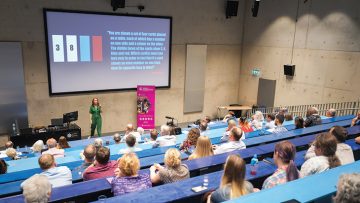
Mathematics in the Digital Age: South West and Wales branch relaunch event, with introduction by IMA President Nira Chamberlain, with talks from Sabine Hauert (University of Bristol) and Nelly Villamizar (Swansea University)
Swarm engineering across scales, a talk by Sabine Hauert (University of Bristol)
Abstract
As tiny robots become individually more sophisticated, and larger robots easier to mass produce, a breakdown of conventional disciplinary silos is enabling swarm engineering to be adopted across scales and applications, from nanomedicine to treat cancer, to cm-sized robots for large-scale environmental monitoring. This convergence of capabilities is facilitating the transfer of lessons learned from one scale to the other. Cm-sized robots that work in the 10,000s may operate in a way similar to reaction-diffusion systems at the nanoscale, while sophisticated microrobots may have individual capabilities that allow them to achieve swarm behaviour reminiscent of larger robots with memory and communication. Although the physics of these systems are fundamentally different, much of their emergent swarm behaviour can be abstracted to their ability to move and react to their local environment. This presents an opportunity to build a unified framework for the engineering of swarms across scales that makes use of machine learning to automatically discover suitable agent designs and behaviours, realistic simulators to capture the physics of the agents, and general performance measures based on emergence. Such a framework would push the envelope of what swarm robotics is currently used for, bringing together active matter physics, collective behaviour research, synthetic biology and medicine towards the desire to engineer useful swarms.
About the Speaker
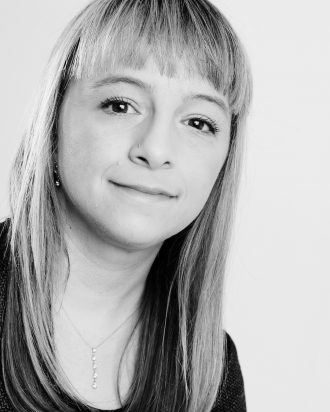 Sabine Hauert is Senior Lecturer in Robotics at the University of Bristol. Her research focuses on designing swarms that work across scales. Profoundly cross-disciplinary, Sabine works between Engineering Mathematics, the Bristol Robotics Laboratory, and Life Sciences. Before joining the University of Bristol, Sabine engineered swarms of nanoparticles for cancer treatment at MIT, and deployed swarms of flying robots at EPFL. Her recent work has been published in Science Robotics, Science Advances, Advanced Intelligent Systems, Nature Machine Intelligence, and ICRA/IROS and Ra-L. She’s Principal Investigator or Co-Investigator on nearly £5M in grant funding and has served on international committees, including the UK BEIS Robotics Growth Partnership, the Royal Society Working Group on Machine Learning and Data Community of Interest, and several Institute of Electrical and Electronics Engineers boards. She’s helped organise over 15 conferences and workshops and is on the founding board of Women in Robotics. As an expert in science communication, she is often invited to speak with media and at conferences (over 50 invited talks). She is Director and Co-founder of non-profits Robohub and AIhub, which connect the robotics and AI communities to the public.
The algebraic nature of computer graphics, a talk by Nelly Villamizar (Swansea University)
Abstract
In this talk we will explore one of the fundamental mathematical tools for 3D visualisation and manipulation of shapes. We will see how complex shapes are built from simpler pieces (usually defined by low-degree polynomials) which are glued together forming a smooth curve, a surface, or a volume. The simplicity of such mathematical representation is fundamental for storage and visualisation, but is also essential for performing mathematical analysis, and reveals fascinating connections to different areas within pure mathematics. We will have a look into the current mathematical challenges lying at the heart of shape representation that bring together methods stemming from algebra, geometry, topology, and combinatorics.
About the Speaker
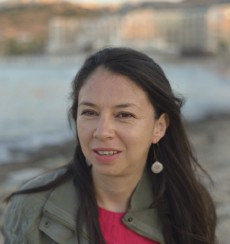
Nelly is a Senior Lecturer at the Department of Mathematics in Swansea University. She is originally from Colombia, where she obtained my BSc degree in Mathematics. She holds an MSc degree in Algebra, Geometry and Number Theory from the University of Bordeaux, France. Nelly obtained her PhD in Mathematics in 2013 from the University of Oslo. Prior to joining Swansea University in 2017, she held a postdoctoral position at the Johann Radon Institute for Computational and Applied Mathematics (RICAM) in Linz, Austria. Her primary area of research is Applied Algebraic Geometry, with applications including approximation theory, computational geometry, computer graphics, and robotics.
Agenda
7.00pm Introduction by Dr Nira Chamberlain CMath CSci FIMA, IMA President
7.05pm Talk 1, followed by questions
7.30pm Talk 2, followed by questions
8.00pm Short presentation by Nicholas Brusby (Branch Chair), followed by a poll of attendees to establish demographics and what type of events / topics are desired by branch members.
8.25pm Closing statement, followed by an opportunity for delegates to converse with the branch committee and ask questions about the branch.
This talk will be given remotely, via Zoom. If you wish to register for attendance at this South West and Wales branch talk, please contact Gemma Reeves who will provide the required details.
No charge is made to attend meetings. Non-IMA members are welcome.
Mathemateg yn yr Oes Ddigidol: Digwyddiad ail-lansio cangen De Orllewin a Chymru
Dydd Iau 26 Tachwedd o 7.00pm
gyda chyflwyniad gan Lywydd yr IMA Nira Chamberlain, a sgyrsiau gan Sabine Hauert (Prifysgol Bryste) a Nelly Villamizar (Prifysgol Abertawe)
Agenda
7.00pm Cyflwyniad gan Lywydd yr IMA Dr Nira Chamberlain CMath CSci FIMA
7.05pm Sgwrs gan Dr Sabine Hauert, ac yna cwestiynau
7.30pm Sgwrs gan Dr Nelly Villamizar, ac yna cwestiynau
8.00pm Cyflwyniad byr gan Nicholas Brusby (Cadeirydd y Gangen), ac yna arolwg barn o fynychwyr i sefydlu demograffeg a pha fath o ddigwyddiadau / pynciau y mae aelodau’r gangen yn eu dymuno.
8.25pm Datganiad clo, ac yna cyfle i gynrychiolwyr sgwrsio â phwyllgor y gangen a gofyn cwestiynau am y gangen.
Peirianneg haid ar draws graddfeydd, sgwrs gan Sabine Hauert (Prifysgol Bryste)
Wrth i robotiaid bach ddod yn fwy soffistigedig, a robotiaid mwy yn haws eu masgynhyrchu, mae dadansoddiad o seilos disgyblu confensiynol yn galluogi mabwysiadu peirianneg haid ar draws graddfeydd a chymwysiadau, o nanofeddygaeth i drin canser, i robotiaid maint centimetr ar gyfer monitro amgylcheddol ar raddfa fawr. Mae’r galluoedd hyn yn hwyluso trosglwyddo gwersi a ddysgwyd o un raddfa i’r llall. Gall robotiaid maint centimetr sy’n gweithio yn y 10,000au weithredu mewn ffordd debyg i systemau trylediad adwaith yn y raddfa nano, tra gall micro robotau soffistigedig fod â galluoedd sy’n caniatáu iddynt gyflawni ymddygiad haid sy’n atgoffa rhywun o robotiaid mwy gyda chof a chyfathrebu. Er bod ffiseg y systemau hyn yn sylfaenol wahanol, gellir tynnu llawer o’r ymddygiad haid sy’n dod i’r amlwg i’w gallu i symud ac ymateb i’w hamgylchedd lleol. Mae hyn yn gyfle i adeiladu fframwaith unedig ar gyfer peirianneg heidiau ar draws graddfeydd sy’n defnyddio dysgu peiriant i ddarganfod dyluniadau ac ymddygiadau asiant addas yn awtomatig, efelychwyr realistig i ddal ffiseg yr asiantau, a mesurau perfformiad cyffredinol yn seiliedig ar ymddangosiad. Byddai fframwaith o’r fath yn gwthio’r hyn y mae roboteg haid yn cael ei ddefnyddio ar hyn o bryd, gan ddod â ffiseg mater gweithredol, ymchwil ymddygiad ar y cyd, bioleg synthetig a meddygaeth ynghyd tuag at yr awydd i ddyfeisio heidiau defnyddiol.
Natur algebraidd graffeg gyfrifiadurol, sgwrs gan Nelly Villamizar (Prifysgol Abertawe)
Yn y sgwrs hon byddwn yn archwilio un o’r offer mathemategol sylfaenol ar gyfer delweddu 3D a thrin siapiau. Byddwn yn gweld sut mae siapiau cymhleth yn cael eu hadeiladu o ddarnau symlach (a ddiffinnir fel arfer gan bolynomialau gradd isel) sy’n cael eu gludo gyda’i gilydd gan ffurfio cromlin esmwyth, arwyneb neu gyfaint. Mae symlrwydd cynrychiolaeth fathemategol o’r fath yn sylfaenol ar gyfer storio a delweddu, ond mae hefyd yn hanfodol ar gyfer perfformio dadansoddiad mathemategol, ac mae’n datgelu cysylltiadau hynod ddiddorol â gwahanol feysydd o fewn mathemateg bur. Byddwn yn edrych ar yr heriau mathemategol cyfredol sydd wrth wraidd cynrychiolaeth siâp sy’n dwyn ynghyd ddulliau sy’n deillio o algebra, geometreg, topoleg a chyfuniadeg.