Being passionate about the role that professional bodies play in society, providing benchmarks for professional standards which celebrate knowledge, competence, ethics, continued learning and delivering public benefit, I am very excited to have joined the IMA.
How did I get here? Growing up in a challenging area, I was lucky to have a very supportive family who put education first. I enjoyed many subjects at school – particularly art, languages, chemistry, geography and maths and was very close to my grandfather, a civil engineer, but didn’t listen to his advice to consider engineering. Nor my (male) science teacher who worked tirelessly to encourage girls into STEM! After GCSE Maths disappointment, I opted for A-level Business Studies, Art and French, going on to study BSc French, Economics and International Business.
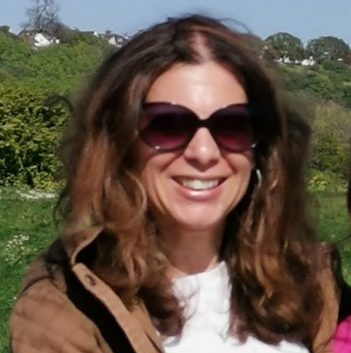
After graduating, I returned to the South of France where I had undertaken work placements and began voluntary work with disadvantaged young people, I then worked for an English language school teaching local businesses and students. Despite the beautiful location and weather, I returned to the UK in 2001 joining London Met University as an International Placements Officer for business and tourism students. After stumbling across a newspaper advert for a Careers and Education Manager at the Royal Aeronautical Society (RAeS), I successfully applied (to my grandfather’s delight!). Although the industry was reeling from 9/11 and subject to increasing environmental pressures, it was an exciting time with new aircraft launches including the Airbus A380 and Boeing 787.
I worked closely with members and employers to develop a number of outreach and careers programmes. In 2009 my daughter was born, and I faced the challenges of balancing work commitments with motherhood. Most recently I led RAeS work to support apprenticeships development and ensure apprenticeships achieve parity of esteem with other routes into engineering. I also oversaw diversity and inclusion activities, developing online mentoring to support women’s retention in the sector.
Then, the unthinkable happened. The pandemic placed organisations and delivery models of all types under scrutiny. Overnight, the aviation industry ground to a halt. Meanwhile, many feared that professional bodies would suffer without the traditional conferences and networking opportunities which were central to many member interactions. Yet, those which had focused on membership services and public benefit and could rapidly transition to online delivery, fared well, even flourishing, with membership increasing from 2019 levels.
Nonetheless, the pandemic took its toll; so many people experienced personal loss, loneliness and hardship. But it was also a time for reflection. Flexible and home working – having often been described pre-pandemic as incompatible with productivity and career development – was now widespread, opening up greater understanding (particularly when schools and childcare providers reopened) of benefits for both staff and stakeholders: well-being, work–life balance, less time on the road and new interactive tools could help improve performance. The old ‘normal’ wasn’t working for everyone; the ‘pandemic’ model wasn’t perfect either, but a future model uniting the best of both was in reach. For me it seemed a great time to start a new challenge and support the future development of a professional body for the benefit of members, staff, the STEM community and society.
Despite a period of such innovation and disruption, thanks to David Youdan’s legacy following his long tenure as Executive Director, and the dedication of IMA members and staff, there is a strong foundation upon which to build. Virtual meetings and events have seen participation levels increase, reaching new audiences. Events can be recorded for on-demand access. New digital tools can provide innovative ways to support career development, such as through online mentoring or CPD platforms. Nonetheless, the value of human contact and in-person networking opportunities remains important, as well as reversing ‘STEM poverty’ after so many youngsters missed out on live STEM engagement during the pandemic.
Helping to increase mathematical confidence in the population generally will not only encourage more people to consider advanced mathematics careers, but also support analytical and numerical skills development across the future workforce. New entry routes, such as apprenticeships, already available in data science fields, could also help ‘grow our own’ mathematical modellers, ensure their greater visibility in industry and help secure threatened mathematics departments.
From climate change to medical science, artificial intelligence to space and defence, the world needs mathematicians. Addressing the lack of diversity in the field will help us access the widest pool of talent. Following the fantastic progress to increase representation of women, ethnic minorities and the LGBT+ STEM community, our challenge now is to create a diverse and inclusive culture where every IMA member can thrive and which enhances diversity of thought.
The IMA’s unique position, as an organisation representing all mathematicians, can drive inclusivity for the whole profession. It will take time and effort but the results will benefit all parts of society. I am looking forward to this new challenge.
Rosalind Azouzi
IMA Executive Director
Reproduced from Mathematics Today, April 2022
Download the article, New IMA Executive Director, Rosalind Azouzi (pdf)