What are Soft Skills?
Your maths degree will help you to understand abstract concepts, and will give you the opportunity to learn about subjects like data analysis and numeracy, These ‘hard skills’ will all be very useful to you in your search for a job when you graduate.
However, employers also want candidates with soft skills. Soft skills include things like:
Flexibility – How well do you deal with the unexpected? Not everything goes according to plan and employers need people who can deal with change while retaining focus on the end goal.
Communication – How well you can build relationships, avoid misunderstandings and adapt your communication style to fit the circumstances.
Teamwork – Employers need people who can work with others and combine their abilities to achieve the desired result
Decision making / Problem solving – Your ability to think on your feet to resolve issues that arise.
Time management – Can you meet deadlines? Assess how to complete a task within a fixed time?
Gaining soft Skills
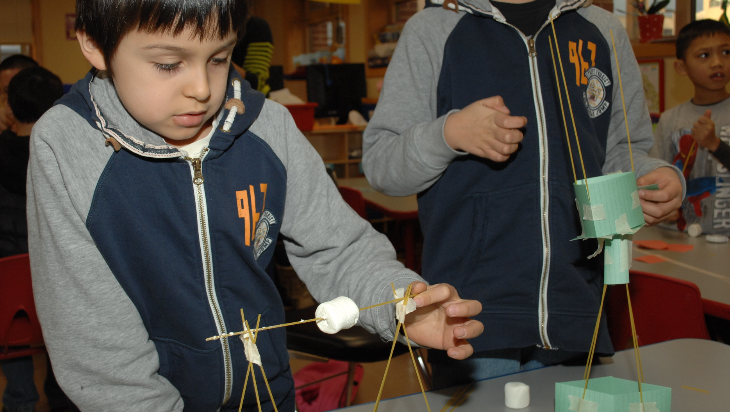
Voluntary work is a great way to develop soft skills. One way of volunteering for mathematics students is mathematics outreach work. This type of volunteering involves activities like giving presentations and coaching people. You can also hone your technical skills – you really need to understand things well to explain them successfully to somebody else. Mathematics outreach gives you a chance to enthuse the next generation of mathematicians, scientists and engineers which offers a real sense of achievement. Promoting your subject also demonstrates your commitment to your profession.
“I have been a STEM Ambassador for many years. This is a formal registered scheme to support education outreach activities offering training, checking (required by most schools before they let you on their premises) and public liability insurance. I take part annually in a local Design Challenge for primary schools. There is a small event in March in the south of the county on a Saturday with usually 8 teams and then a larger event in the north of the county over a Saturday and Sunday in June with typically 18 teams of 6 pupils from years 4, 5 and 6. Over the years we have recycled the challenge of designing, making and testing bridges, cranes, diggers (which proved to be the hardest), lighthouses and, always the most popular, trebuchets so even if any pupils came in all 3 eligible years they wouldn’t get the same challenge. Being on the STEM Ambassadors register I regularly get information about local opportunities that need volunteers so based on my diary and geography I can select if there are any others I can easily support. I tend to pick mock interviews as I find them easy to do and they are usually in an afternoon or early evening.” – Erica Tyson, University Liaison Officer.
How do I get involved?
If you are interested in becoming a STEM ambassador, the STEM Learning website has all the information you need. As an ambassador you will get updates on activities and requests for volunteers in your area – you can then choose the ones you want to participate in. If you want to organise something specific they can help you do that. And if you take part in other activities you can register them easily.
Resources you might find useful for working with schools include the Mathematics Matters case studies and the Maths at University poster and booklet on the MathsCareers web site.
Image credits
Jennifer Quinn (U. of Washington)” (CC BY-ND 2.0) by Mathematical Association of America
Making math fun” (CC BY-NC-ND 2.0) by U.S. Army Garrison Casey