On the evening of 1 April this year (fear not, this is not a very belated April Fool’s joke …) I was watching television and remembered that NASA’s Artemis II mission was about to launch, so I switched over to watch it on the BBC News channel.
I honestly cannot remember the last time I was interested in a rocket launch, but it has been several years, if not decades. I was born just over two months after the Apollo 17 astronauts left the lunar surface; in fact, by the time you read this, it will have been at least 53 years and about eight months since humans last travelled beyond low Earth orbit. Watching the launch brought back lots of feelings I felt when watching rocket launches as a child, which was primarily the wonder and excitement, but of course it was also tinged with a hope that nothing would go wrong, since the launch is one of those critically dangerous times. I watched the successful launch and followed the progress for around an hour. I then retired for the night, thinking that possibly the most dangerous part was over, at least until final re-entry back into Earth’s atmosphere, approximately ten days later.
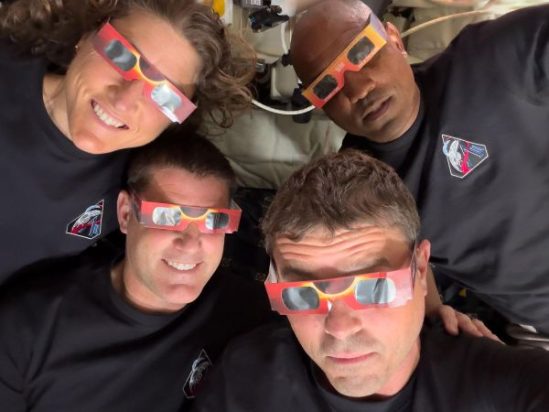
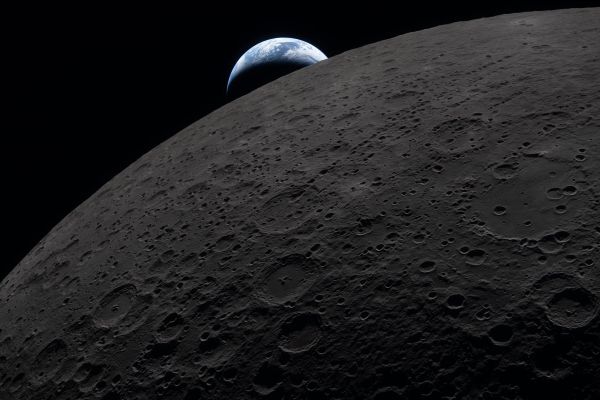
Although space travel is quite routine these days, Artemis II did provide a refreshing distraction from the news. Happily, the mission completed successfully and the astronauts returned safely to Earth having travelled around the moon’s far side, gaining an experience that only a privileged few have witnessed. Notably, the crew broke the record for travelling the furthest distance from the Earth, set previously by Apollo 13 in April 1970, when the crippled spacecraft slingshotted around the Moon on a free-return trajectory and successfully brought its crew home. Amongst the fascinating images that were returned, the crew were able to witness a total solar eclipse, where the solar corona was visible for 54 minutes, this compares to the duration of totality from the Earth’s surface that lasts a maximum of approximately 7.5 minutes.
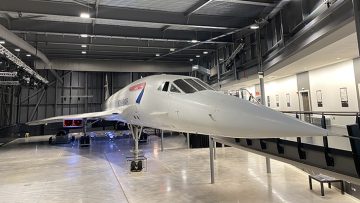
On a slight tangent, we are planning an article to commemorate the 50th anniversary of the supersonic airliner Concorde’s first commercial flight later this year. During its testing phase, after a meeting between an astronomer at the Paris Observatory and the Concorde test pilot, the idea of extending totality took shape. This led to a flight during a solar eclipse in June 1973 that extended the duration of totality to a remarkable 74 minutes. Various scientific experiments were conducted during this time by four separate teams: one from France (Paris Observatory), two from the UK (University of Aberdeen and Queen Mary College, London) and one from the US (Los Alamos Scientific Laboratories), taking due advantage of the extended time available [1].
Reflecting on Artemis II took my thoughts back to the first launch of the Space Shuttle, which had its first crewed mission just over 45 years ago in April 1981, commanded by the Gemini and Apollo veteran astronaut, John Young, and piloted by Bob Crippen. Their mission went to plan and paved the way for regular missions by the shuttles: Columbia, Challenger, Discovery and Atlantis (joined later by Endeavour in 1992). Then, nearly five years later, in January 1986, after 24 successful missions from the four shuttles, I clearly remember watching in horror the reports of Challenger being destroyed just over a minute after launching when one of its rocket boosters exploded killing all seven of the crew. This disaster, which had its 40th anniversary this year, inevitably grounded the NASA space programme for nearly three years while major inquiries were conducted to discover what went wrong and what needed to change.
One of the key problems in astronautical engineering is the fact that obtaining sufficient power from liquid propulsion rockets is expensive for overcoming gravity. The implication is that designs of space launch vehicles (and aircraft for that matter) are necessarily optimised to minimise weight to ensure the cost is not prohibitive to carry a significant payload. Therefore, maximising the design safety factor within the context of this highly constrained optimisation problem becomes naturally very difficult. The consequence is that these craft are far more fragile than, say, a typical building or a bridge. Although in both of these latter examples, minimising weight can also be desirable due to cost and functionality requirements, for instance a roofed sports stadium or an aircraft hangar both necessarily require a large open but covered space without internal columns, which makes minimising the self-weight of the roof structure a key design objective.
The phrase ‘a chain is only as strong as its weakest link’ is often quoted in this fragility context. In well-designed systems, redundancy is often embedded deliberately; or to extend the chain analogy: redundant systems contain many metaphorical chains working in parallel so that if one link in one chain happens to break then the other intact chains are able to take up the additional load. However, in systems that need to be optimised for essential functionality, the number of effective chains working in parallel are necessarily more limited in number and in extreme cases may be reduced to one. For the latter case, any kind of failure, even in a seemingly innocuous sub-system or physical component, can have catastrophic consequences.
With hindsight, the causes of the Challenger tragedy reads like a disaster waiting to happen. Many readers will of course be familiar with the details, but for those who are less aware, here is a brief summary. The mission originally planned for July 1985 was repeatedly delayed and eventually launched in January 1986. This change was highly significant because the ambient temperature at launch was considerably lower going from summer to sub-zero temperatures. An issue that was known for several years before that fateful day in 1986 was that within the solid rocket booster system there were elastomer O-rings, utilised to provide a seal for containing the hot and high-pressure gases produced during the launch, which did not perform well at low temperatures.
Elasticity is the property that a material deforms under loading but immediately returns exactly to its original shape once that force is removed. However, temperature can play a key role in material behaviour and low temperatures are often associated with less elastic, alongside perhaps even brittle, behaviour becoming more prevalent even though the same materials may behave perfectly well at higher temperatures.
Famously, the theoretical physicist and Nobel Laureate, Richard Feynman, who served as a member of the Rogers Commission that investigated the disaster [2], demonstrated that NASA’s fundamental understanding of design safety factors was substantially flawed and their estimations of failure probabilities was grossly optimistic. He also demonstrated the poor physical behaviour of the O-rings at low temperatures during a televised hearing of the inquiry by applying a clamp to a sample O-ring and submerging it in iced water, subsequently releasing the clamp and showing that the O-ring did not return to its original shape (at least during the broadcast).
The commission subsequently made extensive recommendations regarding the safety culture and various other critical matters. Significantly, this also included calls for improved communications between the engineers and senior management since concerns were effectively ignored, resulting in the decision to launch being based on incomplete and at times misleading information. In his typical style, Feynman put it pithily thus [2, Appx. F]:
For a successful technology, reality must take precedence over public relations, for nature cannot be fooled.
Unfortunately, the subsequent tragedy of the very first shuttle to fly, Columbia, which failed on re-entry in February 2003 inevitably killing all seven of its crew, was also partially attributed to a lack of appropriate communication channels within NASA for problems to be discussed and addressed effectively.
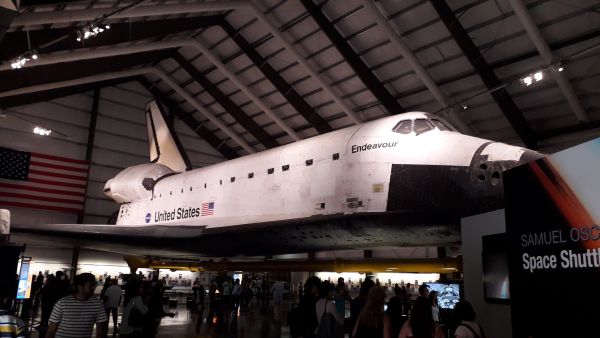
The shuttle programme was eventually discontinued in 2011 after 133 successful missions. The three surviving craft are now on public display across the US. However, it was a programme that over its 30 years had a chequered history with notable successes punctuated by two terrible tragedies. With the Artemis programme leading onto far more ambitious missions over the coming period, let us hope that the painful previous lessons have been learnt. The safety record of the aerospace industry is generally excellent, the authorities mandate full-scale destructive testing before a new aircraft-type is certified for flight. Nevertheless, the safety culture has to be maintained given the necessary fragilities of the vehicles in question.
Ahmer Wadee CMath CSci FIMA
Imperial College London
References
- Beckman, J., Begot, J., Charvin, P. et al. (1973) Eclipse flight of Concorde 001, Nature, vol. 246, pp. 72–74.
- Presidential Commission on the Space Shuttle Challenger Accident (1986) Report of the Presidential Commission on the Space Shuttle Challenger Accident, technical report, NASA, Washington DC, USA.
Reproduced from Mathematics Today, August 2026
Download the article, The Challenge of Artemis (pdf)