PROGRAMME
Abstract Book
CONFERENCE DINNER – The Botanist ,46a Milsom St, Bath BA1 1BZ at 6:30pm
Inverse problems are widespread in many varied fields such as medical and satellite imaging, biology, astronomy, geophysics, environmental sciences, computer vision, energy, finance, and defence. These problems are inverse in the sense that they arise from seeking to use a mathematical or physical model “backwards” to indirectly determine a quantity of interest from the effect that this quantity causes on some observed data.
A main challenge resulting from using models “backwards” to measure causes from their effects is that solutions are often not well posed, i.e., not unique and/or unstable with respect to small perturbations in the data. This difficulty has stimulated an important amount of research and innovation at the interface of applied mathematics, statistics, engineering, physics, and other fields, leading to great social and economic benefit through impact on science, medicine, and engineering.
The aim of this conference is to bring together the applied mathematics, statistics, machine learning, engineering, physics and industrial communities around the topic of inverse problems to discuss recent developments and open challenges in theory, methodology, computational algorithms, and applications. We welcome industrial representatives, doctoral students, early career and established academics working in this field to attend.
Topics of interest include, for example,
• Inverse problems in mathematical and computational imaging.
• Inverse problems in science, medicine, engineering, and other fields.
• Model‐based and data‐driven methods for solving inverse
• Optimisation, statistical, and machine learning methods for solving inverse problems.
• Mathematical theory for inverse problems.
• Deterministic and stochastic computational methods and algorithms.
Call for Presentations/posters – Is now closed
Prizes
The Institute for Mathematics Innovation are kindly sponsoring the prizes for best posters, which will be judged at the conference!
1st Prize – £200
2 x Runner-ups – £50 each

Invited Speakers
Coralia Cartis (Oxford)
Improving the scalability and tractability of optimization algorithms
We discuss random and deterministic subspace methods for nonconvex optimization problems. We are interested in the optimisation of functions with low effective dimensionality, that vary only along certain important directions or components. We show that the effective subspace of variation can be efficiently learned in advance of the optimization process; we contrast this with random embedding techniques that focus directly on optimization rather than learning.
Hanne Kekkonen (TU Delft)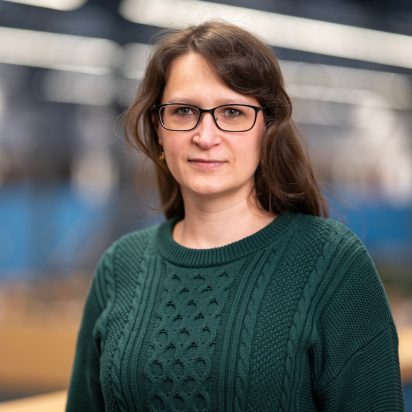
Edge preserving priors for inverse problems
The Bayesian approach to inverse problems allows us to encode our a priori knowledge of the unknown function of interest as a probability distribution. Gaussian process priors are often used in Bayesian inverse problems due to their fast computational properties. However, the smoothness of the resulting estimates is not well suited for modelling functions with sharp changes, such as images. Smooth functions with few local irregularities have a sparse expansion in the wavelet basis, making wavelet-based Besov priors a good candidate for modelling spatially inhomogeneous functions. The sparsity-promoting and edge-preservation properties of Besov priors can be further enhanced by introducing a new random variable that takes values in the space of ‘trees,’ ensuring that the realisations have jumps only on a small set. We will also discuss how to estimate the optimal value for the hyperparameter controlling the sparsity of the solution from the data.
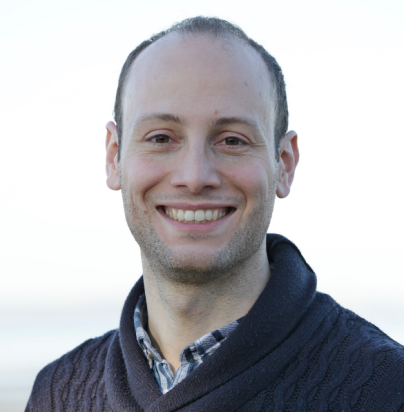 Marcelo Pereyra (Heriot Watt)
Uncertainty quantification in statistical imaging sciences: 40 years of muddling through
Probability theory and statistical science are cornerstones of imaging sciences, underpinning many and varied approaches from Markov random fields to score-based denoising diffusion models and stochastic flow-matching techniques. In addition to powerful image estimation methods, statistical science provides a framework for uncertainty quantification and for using image data as quantitative evidence. These capabilities are important for the rigorous interpretation of experimental results and for robust interfacing of quantitative imaging pipelines with scientific and decision-making processes. This talk explores the following question: four decades after the publication of the first seminal papers on the topic, are the probabilities and statistical inferences delivered by existing probabilistic and statistical imaging methods meaningful under replication of an experiment? or are they still only meaningful as subjective measures of belief?
 Olga Hernandez ( Eindhoven University of Technology)
Optimal State and Parameter Estimation Algorithms
This talk presents an overview of recent works aiming at solving inverse problems (state and parameter estimation) by combining optimally measurement observations and parametrized PDE models. After defining a notion of optimal performance in terms of the smallest possible reconstruction error that any reconstruction algorithm can achieve, I will present practical numerical algorithms based on nonlinear reduced models for which we can prove that they can deliver a performance close to optimal. The proposed concepts may be viewed as exploring alternatives to Bayesian inversion in favor of more deterministic notions of accuracy quantification.
Rob Scheichl (Heidelberg)
Scalable Bayesian Inference using Hierarchical Sampling Approaches
 Simon Arridge ( University College London)
Learned Forward and Inverse Problems for PDEs in imaging
Several problems in imaging are based on recovering coefficients of a PDE, resulting in a non-linear inverse problem that is typically solved by an iterative algorithm with the gradient obtained by an adjoint state method. When the forward problem is time-varying this corresponds to the method of time-reversal which convolves a forward and time-reversed field with the derivative of the spatial operator (sometimes called the “imaging condition”). Applications include full-waveform imaging (FWI) in Ultrasound Computed Tomography, Photoacoustic Tomography (PAT) and time-resolved Diffuse Optical Tomography (tDOT). Within Learned Physics approaches time reversal corresponds to the Neural ODE method for learning the time-derivative of an ODE parameterised by a neural network. By combining the trained network with symbolic regression an interpretable model can be discovered. In this talk I will discuss application of these methods for solving some forward and inverse problems in imaging.
Registration Information
Conference Fee – Non IMA Member £370
Conference Fee – IMA Member £275
Conference Fee – IMA Student £170
Conference Fee – Non-Member Student £200
Conference Fee – Includes your pass for the whole conference, refreshments and lunch.
Conference Dinner will be held at The Botanist on Thursday 12 September – £38 This is in addition to your conference fee, you have to pre-book to confirm your space.
If you are an IMA Member or you have previously registered for an IMA conference, then you are already on our database. Please “request a new password” using the email address previously used, to log in. Register for the conference using this link
Registration closes – 2 September 2024
Organising Committee
Matthias Ehrhardt, Chair
Tatiana Bubba
Yury Korolev
Silvia Gazzola
Programme Committee
Marta Betcke
Romina Gaburro
Jonas Latz
Audrey Repetti
Paul Ledger
Thomas Blumensath
Tristan Van Leeuwen
Silvia Villa
Per Christian Hansen
Richard Nickl
Travel Details
Directions to the conference venue – https://www.bath.ac.uk/locations/3-west-north/