Mathematics of AI (MAI) Special Interest Group
IMA Special Interest Group: Foundational Mathematics for Artificial Intelligence
The IMA Special Interest Group (SIG) on Foundational Mathematics for AI aims to advance understanding of the mathematical foundations underpinning artificial intelligence and promote the essential role of mathematics in its development, evaluation and responsible application.
The SIG brings together mathematicians, researchers, academics, industry professionals and other disciplines to encourage collaboration, knowledge exchange and interdisciplinary engagement. Its work focuses on mathematical understanding, interpretability, verification, reliability and assurance of AI systems, alongside the evolving role of mathematics, computational thinking and programming in education and research.
Through conferences, webinars, roundtable discussions and engagement with learned societies, industry, government and regulatory bodies, the SIG seeks to strengthen the contribution of the mathematical community to AI policy, education and practice.
Its overarching purpose is to ensure that mathematics remains central to the advancement of AI, helping to build systems that are not only capable and innovative, but also understandable, reliable and trustworthy.
Steering Committee
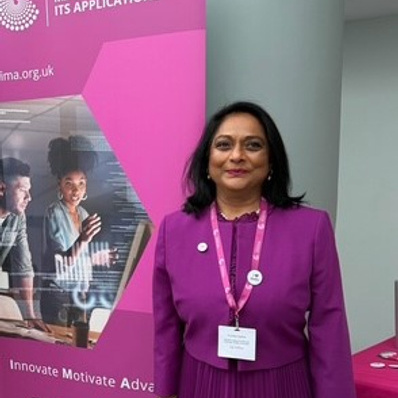
Dr Anjulika Salhan
Chair, IMA Special Interest Group for Mathematics for AI
Dr Anjulika Salhan is an applied mathematician, technology entrepreneur and AI innovator whose career bridges mathematical research, scientific innovation and the commercial application of advanced technologies. With a PhD in Applied Mathematics, her work has spanned computational modelling, numerical methods and the development of mathematical algorithms for complex scientific and industrial applications.
She is the CEO of System Holdings Group of Companies and ITIXA, and the principal architect of trustworthy AI solutions for accounting, taxation and financial compliance. Her work combines mathematical rigour, technological innovation and practical industry experience to address the challenges of accuracy, interpretability, reliability and accountability in AI-driven systems.
Anjulika chaired the IMA AI Congress in 2024 and 2026 and founded the IMA Special Interest Group on Foundational Mathematics for AI. She is a leading advocate of a mathematics-first approach to artificial intelligence, championing the importance of mathematical understanding, independent verification and assurance as AI systems become increasingly powerful and autonomous.
Her wider interests encompass the future of mathematics and AI education, interdisciplinary research, industry collaboration and the role of mathematical sciences in shaping national AI policy.
Central to her work is the conviction that advancing AI capabilities must be accompanied by a deeper mathematical understanding of how AI works, why it works and when it can be trusted.
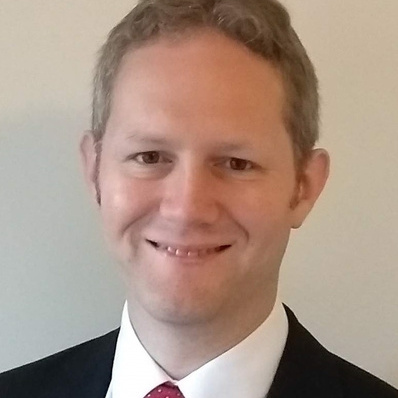
Richard Lane
Richard is a principal data scientist with 25 years’ experience in applying statistical and signal processing techniques to defence and security problems. He holds a 1st class MEng in engineering science from Oxford University and an Engineering Doctorate (EngD) from University College London, on “Bayesian super-resolution with application to radar target recognition”. Richard was awarded the John Benjamin Memorial Prize for his work on maritime anomaly detection and threat assessment, culminating in a demo to representatives from the Royal Navy, UK Border Agency, and Police Force. Richard has been the technical leader for many projects involving the development and use of: statistical image and signal analysis; tracking and data fusion; and artificial intelligence, deep learning, and object detection. Richard has written over 130 journal and conference papers, patents, and technical reports; has been senior editor of the Applied AI Letters journal; was chairman of the Mathematics in Defence conference series for 4 years; and has given multiple invited and keynote presentations.
SIG Roles
- Editor-in-Chief of SIG Wiki Pages.
- Lead Organiser of SIG Webinar Series.
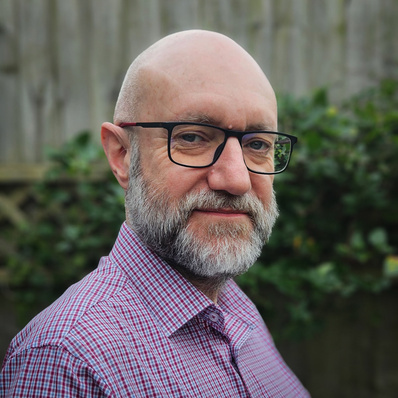
Andy Harrison

Richard Pinch

Professor Stephen Lynch
Stephen Lynch is a Professor of Digital Skills at Loughborough University.
According to ScholarGPS, he is a highly ranked scholar in Dynamical Systems. In 2022, he was awarded a National Teaching Fellowship for his work in Widening Participation (WP), developing a programming-based Mathematics curriculum, and for research feeding into teaching. He is trying to get programming introduced at high school level in the UK. He would like all pupils in the UK to learn how to code and learn the fundamentals of Mathematics for AI. He runs national and international workshops on Python/MATLAB for Scientific Computing and AI. At Loughborough, he is teaching all alumni, staff, and students how to code. He has authored books on Maple, Mathematica, MATLAB, and Python.
David Snee
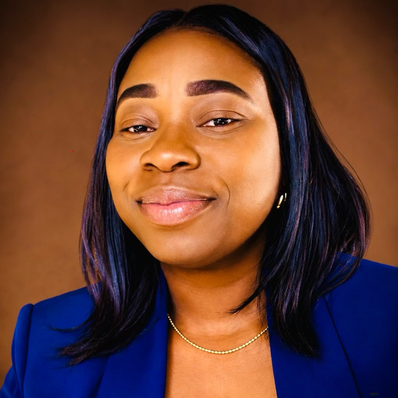
Imoleayomide Ajayi
Dr Imoleayomide Ajayi is an applied mathematician, statistician and AI researcher with a PhD Mathematics from Loughborough University. UK. Her research focuses on statistical modelling, computational mathematics and her recent research explores the mathematical foundations of trustworthy AI, particularly probabilistic approaches to algorithmic fairness, uncertainty quantification and interpretable decision-making.
She developed Particle Pipeline, an open-source Python package for quantitative particle image analysis, and conducts research on the Chamberlain Fairness Framework, applying frequentist and Bayesian statistical methods to evaluate inequalities in AI-driven decisions.
Alongside her research, she serves as Head of Data & Analytics at AB Microfinance Bank, bringing practical experience in machine learning, credit risk analytics and data-driven decision-making.
A passionate advocate for mathematics education and STEM engagement, she has supported teaching mathematics and computational subjects at university level and organised hands-on AI workshops for young people within the UK. Within the IMA Foundational Mathematics for AI Special Interest Group, she is particularly interested in advancing mathematically grounded, trustworthy AI and developing educational initiatives that inspire the next generation to explore the mathematics behind artificial intelligence.
Previous Events
Unlocking the Potential: The IMA AI/ML Congress 2024
2nd IMA Congress: AI Unlocked: Innovation, Insight and Impact
Collected Abstracts from 2nd Congress
Discussion Paper (Abstract)
Foundational Mathematics for Trustworthy Al (PDF Download)
Upcoming Event
Richard Lane, “Classifier Probability Calibration”, 21st April 2027 from 12:30 to 13:30.
Online webinar. Joining details to be announced.