IMA Gold Medal | Previous Winners
Click on the winner's pictures to read more about their achievements
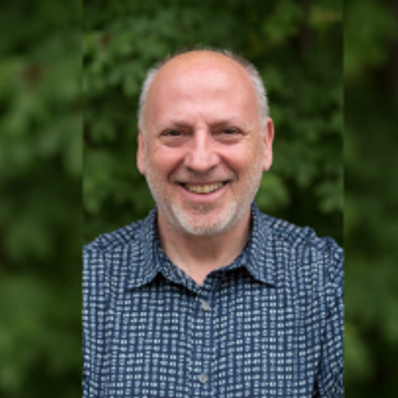
I. David Abrahams
The President and Council of the IMA are delighted to announce that the 2024 IMA Gold Medal has been awarded to Professor Ian David Abrahams BSc PhD DIC FIMA FRSE of the University of Cambridge, Faculty of Mathematics.
Professor I. David Abrahams will receive his award at the 2025 IMA Summer Lecture, which will be held at the Royal Society on the 25 June 2025 – more information on this event will be announced early in 2025.
Citation
Professor I. David Abrahams has provided three decades of enthusiastic, inclusive and energetic leadership to the UK applied mathematics community. He has made substantial and innovative contributions across an extremely wide range of problems in applied mathematics and nurtured many important collaborations between academics and UK industry. He has consistently encouraged and mentored younger mathematicians, promoted public communication of science and widening participation, and led and developed his own Waves Group and applied mathematics generally at the University of Manchester. He has also served and supported the entire UK mathematical sciences community through his outstanding Directorships of both the International Centre for Mathematical Sciences (ICMS) in Edinburgh and the Isaac Newton Institute for Mathematical Sciences (INI) in Cambridge.
The United Kingdom is a world leader in the Mathematical Sciences. As well as university departments, the culture of mathematics in the UK is supported by learned societies (including IMA and the London Mathematical Society (LMS)), national mathematics research centres: the INI and the ICMS, and major international conferences in the UK especially the British Mathematics Colloquium (BMC) and the British Applied Mathematics Colloquium (BAMC). David has made major contributions to all these bodies. He has served as President and Vice President of the IMA, modernizing and invigorating this institution as well as enthusiastically chairing and serving on many boards and committees of the IMA and LMS, especially promoting closer cooperation between applied and pure mathematics. He has been an organizer of six BAMCs as well as being instrumental in the merging of the two cultures with joint BAMC and BMC meetings.
David has served on committees of funding bodies including EPSRC, councils and boards of many international mathematics and mechanics societies, as well as numerous national and international nominating and prize committees. He was awarded the IMA/LMS David Crighton Medal for services to mathematics in 2017.
Through his energetic and dedicated leadership and participation, David has focused in particular on bringing together people from different ‘factions’ within mathematical sciences in the UK, on promotion of mathematics in the service of industry and broader society, and on inclusiveness and sharing his love of mathematics. In his roles as Director of ICMS and then INI, two of the most pivotal positions in UK mathematics, David expanded and developed mechanisms for collaboration between academic mathematicians and UK industry. At INI he was instrumental in securing additional funding to enlarge the scope and volume of its work; in particular, he employed part of this new resource, as well as providing academic steer, towards the setting up of the fledgling Academy for Mathematical Sciences and the Knowledge Exchange Hub for the Mathematical Sciences.
When the COVID-19 pandemic struck, under David’s leadership the INI pivoted rapidly to running its programmes virtually and he was instrumental in forming the Virtual Forum for Knowledge Exchange in the Mathematical Sciences (V-KEMS), that received the PraxisAuril award for Knowledge Exchange in 2021. He also oversaw the creation and delivery of a virtual INI research programme on the ‘Infectious Dynamics of Pandemics’.
Davids’ appointment to national leadership roles in UK mathematics is founded, of course, on his academic track record of deep contributions to applied mathematics across a broad range of topics. He has published around 180 research papers with major contributions to acoustics, fluid/structural interactions, non-destructive evaluation, fracture mechanics, linear and nonlinear elasticity, composite materials modelling, electromagnetism, water waves, aero- and hydro-acoustics and seismology. More recently his research has diversified to include mathematical finance, nonlinear viscoelasticity, melting of glaciers and related phenomena including the entrapment of meteorites in Antarctic ice. He has developed and sustained the Waves Group at Manchester with mathematicians he mentored, who are now leaders in academia and industry in their own rights. David held the prestigious Beyer Chair in Applied Mathematics at Manchester and the N.M. Rothschild & Sons Professorship of Mathematical Sciences at Cambridge. He has been awarded a Royal Society Industry Fellowship and Wolfson Fellowship.
Given David Abrahams committed energetic and sustained leadership in UK applied mathematics it is fitting that he is the recipient of the IMA’s most prestigious award, the Gold Medal.
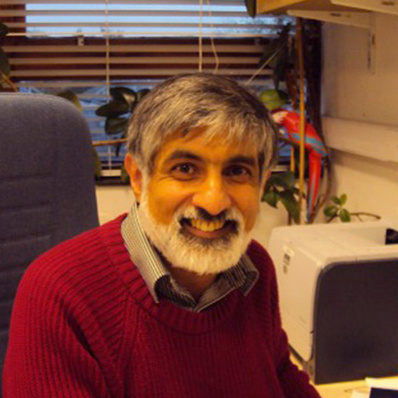
Philip K Maini
We are delighted to announce that the Council of the IMA has awarded the IMA Gold Medal 2022 to Professor Philip K. Maini FRS, FMedSci, of the University of Oxford.
Institute Gold Medals are awarded in recognition of outstanding contributions to mathematics and its applications over a period of years, with nominations being considered every two years.
The citation for this year’s award to Professor Philip K. Maini follows.
Philip K. Maini is awarded the IMA Gold Medal 2022 in recognition of his profound contributions to mathematics in biology and medicine, for the sustained role he has played in supporting and mentoring researchers in the early stages of their careers, and for the leadership he has shown in the biological mathematics community and the Centre for Mathematical Biology in Oxford.
Maini has been Director of the Wolfson Centre for Mathematical Biology (WCMB) since 1998, and has obtained significant funding to develop the Centre. The WCMB is an interdisciplinary research centre which has trained over 100 students of which over 50 have gone on to academic posts. Philip himself has supervised over 50 successful PhD theses and through this supervision and his broader roles he has shown great leadership in creating such a powerful centre for research in mathematical biology in the UK. He has been a mentor for colleagues at all stages of their careers.
Philip Maini was elected fellow of the Royal Society in 2015. He is a Fellow of the IMA (FIMA), Fellow of the Society for Industrial and Applied Mathematics (SIAM), an Inaugural SMB Fellow, a Fellow of the Royal Society of Biology (FRSB), Miembro Correspondiente (Foreign Fellow), La Academia Mexicana de Ciencias (AMC), Fellow of the Academy of Medical Sciences (FMedSci), Foreign Fellow of the Indian National Science Academy (FNA), Fellow of the European Academy of Sciences (FEurASc) and Fellow of the American Association for the Advancement of Science (FAAAS).
The scope and scale of Maini’s research is impressive. He has made major contributions to the understanding of developmental biology, wound healing, host-pathogen interactions, tumour growth and intestinal crypt morphology. He has developed the art of mathematical modelling in biological and medical settings, including models of multi-scale structure and spatiotemporal structure more generally.
He has authored or co-authored more than 500 publications in a diverse range of mathematical, biological, medical and inter-disciplinary journals and six books. His research has been supported by grants totalling millions of pounds from across the UKRI portfolio (EPSRC, BBSRC, NERC), NIH/NCI in the United States, the European Commission, the Wellcome Foundation, the Nuffield Foundation, Cancer Research UK, the Royal Society and many others. He has also put effort into gaining support for research opportunities for early careers 3 researchers, which whilst not financially large, provide life-changing experiences for those involved.
Philip K. Maini’s contribution to the mathematical sciences is underpinned by a world class research record, combined with a strong sense of service to the community through his involvement as an editor with many journals and as Director of WCMB, and an extraordinary level of support and encouragement for emerging researchers in the interdisciplinary area of mathematical biology.
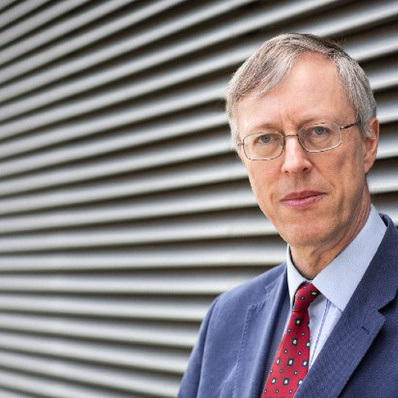
Nicholas J Higham
We are delighted to announce that the Council of the IMA has awarded the IMA Gold Medal 2020 to Professor Nicholas (Nick) J Higham FRS of the University of Manchester.
Institute Gold Medals are awarded in recognition of outstanding contributions to mathematics and its applications over a period of years, with nominations being considered every two years.
The citation for this year’s award to Professor Nick Higham follows.
Nick Higham is Royal Society Research Professor and Richardson Professor of Applied Mathematics in the Department of Mathematics, University of Manchester. He was elected Fellow of the Royal Society in 2007 and was awarded a Royal Society Research Professorship in 2018. He is a Fellow of the Society for Industrial and Applied Mathematics (SIAM), a Turing Fellow and a Member of Academia Europaea. He held a Royal Society-Wolfson Research Merit Award (2003-2008).
Higham is best known for his work on the accuracy and stability of numerical algorithms, and the second edition of his 700-page monograph on this topic was published by SIAM in 2002. His most recent monograph, Functions of Matrices: Theory and Computation (SIAM, 2008), is the first book devoted to this topic. He is the Editor of the Princeton Companion to Applied Mathematics (2015, over 1000 pages).
He has more than 140 refereed publications on topics such as rounding error analysis, linear systems, least squares problems, matrix functions and nonlinear matrix equations, condition number estimation, and polynomial eigenvalue problems. His research has been supported by grants from EPSRC and by fellowships from the Nuffield Foundation, the Royal Society and the Leverhulme Trust. He held a 2M euro ERC Advanced Grant (2011-2016) supporting his research on matrix functions.
He served as President of SIAM (2017-18), and was Vice President at Large (2010-2013) and served for over ten years on the SIAM Board of Trustees and the SIAM Council. He has also served on the Board of Directors of the International Linear Algebra Society, and as Chair of the SIAM Activity Group on Linear Algebra. He was a member of the Applied Mathematics sub-panel for the 2008 UK Research Assessment Exercise and the Mathematical Sciences sub-panel of the 2014 UK Research Excellence Framework.
Higham’s speciality is Numerical Linear Algebra and he follows in the Wilkinson tradition with a world leading background in error analysis. He also leads one of the largest groups in this area in the UK and indeed in all of Europe.
He has contributed software to LAPACK and the NAG library, and has written numerous M-files included in MATLAB. His algorithms are also included in Julia, SciPy, Mathematica and other packages.
Higham is also author of the best-selling SIAM books Handbook of Writing for the Mathematical Sciences (3rd edition, 2020) and MATLAB Guide (with D. J. Higham, 3rd edition, 2017), and is a contributor to the popular Penguin Dictionary of Mathematics (fourth edition, 2008).
Image credit: Rob Whitrow
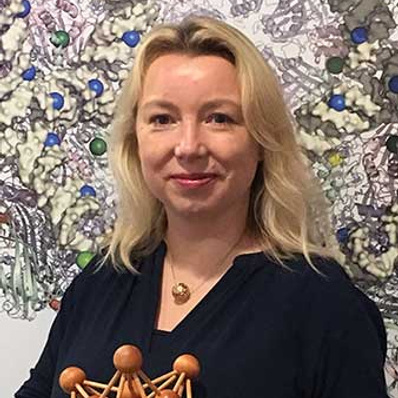
Reidun Twarock
We are delighted to announce that the Council of the IMA has awarded the IMA Gold Medal 2018 to Professor Reidun Twarock of the University of York. Institute Gold Medals are awarded in recognition of outstanding contributions to mathematics and its applications over a period of years; the citation for this year’s award follows.
The citation for this year's award to Professor Reidun Twarock follows:
Prof Reidun Twarock is awarded the IMA Gold Medal 2018 for her work in the field of Mathematical Virology, an emerging subject in which she is the world leader and which is essentially founded by her. This involves the study of non-crystallographic symmetries of the three-dimensional structures of viruses, the symmetry-breaking mechanisms in the structural transitions of capsid architectures that in many clinically important viruses are required for infection, and the impact of the asymmetric organisation of the viral genome on virus assembly. One key concept is that the contact points between the encapsulated genomic RNA and the inner capsid surface act as the vertices of a polyhedron with related symmetry. In effect, Hamiltonian paths on this polyhedron enabled the discovery of sequence-specific contacts between genomic RNA and capsid and characterise capsid formation. The study of these paths therefore acts as a powerful tool in interrogating virus structure and assembly.
The mathematical approach Prof Twarock developed, has played a key role in the discovery of a virus assembly mechanism which has changed the existing paradigm, and which has opened up novel opportunities in anti-viral therapies and vaccination. Her work has shown that the traditional models of virus formation are inadequate for single-stranded RNA viruses such as Hepatitis C, HIV and the common cold. In addition, developing applications of her Viral Tiling Theory includes assisting experimentalists in understanding the geometries of self-assembling protein nanoparticles such as those used in the design of malaria vaccines.
Her work has been highlighted in articles in international science magazines such as Quanta and in SIAM News, in documentaries such as “Thinking Space” funded by the LMS, and in a forthcoming BBC documentary with Hannah Fry at the helm.
Prof Twarock has led a sizeable team of researchers since 2007, with Leverhulme Trust funding, followed by large grants from EPSRC, BBSRC and the Wellcome Trust. Her team of typically three PDRAs, spans expertise in Mathematics, Biophysics and Bioinformatics, working on interdisciplinary projects in which Mathematics plays a key role and acts as driver of discovery in virology.
Prof Twarock has a strong record of outreach and community service. She is involved in developing artwork illustrating the geometry of virus architecture and in the creation of virtual environments to enable the public to experience genome organisation in viruses, and is involved in the design of the maths and medicine zone of a forthcoming Mathematics Discovery Centre in collaboration with the CEO of MathsWorld UK. Further, Prof Twarock is a renowned speaker, giving the 2011 Plancherel Lecture in Fribourg (Switzerland), the 2012 Ladyzhenskaya Lecture in Leipzig (Germany), the 2014 LMS Mary Cartwright Lecture, and the 2018 Lighthill Lecture amongst others. Prof Twarock has served on two EPSRC Strategic Advisory Teams and the Isaac Newton Institute’s Scientific Steering Committee.
This list is updated every two years following the new award announcement.
2016 Professor A. C. Croft and Professor D. A. Lawson
2014 Clifford Cocks CB D.Sc.
2012 Doctor M. Sabin
2010 Professor L. N. Trefethen, FRS
2008 Professor J. D. Murray, FRS and Professor T. J. Pedley, FRS
2006 Doctor J. R. Ockendon FRS
2004 Professor J. M. T. Thompson, FRS
2002 Professor K. W. Morton and Professor F. C. Piper
2000 Professor I. N. Stewart, FRS
1998 No award
1996 Professor M. J. D. Powell, FRS
1994 Professor F. Ursell, FRS
1992 Professor O. C. Zienkiewicz, FRS
1990 No award
1988 Professor Sir Hermann Bondi, FRS
1986 Professor G. A. Barnard and Professor Sir Sam Edwards, FRS
1984 Doctor J. M. Hammersley, FRS and Sir Alan Wilson, FRS
1982 Professor Sir James Lighthill, FRS and Doctor A. B. Tayler CBE